Search

band annie's Weblog

I have a parallel blog in French at http://anniebannie.net

Category

Arabs

Arabs of the World for a World of Justice


Arabs of the world, we are along the same line as Ibn Rushd-Averroes,
the Emir Abd el Kader, Ibn Arabi, Ibn Sina-Avicenna, personalities
whose contribution to the world is undisputable. If we are Arabs, it
is neither by blood nor by ethnicity, but by the culture and
civilization, by the universal dimension that is held by this part of
humanity.

We are attached to the universal ideals and we are working
relentlessly for their promotion. Thus, we are involved in all the
fights for the realization of democratic aspirations of people, and
the preservation of human rights.

Arabs of the world; citizens of Europe, America or Africa, we are
taking part in life, the progress and the blooming of the societies we
live in.
We are standing out for our mosques and our churches, for our
rationalist trends, our ancient cultures and for the original
languages that constitute today’s Arab world.

This civilization has been a leading one for Humanity. It can still
contribute further to its development and progress.
We can not imagine the world of tomorrow cut from its Arab dimension.
We can not imagine that tomorrow, the Arab countries could be nothing
more than an issue at stake between dominating powers.

Iraq is dismembered. Palestine is dying. Lebanon is regularly
assaulted by its Israeli neighbours. Great Arab countries are reduced
to act as supporting roles, unable to define their own strategy and to
conduct it in the interest of their people.

We are in favour of peace all over the world. We are making the wish
that is for the young people of the world to free themselves from war,
meet, know and speak to each other. In short, we are making the wish
that they fulfill the society we dream of.

To make this dream possible, injustice has to end. It is necessary to
bring back to reason those who think that they are entitled to own all
the resources of this land and who treat those who live in it as
inappropriate occupants that need to be chased away and even killed.

This is not a fatality. The Arab world is not cut out to be the
permanent battlefield of powers aiming to appropriate its resources.
We are rising up against this disgraceful situation and we are calling
upon good-willing men and women, aiming to ensure a future of peace
and stability, to join us in the firm support in favor of the Arab
resistance in Lebanon, Palestine, Iraq…

We are expressing our strong support, by visiting these countries so
we can salute the women and men who are on the field of struggles.

Arabs of the world for a world of justice, we think this fight is a
fight for everyone. The fair and quick settlement of the current
issues is serving the entire community, a preventative mine clearance,
the guarantee of a pacified world for our future.


SEE HERE

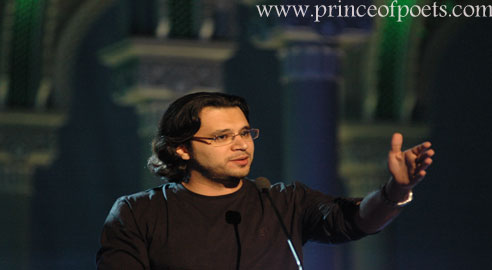
The Prince of Poets: Arab Poetry’s Answer to American Idol


Imagine an American TV network deciding to take the American Idol format and apply it to poetry; lining up poets to read their poems in front of temperamental judges while the nation gets out its mobile phones to vote for its favorite poet. One can be sure the show would not survive the first commercial break before the chastened executives pull the plug on it and replace it with yet another series on the Life and Times of Nicole Ritchie. Yet, that was exactly the formula for the latest TV sensation to take Arab countries by storm.

Perhaps the only thing that is as hard as translating Arab poetry to other languages is trying to explain to non-Arabs the extent of poetry’s popularity, importance and Arabs’ strong attachment to it. Whereas poetry in America has been largely reduced to a ceremonial eccentricity that survives thanks to grants and subsidies from fanatics who care about it too much, in the Arab world it remains amongst the most popular forms of both literature and entertainment. Whereas America’s top poets may struggle to fill a small Barnes & Noble store for a reading, Palestine’s Mahmoud Darwish has filled football stadiums with thousands of fans eager to hear his unique recital of his powerful poems. And while in America a good poetry collection can expect to sell some 2,000 copies, in the Arab world the poems of pre-Islamic era poets are still widely read today in their original words, as are those from the different Islamic eras leading to the present. The late Syrian poet Nizar Qabbani had a cult following across the Arab world, and his romantic poems have for decades constituted standard covert currency between lovers.

The Arab World has had its own enormously successful pop music answer to American Idol in Superstar which has concluded its fourth season with resounding success, unearthing some real stars of today’s thriving Arabic cheesy pop scene. But a few months ago, the governors of the Emirate of Abu Dhabi took a bold move by organizing a similar contest for poets. This comes as another step in Abu Dhabi’s ambitious attempts to use its petro-dollars to transform itself into the capital of Arab culture, and one of the world’s leading cultural centers; a Florence to Dubai’s London.

The show, named Prince of Poets, was an enormous success. Some 4,000 poets from across the Arab world sent in submissions to be considered. 35 were chosen for the show, and millions of viewers from across the Arab world tuned in to watch them recite their poetry, get criticized by Arab poetry’s answer to Simon Cowell, Paula Abdul and Randy Jackson (5 older poets and professors), improvise verses on the spot, and address wide-ranging issues from women’s rights, Iraq, love, democratization, Palestine and the old staple of Arab poetry: self-aggrandization. The winner would not only gain fame, but also a grand prize of 1,000,000 UAE Dirhams ($270,000).

The success of the show was wilder than anyone could’ve expected. The Arab press has had reports about how it has achieved the highest ratings in its spot, overtaking football matches and reality-TV; and millions have paid for text messages to vote for their favorite poet.

The turning point in the show’s popularity, many have speculated, came when young Palestinian poet, Tamim Al-Barghouti, read his poem “In Jerusalem“. Tamim, who is a distant cousin and close friend of mine, is the son of famous Palestinian poet and writer Mourid Al-Barghouti (author of the excellent I Saw Ramallah) and Egyptian novelist Radwa Ashour. Tamim’s charisma, poetry, personality and politics captured the imagination of the Arab world. A veteran of years of student political activism in Palestine and Egypt, Tamim was once deported from Egypt by the authorities after engaging in one too many anti-Iraq War protests for the liking of Egypt’s regime. He then moved to America where he completed a Ph.D. in Political Science at Boston University in only three years, before working for the United Nations in Sudan. Through all of this, he has managed to publish four collections of poetry that have received critical acclaim and is expanding his Ph.D. thesis into a book on political identity in the Middle East to be published in 2008. He is now headed to Germany to become a fellow at the Berlin Institute for Advanced Study.

While many contestants opted away from talking about politics in their poems, hoping to not cause any grievance to the generous leaders of the United Arab Emirates who are hosting this show, or to any of the other Arab leaders, Tamim’s poetry was almost entirely political. Whether it was about Palestine, Iraq, or Arab dictatorships, Tamim was as courageous as he was eloquent, raising a few eyebrows in the quiet Emirate where discussing regional politics is not considered the wisest choice of discussion topic.

“In Jerusalem” is a poetic diary of Tamim’s last visit to his land’s occupied capital; a sad traverse through its occupied streets defiled by the occupation soldiers and the illegal settlers living on stolen Palestinian land, and around the apartheid walls choking the city with their racist denial of Palestinians’ basic freedoms and rights. Nonetheless, the poem ends on a cheery and optimistic tone, leading to the jubilant excitement with which the Arab world enjoyed the poem.

Palestinian newspapers have dubbed Tamim The Poet of Al-Aqsa; his posters hang on the streets of Jerusalem and other Palestinian cities, where key-chains are being sold with his picture on them. Sections of the poem have even become ring-tones blaring out from mobile phones across the Arab World, and 10-year-old kids compete in memorizing and reciting it. Hundreds of thousands of people have seen Tamim’s poems on Youtube and other video websites.

But perhaps Tamim’s most amazing feat was how he has galvanized all Palestinians into following him and supporting him. After all of the troubles that Palestine has been through recently, and all the divisions that have been spawned within the Palestinian people, it was very refreshing to finally find something that unequivocally unites all Palestinians, and rouses millions of Arabs behind the cause that was tarred recently by the actions of some Palestinians.

This unifying effect was most glaringly captured when the TV stations of both Hamas and Fatah threw their support behind the unsuspecting Tamim, broadcasting his poems repeatedly, and urging people to vote for him, catapulting him from a little known young poet into a symbol of national resistance and unity. Finally, after months of divisions amongst Palestinians, there was something uniting them: a reminder of the true essence of the cause of the Palestinians, of the real problem, the real enemies and the real need for unity to face these challenges for the sake of Palestinian people and their just cause.

All of which made the final result of the contest most surprising. After having consistently received the highest ranking from the viewers’ votes and the unanimous flattery of the judges, and after a barn-storming flawless last poem that had the judges gushing, Tamim ended up in fifth place out of the five finalists. The poetess that was expected to most strongly challenge Tamim, the Sudanese Rawda Al-Hajj, who had focused her poems on women’s empowerment, finished fourth. The winner, perhaps unsurprisingly, was Abdulkareem Maatouk, a poet from the host country, the United Arab Emirates, whose poems had steered clear of anything political or controversial.

Though Tamim refused to comment, speculation was rife that the results were rigged. That Tamim and Rawda, widely viewed as the two best poets, would finish bottom of the finalists was certainly implausible, and one could not help but imagine that politics came into play. Abu Dhabi may want to fashion itself as the capital of culture, but it probably values its political stability more than any cultural pretenses. Arab regimes may have behaved like warring tribes with narrow self-interest over the past century, but there is one thing in which their cooperation was always exemplary: the effective suppression of all voices of dissent. As the contest became more popular, and the crown of the Prince of Poets more prestigious, it may have become too hard for the organizers to accept giving the trophy to a Palestinian rabble-rouser who in one of his poems bemoaned the times that have “degraded the free amongst us, and made scoundrels into our rulers.”

Nonetheless, there is no doubt who the real winner was; it was not just Tamim and his poetry which will now rival Mahmoud Darwish’s as the voice of the Palestinians, but also the Palestinian people who were reminded of the meaning of their unity, and their cause, which has found its best advertisement that has strengthened the mutual affection, dedication and support of millions of Arabs in the midst of one of its darkest hours.

Girls of Riyad

Their stories :

Girls of Riyadh was written by Rajaa Alsanea.

There now follows a summarised version of Girls Of Riyadh.
Girls Of Riyadh – Beginnings

An unknown girl in her early twenties decides to tell the story of her friends. She is like a modern Scheherazade who narrates these stories every weekend. Her motivation is to avenge the tyranny of life and society against her friends. Each chapter in the novel starts with a piece of poetry, a verse from the Quran, or lyrics from a famous song that captured the idea of the chapter.

The Book Stirs The Media

The narrator sends e-mails from her internet group to the subscribers. Those e-mails, as the narrator forecasts in the novel, stir the media. Popular newspapers in Saudi like Al-Riyadh, Al-Watan and Al-Jazeerah are all buzzing – mirroring what happened in real life after the novel was published. This kind of forecasting adds reality and intrigue to the novel. In one segment, the narrator says that she will probably be interviewed on Al-Arabiya TV by one of the most important interviewers in the Arab World: Turki Al-Dakheel (his style is similar to Tim Sebastian in Hard Talk on BBC or Ted Koppel on ABC news) which also took place in real life.

The Girls Of Riyadh

The novel describes four Saudi girls who are studying at the university in Riyadh, the Capital of Saudi Arabia. Their names are Sadeem, Qamrah, Lamees and Mashael (her name is similar to Michelle in pronunciation. She is half Saudi and half American. Her American mother and friends prefer to call her Michelle).
Lamees

The four girls are bound by a strong friendship despite their differences. Each one of them explores her own failures – except Lamees who finds success in both her professional career and her love life. She marries a man of her choosing and moves with her husband to Canada to get her Boards in Medicine. There, she commences research into MRSA infection, as part of her doctorate. Lamees is the fortune teller of the group. She is consulted by her friends about their future matches and emotional relationships. At one point in the novel she has to sever her friendship with a girl called Fatima due to religious differences. Fatima was from the Shiites minority while Lamees belonged to the Sunnites majority. Lamees likes Fatima’s brother who is studying Medicine at the same University, but the relationship has to end abruptly after they are both caught in a café by the Police of Morals and Virtue (dating is not allowed in Saudi and is an offense punishable by the Men of Religion). Her father is more like her friend and was very understanding. However, he insists that she never meet anyone outside the university in the future. Fatima’s brother, on the other hand, suffers at the hands of the Moral Police and his suffering is compounded since he is a Shiite.

Lamees has a kind heart. She helps her friends solve their problems and supports them in times of need. For example, she teaches her ill-treated friend, Qamrah, how to use the internet, send e-mails and chat online to break through the isolation that is imposed upon her after she is divorced and left with a baby.

Qamrah

Qamrah marries Rashid after an arranged sighting where the two families allow the prospective husband to see the girl only once to decide whether he likes her or not. As it happens he does and they marry. There is no dating, no exchange of ideas or thoughts. “See the girl once and make up your mind!” The girl also uses the same chance to see the man and give her opinion. Since they both agree, their families proceed with the marriage. The story unfolds with this beginning as the narrator continues to describe the Muslim wedding of Qamrah and how the tape for the walk-down the aisle music gets stuck which symbolically signals the failure of that marriage. The newlyweds go to Chicago so that Rashid can finish his postgraduate studies in electronic commerce. Seven nights pass and he does not care about his wife’s feelings. He stays away from her and doesn’t touch her. Soon the quarrels start and ecentually reach a climax when Rashid declares his hate for his new wife. He forces her to give up her hijab and she does so in the hope that she can win his heart (Moslem women are supposed to wear lose garments that do not reveal the silhouette of their bodies and they should not reveal any body parts except their face and hands). When he sees her without hijab, he thinks she looks very ugly and asks her to wear the Hijab again to hide the ugliness. Qamrah loves Rashid despite his cruelty. When she learns of his betrayal with an American-Japanese woman called Carry, she loses her mind. She insists on meeting the mistress and Carry mocks her by calling Rashid in front of her. Qamrah in return takes revenge by not taking her contraceptive pill. She becomes pregnant. In the back of her mind, she thinks she can change the behaviour of her husband through her pregnancy as her mother advised her. When Rashid finds out she is pregnant, he slaps her and sends her back to Riyadh followed by her divorce papers. Her second tragedy unfolds when Qamrah uses the first name of Rashid’s father to name her new baby in a last attempt to win the sympathy of her husband (it is a tradition in Saudi that babies are first-named after the first name of their grandparents as a gesture of love and respect). The husband does not care and his family shows callous reactions. Qamrah becomes a single parent and lives at her father’s house in isolation. Her family prevent her from going out since she is now divorced and such actions from a divorced woman may bring her ill-reputation. Divorced women in their opinion only bring problems. But her friends manage to get her out of that unbearable jail every now and then.

Sadeem

Sadeem’s story is not less tragic than that of Qamrah. This girl, who was raised by her father as her mother died soon after her birth, would lose her first love and the second one. She avenges both through her marriage to her cousin Tarik whom she never thought would marry despite his strong feelings towards her (Consanguineous marriages are discouraged by Islam but are not prohibited. In a society that separates men from women in all social gatherings, there is no chance to see a woman except those who are relatives, which is another reason why consanguineous marriages make a big share of all marriages in Saudi). Her first emotional tragedy is caused by her fiancé Walid who deserts her after they are officially wed for a few months and before their wedding party. She gives herself to him one night considering that he is her husband officially despite the wedding not having yet taken place. He suddenly disappears after that night and never shows up again. He eventually sends her divorce papers. It is a shock that she blames on herself as she did not wait until after the wedding party. Sadeem never tells her family about that night and she collapses emotionally into herself. She believes the reason that Walid divorced her was that he thought she had previous sexual experiences (In Saudi, engagement is different from the West. The man and woman are considered officially engaged when their marital vows are exchanged and documents are signed. The period from the time of signing the documents till the night of the wedding when they practice sex together for the first time is the engagement period. The virginity of the woman is flowered on that night. There is nothing in Islam to prevent them from practicing sex before that night as they are officially wed, but that is considered a big mistake by the society and men usually get the impression that the girl is too easy or she had extra-marital relations with others if she does such a thing.

The second shock is caused by Firas whom she met in London while she was recuperating from her first tragedy. She fell in love with him as he did with her. But his elite position in Saudi and the fact that he has never married before prevents him from getting married to a divorced woman as it would have brought him bad gossip which he does not need (divorced women in the Saudi society are associated with ill-reputation especially if they traveled outside the country and met men as Sadeem did). Instead, Firas marries one of his relatives. He later calls Sadeem and offers to continue the relationship without leaving his wife. Sadeem refuses the offer and becomes more desperate. Her suffering increases as Firas continues to call her. She finally decides to forget all about him and establishes her own bridal arrangement company which is an irony in itself. Her friends help her establish the company. In the end, Sadeem finds herself in front of her cousin Tarik who adores and reveres her. She cannot help but marry him and revenge both men in her past who nearly destroyed her.

Mashael

Mashael as her real Arabic name or Michelle as her mother and friends used to call her is more realistic and more liberal. She enjoys more freedom than her friends. Michelle was born to a Saudi father and an American mother. One day, she stumbles into Faisal by coincidence when he asks her along with her girlfriends to allow him to enter the shopping mall with them as a brother (In Saudi, single young men are not allowed to enter certain famous shopping malls to avoid the harassment and flirting they initiate towards women). This brief encounter is the start of a mutual love and a happy Valentine’s Day for the first time in her life. After Valentine memorabilia is spread everywhere, the university officially decides, based on the request of the Police of Morals and Virtue, to ban all forms of festivity of Valentine’s Day since it was a Christian event that ignited unvirtuous feelings between boys and girls. The love lasts a year and when Michelle asks Faisal to marry her, he backs off since his mother refuses to allow him to marry a girl not of the family’s choosing and on top of that born to an American mother. She loses her faith in men. After such a disappointment, she travels to San Francisco to study in the company of her American cousin. They develop a mutual admiration, but things never progress to love. Faced with this confusing relationship, she travels back to her father who decides to move the whole family to Dubai to avoid the gossip and ill-reputation that haunts his daughter. He is a liberal and adores his American wife who lost her uterus to cancer. They decide to adopt a baby boy whom they called Mish-´al and they nickname him Misho. Being forthcoming and simple characterises Michelle’s personality. She hates hypocrisy and lies. When she moves to Dubai, she works at one of the satellite TV channels owned by the father of her Emirati girlfriend, Jumanah (Emirati belonging to United Arab Emirates where Dubai is located). She succeeds in her work and lives freely. Michelle admires a TV director who works with her, but remains confused about whether she loves him or not. She asks her father if he will allow her to appear on TV as there is an opening for a TV hostess, but he refuses and convinces her that her appearance on TV would lead to reverberations that might reach Saudi and his family. He explains that he does not want that kind of headache. Michelle does not speak Arabic fluently and always uses English words when her Arabic fails her. She took revenge on Faisal when she attends his wedding uninvited and leaves him a message on his cell phone telling him that she is in the ballroom. Michelle bewilders him. After some delay, he enters and finds Michelle dancing among the girls. He starts to worry: “what next?”, but Michelle leaves before others recognise her. She feels so happy after what she did.
Um Nowayer

There is one more character who is connected with the four girls: Um Nowayer. In the Arab World, the mother and the father are nicknamed after their offspring as a sign of respect. The offspring name appears preceded by a prefix Abu for the father and Um for the mother. Um Nowayer was a Kuwaiti lady who was married to a Saudi who left her and her son after 15 years of marriage. She opens her house to the girls to meet when they cannot find anywhere else. She becomes a friend to them all, helps them in times of need and works sometimes with them. Um Nowayer is in her 39th year, a bald woman who is able to face her only son’s problem with courage. Her son’s name is Nouri, but he is gay and that made people call him Nowayer which is a feminine name close to Nouri. Consequently, everyone calls her Um Nowayer instead of Um Nouri. At first, she does not mind the ridicule, but she defies her neighbours and insists later on being called Um Nowayer. She seeks medical treatment of her son’s condition. One doctor tells her it is a psychological problem and not a physical one and that it may be related to the loss of the parental figure in the family. The son eventually grows out of it after two years of psychological treatment.

The title of the novel is full of irony. It was taken from a song by a very famous Saudi singer and the internet address of the group was called “Memoirs Exposed” which is a twist on the name of a famous TV show called “Memoirs Disclosed”. The novel was also full with humour and laughs as the narrator comments on the events with her trademark witty style. For example, she describes how the girls dance in the wedding in a hilarious way and the way women look at each other with jealousy. She also describes how men walk in their ugly underwear in the house after marriage and makes fun of that.

The novel ends with one success which is the marriage of Lamees to her colleague in Medical School. It seems that Lamees learns from the mistakes of her friends and never repeats them. In fact, she plans a strategy to win her colleague’s heart after she saw him and fell in love with him at first sight. She uses everything at her disposal to lure him into her net. Her successful strategy culminates with a lovely wedding and a trip to Canada to obtain her boards in Medicin

Big Brother Erdogan

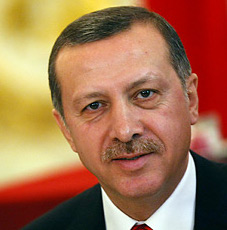
Erdogan
By Sami Moubayed* | Sabbah Report | www.sabbah.biz
After the Justice and Development Party (AKP) came to power in Ankara, many in the West referred to a new Turkish foreign policy called “neo-Ottomanism”, suggesting a revival of the intellectual, political and social influence of the Ottoman Empire, which departed the scene 92 years ago.

That policy was attributed to Prime Minister Recep Tayyip Erdogan and his advisor, now foreign minister, Ahmet Davutoglu. Quickly, however, the term “Ottomanism” began to fade, given that it was difficult to market in countries formerly controlled by the Ottoman Empire, due to continued indoctrination against Ottomanism by the Arabs over nince decades.

Some, however, continued to stand by the term, including Cuneyt Zapsu, an advisor to the Turkish prime minister, who said: “A new, positive role for Turkey in the world requires a reconciliation with its own past, the overcoming of societal taboos, and a positive new concept of Turkish identity. We are the Ottomans’ successors and should not be ashamed of this.”

read on

Be skeptical: American polling of the Arab world

From Angry Arab
“The Greenberg polls found that The Israel Project had its work cut out for it in building Israel’s image in the Arab world. Asked separate questions about their attitude toward Israel and Jews, Palestinians and Jordanians had a universally and completely negative response to both. Egyptians were only somewhat less hostile. On the other hand, a plurality of Egyptians — 46 to 36 percent — approve of their country’s diplomatic relations with Israel. In Jordan, it went the other way — 51 percent opposing those relations and 42 percent approving.” Be very skeptical about American polls in the Arab world. I talked recently to a director of polling at Gallup, and I can affirm the following reasons to be skeptical:

1) Governments are often (especially in Egypt) are notified of the polls and often provide escorts, visible or not;

2) the questions are often drafted in English and don’t translate well into Arabic (I speak about a recent unpublished poll by an American firm and the questions that they gave people in Arabic don’t make sense because of the funny translation;

3) most of them rely on face-to-face interviews and people don’t feel comfortable in expressing their views;

4) the work is often subcontracted to local firms that have political biases (Hariri funding polling firms, for example, do the polling in Lebanon);

5) when interviews are done by phone, people are obviously reluctant to give answers that conflict with the views of the government (you can compare that with a cross section of polls in the Arab world, as I have done;

6) Zogby is more reliable in its polling in the Arab world.

7) the poor are often unpolled or underpolled in the Arab world (just as in Western countries). (Some 25 % of Americans now have only cellphones and no land lines and yet polls rely on land line phone interviews).

source

Has Hollywood helped generate hatred towards the Middle East?

Sunday, 10 May 2009 22:40
Added by PT Editor Sameh A. Habeeb

holly

London, May 11, (Pal Telegraph) – Horia El Hadad looks at how American cinema has helped dehumanize a race of people through decades of false depictions of Arabs on the silver screen and asks the question: Is Hollywood making it hard for people to associate with the Arabs?

Reaching over 100 countries around the world, Hollywood is probably the largest entertainment medium of all races, ages and ethnicities.

But if the ancient Greek philosopher Plato was onto something when he said “those who tell the stories also rule society” it’s worrying that Hollywood films, with its power to entertain and more importantly influence its audience, are seen by millions around the world – especially when that medium has been found to lead to the demonization of a race of people.

READ ON

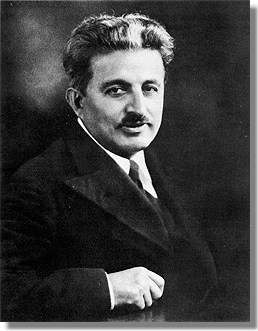
Ameen Rihani

Last picture
Last picture

* Founder of The Arab American Literature
* First Lebanese Arab to:
– Introduce free verse to modern Arabic poetry
– Write and publish a novel in English Writer And Author of:
*
– 29 volumes in English
– 26 volumes in Arabic

Biography

Born in Freike, Lebanon, on November 24, 1876, Ameen Rihani was one of six children and the oldest son of a Lebanese Maronite raw silk manufacturer, then a flourishing local industry. His father had commercial ambitions which beckoned him to America. In the summer of 1888, Ferris Rihani, the father, sent his brother and eldest son, Ameen, to the United States and followed a year later….

read on

A few quotations :

My wish is to live without disliking anyone,
To love without being jealous of anyone,
To rise without being elevated over anyone, and
To advance without stepping on anyone or becoming envious of those above me
(translated from Arabic)

THE RIHANI ESSAYS
(Ar Rihaniyat)

I am the East,
I am the corner stone
Of the first temple of God
And the first throne of Humanity…

I am the East,
I possess philosophies and creeds
So who would exchange them with me for technology

(translated from Arabic)

HYMNS OF THE VALLEYS
(Hutaf-ul Awdiya)

Like the seasons of the year, like history, truth always repeats itself…THE PATH OF VISION

….And especially to my friends, the writers, I invite you to travel with me to a land that is magical despite its poverty, to a people that is generous despite its conflicts and disagreements, and to a nation that is free and dignified despite its limitations.
(translated from Arabic)
Introduction to KINGS OF ARABIA

(Muluk-ul ‘Arab) Source

America’s Hollywood-inspired anti-Arab and anti-Muslim prejudices

As Lee Bailey noted in The National (Abu Dhabi, 16 October 2008), “Jack Shaheen, a Lebanese-American academic, has published two books documenting the representation of Muslims and Arabs in American film. One, Reel Bad Arabs, dealt with the period before 11 September, and the second, Guilty, considered films made after the attacks.”

Bailey added, “…Of approximately 1,000 films that depicted Muslims and Arabs before 2001, [Shaheen] estimated that only 65 portrayed them in a positive or even-handed manner…” In other words, Americans have been brainwashed by anti-Arab propaganda for decades. More than 9/10ths of Hollywood’s productions involving Arabs have made them ugly in the minds of viewers.

On 11 October 2008, James Zogby was reported as saying,

“We are disturbed by the degree to which ‘Arab’ has become the metaphorical mud to sling against your opponent. This week, for example, the Republican Jewish Coalition released a document in which they use the term pro-Arab as a pejorative accusation. For his part, Rush Limbaugh has joined in by declaring that Obama is in fact an Arab American. Then, on Friday, after a supporter called Senator Barack Obama ‘an Arab’, Senator John McCain came to the defence of his political opponent by saying, ‘No, ma’am. He’s a decent family man and citizen…’ From this we are left to infer that an Arab man is less than a decent family man.”

Zogby’s right. It was the first thing that came to mind when I saw McCain remove the mike from the woman. However, Zogby missed my next thought: if McCain was the honourable maverick he claims to be, he would have said to the woman: “He doesn’t have an Arab heritage but so what if he had?”

But then McCain was brought up on more than half a century of Hollywood’s vilification of Arabs, so the images of “rag heads”, jihadists, Islamic extremists, terrorists and womanizing sheikhs has been implanted as deep in his mind as in 250 million or more other mentally programmed Americans. Jack Shaheen’s Reel Bad Arabs: How Hollywood Vilifies a People and Guilty: Hollywood’s verdict on Arabs after 9/11 should be required reading in the schools.

Read on

Blog at WordPress.com.

Up ↑