Posted: 28 Nov 2013 08:32 AM PST

Iranians welcoming the Geneva delegation back home, Serat News, Nov. 25
According to Sheera Frenkel, Israeli officials were made aware by Saudi Arabia of the backdoor talks between the US and Iran detailed in depth by Laura Rozen at Al Monitor this past weekend, which culminated in the interim Geneva agreement. In brief, the deal will see Iran recoup some US$7-8 billion in sanctions relief through 2014 if, in exchange, Tehran does not enrich any more uranium over 5%, allows for new IAEA site inspections, and downgrads its remaining enriched-to-20% uranium stockpile. Some outstanding issues, like the Arak heavy water reactor under construction and Iran’s “right to enrich,” remain to be discussed in talks down the road. Saudi Arabia would not have been a venue for these talks, of course – nor would its closest GCC associate, Bahrain, given the Al Khalifas’ mistrust of the Islamic Republic – but other Gulf states were. Namely Oman — which the US uses as a third party to approach untouchables like the Taliban and the Islamic Republic — and perhaps the UAE as well (unlike its Saudi neighbors, the Emirati Cabinet very quickly welcomed the interim accord). News of the meeting went from these states to Riyadh and then probably got to Tel Aviv, obviously infuriating the Israelis because they were not told up front about the talks.
So, if the Israelis did know weeks in advance, that makes Netanyahu’s intransigence this past Fall more explainable. Appraised of the progress being made in the talks outside normal channels, he was nonetheless unable to make public Israel’s foreknowledge of the deliberations. He is not so reckless as to think he could get away with letting the cat out the bag like that; doing so really would cause significant damage to US-Israeli relations. He had few options to confront a process leading to a deal he opposed because it did not dismantle all Iranian nuclear capabilities. He and his supporters leaned on the most receptive audiences they had: the US Congress, the French Foreign Ministry, and the Sunday talk show circuit, making the case that no deal would be better than a “bad deal”.
Some officials gave Yedioth Ahronoth and Channel 10 details of US-Iran meetings that showed the backdoor to Iran was in place for at least a year. These reports, however, did not affect the pace of the negotiations or public opinion. Netanyahu now has to worry a lot more about the home front, where he faces members of the security establishment expressing support for the deal, politicians outside his coalition criticizing his criticism of Obama, and his reappointed Foreign Minister, Avigdor Lieberman, breathing down his neck. Even the Israeli stock exchange seems to be weighing in against him: its ongoing rally, which began days before Sunday, was not adversely impacted by the deal.
More importantly, though, is what this episode says about the response of certain American allies to the interim deal. The Saudis are unhappy, and Netanyahu even more so. But their leverage going forward is limited, even though it would not take much to trip up the agreement if Iran is found to be in non-compliance. The Obama Administration has thrown its entire political capital behind the deal, which will be very hard, even for AIPAC and Democratic hawks, to handle. There is very little the Saudis can do after already protesting the US handling of the Syria crisis with their refusal of a UN seat and their minister-princes’ complaints in The Times, Bloomberg, and The Wall Street Journal. As an al Quds al Arabi editorial put it, “[i]n order to reach this agreement, Iran has played the many cards it has been working to prepare for decades, and also the cards it has acquired from the mistakes of the United States and its European allies after the occupation of Afghanistan and Iraq, and from the accumulation of the mistakes of the Arab regimes, which do not have a single balancing pillar that presents a real strategy for confronting the real danger surrounding the Arab region.”
But worst of all from Netanyahu’s perspective, is that in offering sanctions amelioration, Iran seems to gain legitimacy in international affairs (for Saudi Arabia, this fear is also felt, and directly connected to the outcome of the Syrian civil war). This deal is a stopgap measure meant to halt Iranian activities while negotiations continue, so it is not an economic godsend. Chip away at the sanctions regime, and Iran’s economy could start to see results, which is especially important for the leadership if this deal leads to a lasting agreement. But it is the prospective dilution of these sanctions (not their financial bottom-line) that deeply disturbs Netanyahu, whether you believe he is serious about it being 1938 all over again or not, because it raises the possibility that Europe and the US will defer less and less to his demands to keep Iran diplomatically and economically isolated.
The public mood in Iran is mixed between caution and acclaim. The returning negotiating team was feted, and did not seem to draw the sort of hecklers who came out to greet President Rouhani when he returned from the UN. As Golnaz Esfandiari reports, crowds waiting for Iranian Foreign Minister Zarif in Tehran chanted “Kayhan, Israel, Condolences, Condolences” (Kayhan is a hardline newspaper, which like other conservative outlets close to the Supreme Leader emphasized the “flexibility” aspect of the interim deal, downplaying Iran’s concessions – in part because the deal is vague on recognizing the “natural rights” of Iranian nuclear work – and the impact of the sanctions thus far). But overall, the reception in the media was positive and the deal is a loss for the ultraconservative arm of the Islamic Republic’s leadership, which would like to pretend the Revolution is still ongoing. By agreeing to the terms of the deal, Iran is electing to participate in the international system on that system’s terms (unlike fellow nuclear pariah North Korea). And if economic relief can develop further, even more Iranians, perhaps, may begin to wake up to the fact that the sanctions have been exploited inside Iran to greatly enrich not just certain businessmen and politicians, but the twin pillars of the state itself: the Supreme Leader’s office, and the Revolutionary Guards.
His next feature film, The Great Budapest Hotel, which comes out in March, takes place in its titular location. His new short film Castello Cavalcanti [seen above], too, takes place in its titular location, a hamlet tucked away somewhere undisclosed in Italy. Then again, hasn’t Anderson, aesthetically and referentially speaking, always enjoyed something of a European period? (Maybe we can call it European by way of his native Texas, which, for me, only adds to the visual interest.) This, combined with his apparent fascination with the objects and built environment of the early- to late-middle twentieth century, has won him a great many fans sympathetic to his sensibilities. (Along with, of course, a handful of detractors less sympathetic to them.) This brief but vibrant new piece should, for them, resonate on several levels at once.
Forrest Wickman has more on Castello Cavalcanti:
Starring Anderson favorite Jason Schwartzman, an American who crashes into a piece of his own past, the short is—like so many Wes Anderson ads—also an opportunity for Anderson to pay tribute to his cinematic ancestors.
Specifically, Castello Cavalcanti seems to be full of nods to the work of Federico Fellini. (Another director, by the way, who made commercials.) In The Wes Anderson Collection, Anderson cites Fellini as an influence for his work in caricature. Here, the caricatures are all over town, but the Christ statue in the center seems to have been air-lifted from La Dolce Vita, alongside the motorcycle-riding paparazzo, and the car race itself seems to be an homage to the car race in Fellini’s Amarcord. And it’s not just Fellini: The title character seems to be named after Brazilian-born director Alberto Cavalcanti, of whom Anderson is a fan.
Kristie Puchko isn’t bothered that Anderson made the film for Prada, remarking, “True to Anderson’s style, the colors are vivid, the dialogue is sharp, and the performances are brightly dynamic.” Peter Weber compares the Prada connection to Chipotle’s artsy, anti-factory farming “stealth ad” that went viral in September:
My bet is that, as explicitly stated by Chipotle, Prada is trying to reach a generation of young consumers who don’t necessarily sit through commercials on TV. And if you’re not going to shell out for a high-dollar spot during, say, the Super Bowl, you have a lot more money available to pay top directors and actors to make interesting, 8-minute films that people will go out of their way to watch. Isn’t that more fun?
Previous Dish on Anderson here, here, and here.
from here :
BBC Horizon programme on the Permian Mass Extinction
Could not help thinking of situation in Syria


TIME:
As always, TIME’s editors will choose the Person of the Year, but that doesn’t mean readers shouldn’t have their say. Cast your vote for the person you think most influenced the news this year for better or worse – in both a straight yes/no poll and a candidate face-off. Voting closes at 11:59 p.m. on Dec. 4, and the combined winner of our reader polls will be announced on Dec. 6. TIME’s Person of the Year will be announced Dec. 11.
Screenshots @ 1AM EST, 11/26

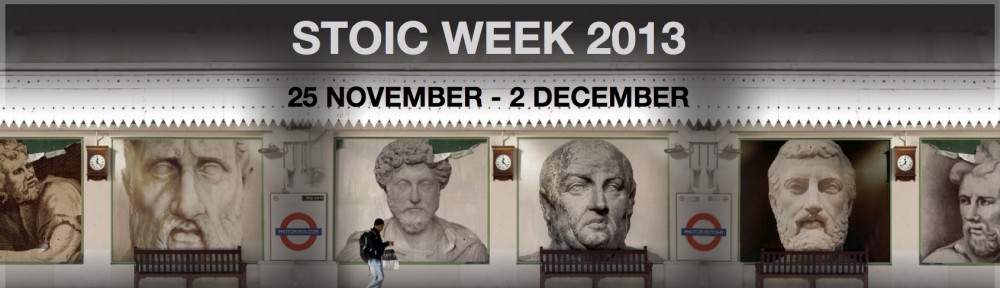
NB: It’s essential you complete ALL the correct questionnaires before and after Stoic Week – see below!

Please try to read it this weekend and prepare yourself for Stoic Week!
Registration: Before midnight (wherever you are) on Monday the 25th, please complete all the following pre-study questionnaires before reading the Handbook (doing so really helps us to gather an evidence base for how effective Stoicism might be):
- The Flourishing Scale
- Satisfaction with Life Scale
- SPANE Scale
- Stoic Attitudes and Behaviour Scale (SABS)
Please use your email address or you can also adopt a pseudonym (which can be virtually anything, though not something which someone else might also use, eg. ‘Seneca’), when filling out this questionnaires. The email address is preferable so that we can get in touch in a few months time to ask about the long-term effect of Stoic practices.
During the week: Read the Stoic Week 2013 Handbook, follow the daily exercises, and explore the suggested key Stoic theme each day.
To support your practice of Stoicism, please also use the following audio-visual resources, which are referenced in different parts of the Handbook.
- Video: Early-Morning Meditation
- Form: Stoic Self-Monitoring Form
- Video: The Stoic Handbook of Epictetus
- Audio: Stoic Mindfulness and Premeditation Exercise
- Audio: The View from Above Exercise
There will also be articles uploaded daily to read on the blog during the week about different ways Stoicism is still used today, as well as the Stoicism Today magazine 2013 (released soon) for extra-reading.
You might also consider blogging about the week and make video diaries (and let @Stoic Week know on twitter), writing in with an idea for a guest piece on the Stoicism Today blog, and posting each day your reflections on this blog about how that day’s practices are going for you. Basically get in touch and we will share what you are doing!
After the week: At the end of the week, please fill out the same surveys, with the same email or pseudonym. Please use these links for the post-study questionnaires:
- The Flourishing Scale
- Satisfaction with Life Scale
- SPANE Scale
- Stoic Attitudes and Behaviour Scale (SABS)
- Additional overall feedback survey on Stoic Week
The statistical analysis of Stoic Week 2013 will be published early in the New Year. We will contact participants who have provided their email address a few months after Stoic Week to ask about the long-term impact.

More about Stoic Week…
Live Like A Stoic Week is happening for the second year. It will be taking place from November 25 to December 1. Everyone who is interested in Stoicism, or who practices it today, is encouraged to take part, get involved in an event or activity, and help spread the word.
Last year, Stoic Week attracted participants in schools, universities and philosophy clubs around the world, and generated articles in the Guardian, Independent, The Philosopher’s Magazine and the Huffington Post. We want to make this year’s Stoic Week even bigger.
How you can get involved:
We’d love it if, once again, Stoic Week events take place all over the world. This could be as simple as organizing a discussion on Stoicism in your local cafe or pub. It could mean local clubs, schools or philosophy departments organizing a debate on a Stoic question or theme, such as ‘can philosophy be a form of therapy?’ or ‘is virtue sufficient for happiness?’ If you’re a teacher or a lecturer, you might get your class to discuss Stoicism and to consider some of the Stoics’ practical techniques for changing our emotions.
We’re organizing a public event in London on Saturday November 30, ‘Stoicism for Everyday Life’. You can find more details here on the event’s website, and book. Places are filling up quickly, so book early so as to avoid disappointment.
It would be great if any bloggers interested in Stoicism used the week as an opportunity to share their own experience of Stoicism. Has it helped you? Do you think it has relevance in modern life? Which ideas or exercises have you found particularly helpful? Write a blog post or make a YouTube video, and be sure to mention Stoic Week and to help spread the word. Send Patrick Ussher or another project member the link, and we’ll share it with our followers.
You can also get involved in our annual study of the practical effects of Stoic techniques and ethics. This year, the handbook will be constructed as a ‘Journey into Stoicism’, which each day focusing on a key Stoic idea and exercises to go with it. If taking part, fill in the Stoic questionnaire we provide, and send it back to us. You might also want to share your experience more informally via a blog or YouTube video.
To read about the team behind Stoicism Today, click here.
Philip Weiss on October 14, 2013 166
Last month, I went to the Ben Yehuda pedestrian mall in West Jerusalem to interview Israelis, and spent half an hour sitting with three teenagers. After a few minutes, they allowed me to turn on my video camera. Max Blumenthal was with me, and I believe the exchange bears out the themes of Blumenthal’s new book, Goliath: that building and sustaining a Jewish state in defiance of most of the indigenous population has endowed young Israelis with fiercely militant, Jewish-supremacist ideas.
Specifically, the teenagers say that young Jews should not date Palestinians and that Palestinians should not have representation in the Knesset, because these inclusions undermine the Jewish character of the state. And the Jewish people need Israel to survive.
“We know that we can’t be Jewish anywhere else,” says one.
And all this as a guitarist picks out rock tunes in the background, including Tom Petty’s Free Falling.
The three teenagers are religious nationalists, but they say their attitudes are widely shared; and polls have indicated that 50 percent or more of Israelis have similar attitudes toward Palestinians.
The forceful young man on the right who is going into the army soon is named Matanya. He’s 19. The girl on the left in the Justin Bieber tshirt is Shiran, 18. The girl in the middle is 17, and named Shoham.
As the video is very long, I’m supplying a partial transcript below.
Matanya begins by explaining why it is necessary to act in Syria, and why the old are reluctant to do so. “Younger people have fire in their eyes” and are willing to die for their “ideals.” Matanya says he is willing to serve in Syria, whatever the risk.
“We have to do something. Something serious.”
The three agree that Arabs are not ready for democracy. “They don’t have the mentality for democracy like we do,” Matanya says. All humanity is moving toward democracy, but Arab political culture is particularly resistant to it.
Shiran says that she can relate to the uprisings of the Arab Spring. “The Jews always had pain in their history so you can understand being oppressed.”
I ask Matanya about the American belief that the occupation is the problem.
“I say that’s nonsense… I know they say that. It’s not true, because 40 years ago when we had the borders of ’67, still the Arabs want to kill us and want us not to be here anymore…They don’t want us here period.”
Is there an occupation? Max asks.
“In my opinion, No. because we were here before the Arabs.”
Shiran adds that Arabs and Jews could have coexisted but Arabs chose not to, beginning in 1948. “They could have a state right next to us. They didn’t want it from the start. Now the [Israeli] people don’t want it either because of the way they treated the Jews in the last few years.”
Matanya explains that Islam doesn’t permit a Jewish state. “If they want peace, of course we will give them peace. Our religion is all for it… [Judaism] says specifically that we should treat nicely the people who are not from our people. [i.e., the stranger]”
I ask the young people my favorite question of young Jews: Isn’t it better that Israel cease to be a Jewish state than that one more young person die for it to be such a thing? “Am I wrong to say that?”
Shiran says a binational state is a utopian idea. “It’s possible but it can’t be, because the Arab don’t want it.” And neither do the Jews. “The Jews need a place to be where they are not oppressed, a place where they can be Jewish.”
Matanya is more authoritative.
“This country has to stay Jewish for a few reasons. First of all, we saw what happens when there is no Jewish country. I am sure about it, if there’s not a Jewish country, there will be another Holocaust…. Our religion is true, I believe in all my heart that it’s true. This nation has been existing for the longest time in history. I think there’s something true about our religion. You see that something real is happening here.
“We know that we can’t be Jewish anywhere else. We know that Jewish people are forgetting their resource and wherever they come from in other countries, and we know there’s going to be another Holocaust if we’re not here.”
I ask if his attitude is representative. He says, “Most of the older people think exactly like me. That’s why they stay here and they want the country to stay Jewish.”
I say that during the civil rights movement, black and white people sometimes fell in love with one another, and in some parts of the country, that was considered bad. How do they look on love across religious/racial lines?
“We’re religious so religious people are not allowed to do it,” Shoham says.
Shiran says it’s not just religious people. “In girls’ schools, they tell you, teach you about how– I’m not saying that all the Palestinians are bad… they tell you how dangerous it can be.”
Shoham explains the danger. “It’s a different culture. They live in different places.” And sometimes when Israeli women marry Palestinians, they move to their villages. “It’s a different way of living And Israelis people are not used to it.”
“Oppressive,” Shiran says.
“Primitive,” Matanya says. “They treat women very primitively. I would not want… a girl I know to marry some Palestinian guy. Not because he’s bad. But because of the way they treat….”
I ask how much they would do to stop such a pairing.
Shiran: “I would try very hard to stop it.… I’m not saying that they all live that way but still– you’re Jewish, you shouldn’t marry a non-Jew… even if [that person is] a very good person, you don’t know what their family would think, friends would think. Also because You should try and raise your kids Jewish. Not religious– Jewish.”
Max then asks if their schools warn them about these dangers.
Shiran: “Yeah they do. Because it’s very important… Not in a way that Arabs are bad. They don’t wash your brain.”
Shoham clarifies, “They’re talking about family and it’s like– they warn you about not marrying an abusive husband. So it’s like they’re also talking about not marrying a non-Jewish man.”
Matanya ties this into ideas of nationality. “We know that we’re not responsible only for ourselves, but for our whole country and also for the Jewish people. So any action you take you have to think about that.”
I say, I know lots of Jews in the U.S. and half of my friends are married to non-Jews. Is that what Matanya means when he sees Jews falling away?
“Yes. I think that’s the way that the Jewish vanish. If all the Jews will do that, there won’t be Jewish people anymore, and we want to keep the Jewish people running for a lot more generations.”
Near the end now, and I ask about tribal beliefs that Jews are smarter. The teenagers don’t buy this. But they do say that Israelis have more get-up-and-go.
Matanya says, “We push harder, we go further, we’re not afraid. You don’t see it in a lot of places in the world. In the US you live very calmly, you don’t have a lot of pressure. Not like here. Here you have life and death situations. In every area of living, from high tech to army…. We come to a place where no one ever succeeded in doing anything with those lands, and we made them great lands with a lot of crops.”
Shiran: “We work harder, we don’t give up.”
Max says, “How come the Jews aren’t smart enough to get out of this situation of endless war?”
I don’t think the answers make a lot of sense, though Matanya emphasizes, “We don’t come to kill. We come to save life, not to take life. We have no intention of taking anyone’s life.”
I say that these young people seem to want to renew the Zionist dream, and Matanya agrees.
Then I ask about strong leaders.
Matanya says, “I’m not sure we have a lot of them now. But I’m sure there’s going to come new blood.”
Shiran says that the leaders have been “letting us down.” She seems to mean in the economy.
Max asks if Ariel Sharon was strong.
Shiran says, “We don’t like him.”
Matanya: “He did a lot of very good things for the Israeli people. He gave his whole life for our security. But at the end of his life he made a big mistake, a very big mistake.” He refers to the removal of settlers from Gaza in 2005.
“So, no further pullouts of settlers?” Max asks.
“For sure. Ever,” Matanya says.
I then ask Matanya about visiting him in the Knesset 50 years from now, and will there be peace?
“I pray with all my heart that there will be peace, but anyway we’ll keep going.” He says that Arabs will be free to live here peacefully, with liberty and have the best life they can have, better than in neighboring Arab countries.
“But in my opinion they should not have political figures in our Knesset.
“In other words, they should not have Arab members in the Knesset?” Max says.
“Ideally, yeah. We will. For sure, the Jewish people will take care of the Arabs, they will get what they have to get, the food, the liberty, they can work wherever they want, but if we want to keep our country Jewish and Israeli and in peace, we have to take control of what is happening.”
Shiran: “The way they treat us is exactly the way their leaders treat them. Something has to be done.”
Max. “So Haneen Zoabi has to get out of the Knesset.”
Matanya: “No doubt. She has to get out. She is a representative of the Israeli nation, and she goes on the Marmara, that was completely against the country, it was a betrayal…. I think the only way there will be peace is if she won’t be there, and we’ll be there.”
But what rights will Palestinians have? I ask. And must they leave?
Matanya says, they can stay where they live. “We’re not going to take the lands.. but we’re not going to give any of our lands and we will expend what we can expend because it’s our country.” Arabs have the right to live here, but the refugees cannot return. “That won’t happen. But they can stay on the land, we will have control of the country, and they can live here peacefully, and happily, with all the rights.”

