English Speakers to Help The Syrian Revolution
Sooo sorry… citizen journalist Anas Tarsha was martyred today by a shell of Assadi army ..Rest in Peace. His last video.. the demonstration at the Stadium in Homs….Missed… remembered….so many lost now….and for every single one of them, another arises in their place….which would always be their last wish….God bless Anas
This is usually how some of my conversations with anti-imperialists go:
Me: Assad is not fit to rule Syria, he must leave after what he’s done.
Them: But can’t you see that there is a conspiracy against Syria?
Me: Yes.
Them: Don’t you know that if Assad goes then that will be exactly what they have wanted?
Me: Yes.
Them: So why are you against Assad?
Me: Because Assad is murdering his own people and that is wrong.
[End of discussion]
Source : Maysaloon
when there is no power, internet, or phones
Information
Press and humanitarian aid (red cross) are not being allowed into Syria.
Blackouts of power and all phone service is making it nearly impossible for live reports to get out from inside Syria.
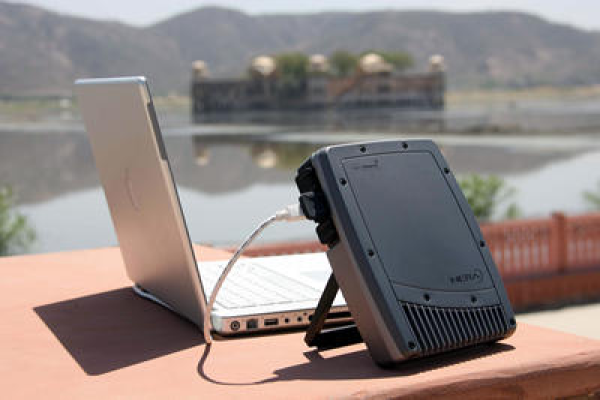
a BGAN terminal is a device that allows a camera or computer to communicate with a satellite network regardless of the situation with cell or power. They are expensive, but the communication ability when in a blackout is PRICELESS.
1500 dollars down to rent one and $8.00 per megabyte transferred. So we are going to need to raise 2,000 to get started and 10,000 to ensure we can broadcast without interruption.
Lets crowdfund this thing like crazy, if 1000 people give 10 dollars, we are set! Lets keep the information flowing when the internet gets turned off.
thank you for the support and please remember to check your email for donation confirmation and say OK or it wont go through.


Syria’s President Bashar al-Assad speaks at Damascus university

Dear President Bashar al Assad
I want to take this opportunity to thank you for all the good you are doing for Syria and the rest of the world, in spite of incredible odds.
As you know, we in the West don’t like Muslims. So thank you for killing so much of them in the past several months.
Thank you particularly for eliminating that little two year old boy, whose death was reported by journalist Marie Colvin on Tuesday, in one of her last reports.
And special thanks for putting an end to that interfering western woman’s reporting. No one will miss her silly, sentimental, female reportage.
“His little tummy just kept heaving until he died”, she reported of a two year old boy, supposedly killed by a shrapnel wound to his chest.
What on earth was she thinking of? Who in the West cares about that?
Who in the West is going to miss some little Muslim brat?
He would probably have grown up to be a terrorist anyway, right?
Just another trouble-maker like the ones whose lying terrorist lives you are now so admirably “snuffing out”.
Everybody knows you are the lawful and rightful leader of Syria: just like Iran’s Mahmoud Ahmadinejad.
All right thinking people know that you are a true servant of Allah, doing his will in the world.
I thank God for your Russian and Chinese friends, who defend your divine appointment.
And I thank Dmitri Medvedev and Vladimir Putin for ensuring tat you have the weapons you need to fight those nasty insurgents.
Nothing like Russian mortars for accuracy, eh?
Keep fighting the good fight. Keep up the good work!
Junior Campbell is based in London, England, United Kingdom, and is an Anchor for Allvoices.
by Amal Hanano
”] The Syrian revolution undeniably belongs to the street. It’s rooted in the public realm where masses of physical bodies occupy the squares and real voices fill the air with defiance against the brutality of a relentless regime. The virtual realm of the revolution is a strong, second line of defense. Communities of online activists in Syria tirelessly spread the voices and events from the street as far and wide as possible, while the activists outside Syria continue the ripple effect, transferring what is happening inside Syria across the world.

Marie would not want any tribute to leave out mention of the people she met, the stories she heard. She often spoke of how humbled she was by the “quiet bravery of civilians”.
We’ve come to expect that wherever something of consequence was happening, Marie would be there. Her signature was not just to go to a story, but to stay for as long as she could, regardless of the danger or discomfort.
She admired the pioneering journalism of fellow American Martha Gelhorn. I always saw her as the Martha of our generation: brave and beautiful. A woman with a wicked laugh, a sensitive soul, and a steely determination to tell the stories that mattered. She had both guts and glamour.
I remember a conversation long ago where she told me a partner wanted her to be what she called a “Laura Ashley” – pretty and perfect in the home. But that wasn’t Marie and she knew it. She was, without exception, a kind and considerate colleague and fellow traveller, a woman who inspired and engaged.
Charlotte McDonald-Gibson in Damascus talks to an activist who survived 21 weeks’ interrogation by Syria’s security forces

- It was a single egg that made Jolan, a 28-year-old activist, realise he was going to survive Syria’s notorious torture chambers. He was blindfolded and locked in what he describes as a metal coffin, and each morning his tormentors would push a small piece of bread and a hard-boiled egg through a narrow opening by his head. But his cramped box – so short he could not straighten his legs – was tilted and his hands were bound, so for five days the egg would simply roll away and drop to the floor through a hole by his feet.
Days earlier, Jolan had been sitting in a park in Damascus on a sunny morning, waiting for a friend from the burgeoning protest movement aimed at forcing President Bashar al-Assad from power. Instead, about 30 regime security personnel surrounded him. Before he could even think about fleeing, a rifle butt to the back of the head knocked him out cold.
Trussed and forced to relieve himself where he lay, Jolan did not know how long he would be there. He did not know how he could survive. But he knew that somehow he must eat the egg. “So the fifth day,” he says, “I put my heel in this hole and I stopped the egg rolling out. I managed to push the egg all the way up my body to my mouth. It was filthy, it still had the shell on it, but I ate it and, when I did, I knew I was going to live.”
Jolan, who gave a pseudonym because he remains active in Syria’s protest movement, is one of thousands of political prisoners who human rights groups say have been thrown in jail by a regime determined to use its full force to crush the biggest threat to its rule since the Assad family took power 41 years ago.
From a secret location in Damascus, Jolan gave a detailed testimony to The Independent on Sunday of his torture during 21 weeks in detention. Although his full account is impossible to corroborate independently, Human Rights Watch, the international watchdog, confirmed that many of the torture techniques he described are commonplace. Many Syrian rights groups have also documented Jolan’s time in detention.
The regime has denied the allegations of torture in its prisons. Its spokesmen say they are fighting an armed uprising sponsored by Islamist groups. But Human Rights Watch has interviewed more than 100 people detained since the protests began in March last year, and the group has collected harrowing testimony of torture against children as young as 13 and of deaths in custody.
For Jolan, his seven days in the metal box was the first of dozens of humiliations and torments. Next, still blindfolded, he was put in a tiny room just one metre high, where he was forced to stand, bent double, for another seven days. Then his captors finally started to interrogate him.
“For eight hours a day they asked me everything about co-ordination, about the people of the revolution. They wanted to know how they worked, how they take the injured from place to place,” he says.
Jolan refused to talk, causing the torment to become even more cruel. He was given 50 lashes with a metal cable in the morning and 50 in the evening. He was then subjected to what Nadim Houry of Human Rights Watch describes as the “dulab” method. A tyre is forced over the victim’s neck and his legs so he is folded forward. He is then tipped on his back, immobile, and beaten. Another day, Jolan says, he was suspended from the ceiling by a cable. On his 45th day in detention, they finally took the blindfold off. But Jolan was not prepared for the sight that greeted him. “When I opened my eyes, I could see two girls who were taken from the demonstrations. They were religious girls – usually they would wear the veil – but they were totally naked: the only item they were wearing was a blindfold,” he says. “From this moment, I started crying.”
With this image etched on his mind, he was taken back to the interrogation room and told that unless he talked, his mother and sister would be hauled in, also stripped naked and tortured in front of him. The UN report details similar “psychological torture, including sexual threats against them and their families”.
But still Jolan refused to talk. Exasperated, his captors transferred him to the Adra civilian prison in Damascus, where he was kept in filthy, cramped surroundings. Over the next few months he was called before a court to answer a litany of charges, including attacking the standing of the state, encouraging problems with minorities, going to a protest without a permit, and setting up an unlicensed field hospital. He was allowed a lawyer, but says his statements were ignored in the court. Jolan says he was saved only by pressure from some international human rights organisations. Eventually, towards the end of December, he was freed with a 1,000 Syrian pound (£11) fine.
Since then, he has continued his work, moving around by night to safe houses to collect supplies, trying to gather more crowds for the weekly demonstrations after Friday prayers. There are physical signs of his time behind bars – he is gaunt, and is missing four front teeth from the beatings. He chain smokes nervously. But he is determined to fight on. Fifteen days ago, the authorities told his uncle that Jolan must stop his activism or face “a bullet in the head”. So he switched mobile phone numbers and went underground for 10 days.
Mr Houry says: “Syria’s torture chambers belong to the Middle Ages. The security forces believe that by torturing people, including children, they will reinstate the wall of fear in Syria. But these torturers should know that their methods have only served to energise the protesters and that it is only a matter of time until they face accountability.”
Syrians flee to Jordan as violence escalates
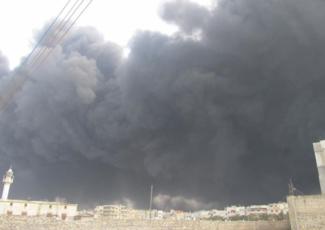
Syrian refugees fleeing to Jordan have described a dramatic escalation in violence and a mounting toll of dead and wounded in the southern city of Daraa and the country’s battered central region. Activists said 26 civilians were killed on Friday, many of them in the central city of Homs.
The fighting in Homs, coupled with fresh violence in Daraa, has triggered a new wave of wounded refugees crossing into Jordan. In the past two days, 170 families – around 850 people – have fled to Ramtha, seven miles from the border. Most were from Daraa. At the hospital in Ramtha, newly installed gates protect hospital rooms where wounded Syrians are being treated, guarded by Jordanian security police.
Syria has seen one of the bloodiest crackdowns since the wave of Arab uprisings began more than a year ago. The United Nations says that more than 5,400 people were killed last year, and the number of dead and injured continues to rise daily. In addition, 25,000 people are estimated to have sought refuge in neighbouring countries and more than 70,000 are internally displaced.
David Cameron has said Britain is sending food rations for 20,000 people and medical supplies for those affected by fighting in Homs and elsewhere. AP

