-
Remember when the Reagan administration and others on the right insisted that everyone (from armed guerrillas to nonviolent human rights activists) resisting the brutal Salvadoran junta were simply dupes of a Soviet/Cuban conspiracy? Now some elements on the far left are claiming that everyone (violent and nonviolent) struggling against the brutal Syrian regime are simply dupes of the U.S. and Israel. Both extremists are united by this racist notion that oppressed people of color cannot think for themselves and will only resist if white foreigners tell them to.
Posted: 21 Jun 2012 10:11 AM PDT
From the essential Just Foreign Policy:
WikiLeaks founder Julian Assange has requested political asylum from Ecuador.
British courts recently rejected Assange’s appeal against extradition to Sweden. Assange has good reason to fear extradition to Sweden: many believe it likely that Sweden would extradite Assange to the United States to face charges under the Espionage Act of 1917 for his role in publishing leaked U.S. diplomatic cables, charges that could carry the death penalty. The treatment of Bradley Manning, the U.S. soldier accused of providing U.S. diplomatic cables to WikiLeaks, suggests the treatment that Assange might expect in U.S. government custody. Manning has been subjected to repeated and prolonged solitary confinement, harassment by guards, and humiliation such as being forced to strip naked and stand at attention outside his cell.
If the U.S. government succeeds in prosecuting Assange under the Espionage Act, it will likely intimidate future potential whistleblowers, making it harder to reveal important secrets about U.S. foreign policy in the future—and making it harder to reform U.S. foreign policy.
Will you join us in urging President Correa to grant Julian Assange’s request for political asylum?
Glenn Greenwald writes today in the Guardian:
If one asks current or former WikiLeaks associates what their greatest fear is, almost none cites prosecution by their own country. Most trust their own nation’s justice system to recognize that they have committed no crime. The primary fear is being turned over to the US. That is the crucial context for understanding Julian Assange’s 16-month fight to avoid extradition to Sweden, a fight that led him to seek asylum, Tuesday, in the London Embassy of Ecuador.
The evidence that the US seeks to prosecute and extradite Assange is substantial. There is no question that the Obama justice department has convened an active grand jury to investigate whether WikiLeaks violated the draconian Espionage Act of 1917. Key senators from President Obama’s party, including Senate intelligence committee chairwoman Dianne Feinstein, have publicly called for his prosecution under that statute. A leaked email from the security firm Stratfor – hardly a dispositive source, but still probative – indicated that a sealed indictment has already been obtained against him. Prominent American figures in both parties have demanded Assange’s lifelong imprisonment, called him a terrorist, and even advocated his assassination.
As Greenwald notes:
Assange’s fear of ending up in the clutches of the US is plainly rational and well-grounded. One need only look at the treatment over the last decade of foreign nationals accused of harming American national security to know that’s true; such individuals are still routinely imprisoned for lengthy periods without any charges or due process. Or consider the treatment of Bradley Manning, accused of leaking to WikiLeaks: a formal UN investigation found that his pre-trial conditions of severe solitary confinement were ‘cruel, inhuman and degrading’, and he now faces capital charges of aiding al-Qaida.
WikiLeaks has made a tremendous contribution to exposing U.S. foreign policy to public scrutiny. The importance of transparency and public information to reforming U.S. foreign policy cannot be overstated. Recently, Just Foreign Policy worked with the offices of Rep. Dennis Kucinich and Rep. John Conyers to support a letter signed by 26 Members of Congress to President Obama pressing the Administration to disclose more information about its drone strike policy, particularly concerning civilian casualties and so-called “signature strikes” that target unknown people based on (often faulty) intelligence of suspicious activity. Polls have suggested that the drone strike policy is popular in the U.S., but the popularity in the U.S. stems from ignorance: the American people don’t know what they are supporting, because the reality of the policy has been hidden from public scrutiny. That’s why it’s so important that information about U.S. foreign policy be made public.
Therefore—in addition to our concern for Assange’s individual human rights—people who are working to reform U.S. foreign policy have a big stake in what happens in the Julian Assange/WikiLeaks case. If the U.S. government succeeds in intimidating whistleblowers, it will be harder to reveal information about U.S. foreign policy in the future, and therefore it will be harder to reform U.S. foreign policy. That’s why it’s so important for President Correa—who has legitimate reason to be concerned about possible retaliation from the United States—to hear from Americans urging that he grant Julian Assange’s request for political asylum.
Please add your voice by signing our petition to President Correa here:
Thank you for all you do to help bring about a more just foreign policy,
Robert Naiman, Chelsea Mozen, Sarah Burns and Megan Iorio
Just Foreign Policy

(MaanImages/Eleonora Vio, File)
“I saw me running after people, I saw myself pointing a gun at a 3-year-old girl, I saw me and my friends cuffing people, checking people, detaining people. questioning people, arresting people. In most cases, it was for nothing.”
Yehuda Shaul, one of the founders of Breaking the Silence, says he did everything he was required to as a fighter — and later a commander — in the Israeli army.
“If the mission right now is to keep the kids out of school, then the kids won’t go to school. If the mission is to disperse a funeral because of the curfew, then the family … will not finish burying their dead relative. It will leave the corpse there and leave. And if they don’t do it, they’ll get stun grenades and gas.”
“Can you even imagine a situation of an Israeli family at a funeral and the police comes to disperse them?”
Yehuda says he talks about his service because “if we don’t talk … none of us will know what goes on there.”
He says the most memorable part of his service was watching Palestinians getting beaten up by settlers in Hebron, while under orders not to touch them.
Another soldier, Sagi, who also served in Hebron, recalls a procession of Israeli children burning an effigy of a member of the anti-settlement organization Peace Now.
“I understood that all of the things that I thought — that there are boundaries, that at the end of the day we’re on the same side — that, from my point of view, is no longer the case. And from their point of view I’m not legitimate, and if they knew my political opinions they could replace the doll with me.”
Sagi says he finds people prefer not to listen to his experiences of the army, and those that do listen think that his experience was isolated, and perhaps he was “a soldier who transgressed” and should be put on trial.
“Maybe I really should be put on trial – but if I need to be tried, as one of the humane soldiers who served in the territories, I guess we should try all Israeli soldiers,” he says.
‘We’re ruining people’s lives on a daily basis’
Yael served as a scout in Gaza, monitoring a live video feed of the Gaza border.
“We’re kneaded and molded to see something suspicious in everything we see. I look into the cameras and I don’t see a donkey, a dog or a cart. I see a vehicle that can get a charge across, a vehicle that can get weapons across … It’s always suspicious.”
She explained: “There’s no routine there, it’s not someone throwing his garbage out, it’s an explosive.”
She recalls seeing an elderly shepherd, “a grandpa, a really old man with his sheep,” too close to the fence. She reported him to the combat engineering force. “I was conditioned to see shepherds and sheep herds as intelligence scouts.”
Israeli forces fired in the air, startling the sheep, but the shepherd remained. Soldiers then shot the ground near the sheep “and they were startled again but the shepherd was determined to stay there. He didn’t want to leave, he wanted to stay there.”
The soldiers shot a sheep.
“(The shepherd) went to the sheep and tried to pick it up and it was full of blood and he tried to pick it up and take it back and they continued to shoot.”
“The sheep didn’t die but he had to leave it there and run away, they would’ve shot him and the rest of the sheep. He ran back and the sheep stayed there until it died.”
“Seeing it from the other side, it was like a video game, so detached from reality. So what if we shoot animals.
“(For the Palestinians) it’s the exact opposite … people just come and shoot your animals, your livelihood, you. And it’s fine. It’s like it’s fine.
“We’re ruining people’s lives on a daily basis.”
Yael said she was testifying because she thought “people should know what’s happening there.”
“It’s not the Israeli Defense Force defending us against horrible terrorists who want to destroy the Jewish people. They are people who live here and who have lived here when we weren’t here and they’re trying to live and we’re the stronger power. And we use that power full on, without any problem. I think people should know that.”
In other testimonies, a soldier describes an incident in which a company of soldiers, including the battalion commander, assaulted a detained Palestinian.
A soldier in an elite unit recalls an officer being ridiculed for not following an order to shoot an elderly, sick Palestinian who had gone back into his home to get his medication during an arrest raid.
The full testimonies can be viewed at www.discovertheterritories.com
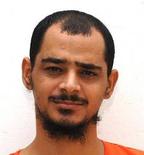 Adnan Farhan Abdul Latif, one of seven Guantánamo prisoners whose appeals were turned down this week by the Supreme Court.
By Andy Worthington
This week, the Supreme Court took a decision not to accept appeals by seven Guantánamo prisoners who, over the last few years, either had their habeas petitions denied, or had their successful petitions overturned on appeal. The ruling came the day before the 4th anniversary of Boumediene v. Bush, the 2008 case in which the Supreme Court granted the prisoners constitutionally guaranteed habeas corpus rights.
That led to a number of stunning court victories for the prisoners between 2008 and 2010, but in the last two years no prisoners have had their habeas petitions granted, because judges in the D.C. Circuit Court, a bastion of Bush-era paranoia about the “war on terror,” where the deeply Conservative Senior Judge A. Raymond Randolph holds sway, have unfairly rewritten the rules in the government’s favor, so that it is now almost impossible for a habeas petition to be granted.
This is a particularly low point in Guantánamo’s bleak history, because, with the Supreme Court’s refusal to rescue habeas corpus, and its death as a remedy for the Guantánamo prisoners, the remaining 169 men — and especially the 87 already cleared for release but still held — are now trapped, possibly forever, because all three branches of the U.S. government have failed them.
In addition to the Supreme Court, the Obama administration has failed the remaining prisoners, not only through the President’s failure to close Guantánamo within a year, as he promised, but also through his refusal, ever since, to show any interest in belatedly fulfilling his promise. Blame also lies with Congress, where lawmakers have cynically imposed onerous restrictions on the ability of the administration to release or transfer any of the remaining prisoners, with the intention of making it impossible for the administration to close the prison — and almost impossible for anyone to be released.
As Tom Wilner (attorney and “Close Guantánamo” steering committee member) noted back in January, a waiver exists in the latest legislation, the National Defense Authorization Act (NDAA), allowing the President to bypass Congress when it comes to releasing prisoners, but President Obama has not yet chosen to use it.
Last week, we secured some good coverage for our exclusive report, “Guantánamo Scandal: The 40 Prisoners Still Held But Cleared for Release At Least Five Years Ago,” with the report’s author, Andy Worthington, being interviewed on RT andDemocracy Now! to discuss not only the report, revealing the identities of 40 prisoners cleared for release between 2004 and 2007, but also the Supreme Court’s shameful abdication of its responsibilities.
Some of the coverage focused on the story of one of the men whose appeals were turned down, Adnan Farhan Abdul Latif, a Yemeni. Noticeably, he is one of the prisoners featured in our report, and in fact he had his release approved on three separate occasions before the D.C. Circuit Court intervened to trap him at Guantánamo, possibly for the rest of his life.
Latif was cleared by a military review board under President Bush in December 2006, by the interagency Guantánamo Review Task Force established by President Obama in 2009, and by Judge Anthony Kennedy Jr., of the District Court in Washington D.C., who granted his habeas corpus petition in July 2010.
When the D.C. Circuit Court intervened to prevent his release,overturning his successful habeas petition in November last year, two of the three judges ordered that “a presumption of regularity” should be given to an intelligence report that was central to the government’s case against Latif, who has always maintained that he traveled to Pakistan to secure treatment for a head injury sustained in a car crash in Yemen, and was then advised to seek help in Afghanistan.
In a dissenting opinion, the third judge, David Tatel, took exception to his colleagues’s demands, noting that an intelligence report was “produced in the fog of war, by a clandestine method that we know almost nothing about,” and could not, therefore, be regarded as necessarily reliable. He also — unlike the Supreme Court — noted that it was “hard to see what is left of the Supreme Court’s command” that the habeas review process be “meaningful,” in light of his colleagues’ ruling, and warned that, in future, if the ruling stood, it would be impossible for any prisoner to have their habeas petition granted.
In reflecting on this dreadful state of affairs, it is impossible not to notice the gulf between the courage of Judge Tatel compared to the justices of the Supreme Court, who refused — unanimously, but without elaboration — to accept Latif’s appeal, even though Latif had a compelling case, in which, as Lyle Denniston noted for SCOTUSblog, he challenged “the presumption of accuracy of US intelligence reports,” challenged the Circuit Court’s “power to find facts on its own,” and also challenged the Circuit Court’s “refusal to uphold any release order.”
In considering Latif’s case, it occurred to me that the other six prisoners had also, to varying degrees, been failed disgracefully by the Supreme Court — and, in some cases at least, by the Obama administration, which had proceeded with cases through the Justice Department, even when there were sometimes clear reasons for officials not to do so.

Latif’s case — with his repeated history of being cleared — was one example, but another was that of Hussein Almerfedi, another Yemeni, who, as noted in the “Guantánamo Scandal” report, was approved for transfer, probably in 2008, by an unidentified “Designated Civilian Official,” and then had his habeas petition granted by Judge Paul Friedman in July 2010, only for that ruling to be reversed on appeal in July 2011.
Almerfedi, seized in Iran, and held in secret prisons in Afghanistan before his transfer to Guantánamo, had challenged the government’s detention authority if, as he claimed in his case, it was “based on non-incriminating facts.” He, like Latif, also challenged the Circuit Court’s “refusal to uphold any release order,” as well as asking about the validity of a detainee being required to “rebut government evidence found to be credible,” when he had — and has — no means of doing so.

The point about the inability to refute evidence, as with Latif’s challenge to the requirement that the government’s evidence should be automatically regarded as accurate, found an echo in a challenge by a third prisoner, Fayiz al-Kandari, a Kuwaiti who lost his habeas petition in September 2010, after the Circuit Court rewrote the rules. Al-Kandari has always insisted that he traveled to Afghanistan to provide humanitarian aid, and the case against him is desperately weak, as it relies almost entirely on statements made by unreliable witnesses. However, the Circuit Court’s rewriting of the rules trapped al-Kandari, who, as a result, was calling on the Supreme Court to to allow him the right to restrict the government’s use of hearsay evidence.
Despite the lack of evidence against him, al-Kandari has never been cleared for release — either by military officials, or by a judge — but another of the seven, Uthman Abdul Rahman Mohammed Uthman, another Yemeni, had. Uthman’s habeas corpus petition was granted in February 2010, but the government appealed, and his successful opinion was reversed on appeal in March 2011. He took a different approach, challenging the government’s right to detain someone who, as he claimed in his case, “did not actually fight against U.S. or allied forces and provided no direct support to terrorists.” He also claimed that it was a “violation of the habeas Suspension Clause if habeas review is not meaningful.”
These, too, were valid points, which, like all the others, were turned down by the Supreme Court without explanation.
The last three men had less reason for hoping that the Supreme Court would look favorably on their cases, as they all had their habeas petitions denied by the District Court for low-level or peripheral involvement with the Taliban, and it is apparently outside anyone’s remit to ask why it is that the justification for all the prisoners’ detention — the Authorization for Use of Military Force, passed by Congress the week after the 9/11 attacks — fails to distinguish between those allegedly involved with the international terrorist activities of al-Qaeda, and those involved with the Taliban’s military conflict with the Northern Alliance, which had nothing to do with terrorism, and predated the 9/11 attacks.

Of these men, Musa’ab al-Madhwani, one of six men seized in house raids in Pakistan in September 2002, who lost his habeas petition in December 2009, when Judge Thomas Hogan made a point of stating that he did not consider him to be a threat to the U.S., challenged his detention “based on ‘guilt by association’ with suspected terrorists,” which was “based on visits to guesthouses and training facilities,” as SCOTUSblog described it, and also called for a “right to constitutional due process protection.”
Muaz al-Alawi (described as al-Alwi), who lost his habeas petition in January 2009 for being a lowly Talban foot soldier, challenged his detention “based on ties to the Taliban after hostilities had ended,” and also claimed there was “inadequate time” for his attorney to prepare a defense.
The last of the seven, Tawfiq al-Bihani, who lost his habeas petition in October 2010 — also for being a lowly Taliban foot soldier, seized in Iran, like Hussein Almerfedi, and also held in secret prisons in Afghanistan before his transfer to Guantánamo — sought “a basic definition of detention power, limited by the laws of war,” but like all the other claims, it was apparently regarded as irrelevant by the Supreme Court.
I hope this provides some additional context for the Supreme Court’s decision, on Monday, to accept that Judge Randolph and his colleagues are now in charge of the legal legacy of George W. Bush’s “war on terror” detainee policy. If you wish to know more, SCOTUSblog has links to all the court submissions, by both the prisoners and the government.
From our point of view, here at “Close Guantánamo,” it only confirms our resolve to keep pushing for the closure of Guantánamo, and the release of the 87 men held hostage for political reasons, and we will be working hard to build our campaign in preparation for putting pressure on whoever will be inaugurated as the next President of the United States in January 2013. If you haven’t already signed up, please do so here (just an email address required), and please also ask your friends and family to join up as well. It is time to bring this monstrous miscarriage of justice to an end.
Andy Worthington is the author of The Guantánamo Files: The Stories of the 774 Detainees in America’s Illegal Prison (published by Pluto Press, distributed by Macmillan in the US, and available from Amazon — click on the following for the US and the UK) and of two other books: Stonehenge: Celebration and Subversion and The Battle of the Beanfield. To receive new articles in your inbox, please subscribe to my RSS feed (and I can also be found on Facebook, Twitter, Digg and YouTube). Also see my definitive Guantánamo prisoner list, updated in April 2012, “The Complete Guantánamo Files,” a 70-part, million-word series drawing on files released by WikiLeaks in April 2011, and details about the documentary film, “Outside the Law: Stories from Guantánamo” (co-directed by Polly Nash and Andy Worthington, and available on DVD here — or here for the US). Also see my definitive Guantánamo habeas list and the chronological list of all my articles, and please also consider joining the new “Close Guantánamo campaign,” and, if you appreciate my work, feel free to make a donation.
By Christoph Reuter


Thin clouds of smoke rise into the air. One field is on fire. Eleven rather dazed fighters from the Free Syrian Army (FSA) emerge from a house, onto the street in front of the building that now contains three smoking impact craters in a neat row. The fourth missile hit a solid stone wall that surrounds the property, but none struck the house itself, or the group’s vehicle, which is quite visibly parked next to the house. The group’s commander requests that the vehicle itself not be described in any further detail, since “it’s the only one we have.” These FSA fighters have been using the same vehicle for six months.
“The pilot must have seen it,” says Chal, the leader, who is an interior decorator by trade. “Why else would he have aimed here? But then, why aim to the side?”
Later this evening, some in the group will speak of God’s sheltering hand, but the military pilot likely had his own reasons for choosing not to kill the men, while at the same time sending a clear message: I know you’re in there. Ultimately, no one can know what went through that pilot’s mind on June 10, as he flew over the village of Harbal, near the northern Syrian city of Aleppo. What Chal’s men do know is that if the pilot had decided differently, they would now be dead. Now they drive off, veering from side to side.
Nightmare of Disintegration
It’s a strange moment in the nightmare of disintegration which Syria is currently experiencing. Fifteen grueling months into the revolution against the country’s dictatorship, an uprising that has become a war, it’s not possible to give a single, unified description of the situation here.
On the one hand, there’s an apocalypse in the form of the regime’s militias, murdering their way through the villages, flanked by government troops and “security” forces issuing orders. Reports published last week by the United Nations and Amnesty International depict torture, executions and the use of children as human shields.
Several doctors and nurses, interviewed separately by SPIEGEL at two military hospitals, reported cases of injured patients being murdered. They talked of corpses of torture victims in cold storage with their ears and noses cut off.
In the north of the country, villages within range of the weapons at Aleppo’s artillery school have been shelled indiscriminately since the beginning of June, as well as attacked by helicopters and fighter jets. In the days around June 10 alone, two dozen civilians died in the area north of Aleppo, and several soldiers and fighters from both sides died in combat.
But at the same time, there’s a pilot who aims off the mark. There are deserting soldiers that no one is trying to stop. Discreet warnings and agreements are made behind the scenes of these battles. Business owners in Aleppo pay both the regime and the rebels, and the FSA kidnaps officers and family members of the torture squads to exchange for prisoners. The regime’s terror tactics are causing its hold on power to crumble.
Looking to a Post-Assad Future
Everyone here is sure things are heading toward an end, but no one knows how it will play out. Here, in the plains around Maraa, in the villages and wheat fields between Aleppo and the Turkish border, the Syrian government ceased to exist months ago.
Occasionally, it does still send in erratic communications, as it did in late May, informing residents that buildings without construction permits would be made legal retroactively. But the rest of the time, what the government sends are bombs.
Yet even as inhabitants of the southern and western parts of the plain are fleeing out of range of the regime’s weapons, and as SPIEGEL experiences first hand in the town of Azaz how helicopters fire at random at people’s homes and the army’s snipers terrorize half the town from the minarets of the central mosque, at the same time just a few kilometers away in a village called Dabiq, representatives from nine towns are meeting to debate, for the first time in their lives, what the Syria of the future should look like.
Thirty-two men gather in an abandoned office that once belonged to the Baath Party that still nominally rules the country. There are several teachers, an engineer, two construction workers, a photographer, a former police officer, two deserted soldiers, an unemployed man and a couple of students. “What do we want?” is the question bandied about in different forms throughout the evening: An Islamic state? A republic? Or perhaps no government at all? After all, as one man points out: “At the moment, it’s easier without one than it was under the dictatorship.”
These men haven’t seen very much of the world themselves, but they’re familiar with the horror stories related by Iraqi refugees who fled their country’s civil war.
Some of the men were also guest workers in Lebanon and describe how the different religious camps there stand in each other’s way. All the people present agree that their country needs a civil constitution where people are not defined by religion or ethnic background, but by being citizens of Syria. They also agree that candidates for parliament should be selected on the basis of their abilities, not their religious background, and that no president should be allowed to serve longer than eight years.
“And people who hold office must disclose their own financial circumstances,” says the former police officer. “We have to make sure they stay honest.”
‘Too Much Blood on Their Hands’
But this delicate new beginning stalls when one person raises the question of whether the family of one Alawi teacher, who left here months ago, ought to return.
“Of course!” insist some. “She hasn’t done anything to anybody!” But the faces of some of the others harden. “They have too much blood on their hands,” they say.
Not the teacher herself, they say, but “the others.”
The men are unable to come to an agreement on this, or on another question that’s been a contentious issue for months throughout the country, from Daraa in the south to here in the north. “We’re very grateful to the FSA for protecting us,” one man says, attempting to put it diplomatically, “but we don’t want them to take over power!” One of the FSA members in the room, a defected soldier, is offended.
There’s a feeling of unease over the fighters’ growing power, explains Yassir al-Hajji, facilitator of this evening’s experiment, on the way back to Maraa. “We need them, absolutely, but we’re afraid of them.” Until the end of August last year, he explains, state security would turn up in town whenever they pleased and arrest people. Now, he says, not even the army comes to Maraa — the last time was April 10, when the regime’s forces burned down houses and shot up Hajji’s café with their machineguns before retreating half a day later, their tanks loaded down with carpets, mattresses and refrigerators. They left graffiti scrawled on the town’s walls, such as: “You don’t need freedom, instead your mothers need to be fucked again!” It was signed “S.M.F.” — Syrian Military Forces.
The Meaning of Free
Those are a few parting words, perhaps, from a government whose functions are slowly being taken over by Commander Chal, the interior decorator, and by other local FSA leaders. The “Committee for Social Services” which controls the price of diesel, the fire department, the municipal administration — all these are part of the new army whose name Hajji mocks: “Free Army — but what is that supposed to mean, ‘free’? Free to do whatever they like?”
It’s a fine line to walk, and hardly anywhere can this be seen more clearly than in the improvised prison operating out of a former administrative building in Maraa.
In particular, those who have tortured, killed or raped are brought here. They are people who have been — depending on your point of view — kidnapped or arrested after being identified by witnesses.
The man in charge here is a former sergeant who defected from the army, a giant of a man whose nickname is Janbu. After extensive negotiations, we are allowed to see two prisoners. One is a spy for the notorious shabiha militia, a philosophy student who reported on his fellow students for the regime’s intelligence service. The other is a soldier accused of raping female prisoners and beating male prisoners with a club.
by Deborah Amos

June 18, 2012
Syria has expelled an Italian Jesuit priest for his outspoken criticism of the government’s crackdown on a popular uprising. The Rev. Paolo Dall’Oglio has lived in Syria for 30 years, helping to restore a 1,000-year-old monastery that became a center for Muslim and Christian understanding.
Dall’Oglio’s departure from Damascus on Saturday was sudden. More than a year ago, the government ordered him out, but a campaign on Facebook — “No to the Exile of Father Paolo” — delayed his expulsion.
When the anti-government demonstrations began last year, Dall’Oglio supported the young Syrians who risked their lives to protest peacefully.
“I am very moved by the face of many youth that have been suffering enormously to achieve their desire of freedom and dignity,” Dall’Oglio said last week from the garden of his home in Damascus as he bade farewell to friends and supporters before his expulsion. “There are so many young persons that are put in jail and tortured, just because they have expressed, nonviolently, their opinions.”
His opinions have finally landed him on the wrong side of the government.
Sectarian Friction
For three decades, he headed a Christian community in an ancient monastery he helped restore in the hills outside Damascus. He invited Muslims and Christians to pray together — and they did — in more peaceful times. But Dall’Oglio says the uprising has strained Syria’s diverse religious fabric.
The government says it protects religious minorities — the Christians, the Alawites and others — against what it says is an uprising of Muslim fundamentalists. Dall’Oglio rejects this picture as simplistic, but acknowledges the tensions.
When asked whether he thinks Christians in Syria are under threat from the uprising, Dall’Oglio is adamant that it is not the revolution that threatens them, but the conflict between the opposition and the regime, and the Alawite community.
“So there is, in some parts of Syria, in a real civil war — we know that,” he said.
Dall’Oglio also knows Syria’s minority Christians have real fears, but he says it is a generational issue. Older Christians have no experience with democracy — not in the family or in the community. Many younger Christians have joined the revolt because, he says, they believe democracy is better protection than the regime’s violence and oppression against the Muslim majority.
“Many Christian youth believe in a better world. We should pay attention to them. Something new has happened,” Dall’Oglio said. “I’ve been with Alawites for democracy, Sunnis for democracy, Christians for democracy — these people are real.”
Dangers, And Violence, Grow
They are real, he says, and in danger. When a young activist, photographer Basil Shehadi, a Christian, was killed by a sniper in the embattled city of Homs, the church in Damascus refused to hold his funeral — a sign of the divisions in the community.
Dall’Oglio arranged to hold the service at his monastery, where he says young activists — Christians, Sunnis and Alawites — mourned the loss and prayed together.
Does he have faith in this uprising now that it has entered a more violent phase?
“I am a monk, and I have taken a position with nonviolence,” he says. But, he adds, “the church I belong to believes in the right of people of self-defense. I will stay faithful to nonviolence, but I won’t be astonished that violence brings violence in reaction.”
Dall’Oglio’s departure comes as the Syrian government has launched a relentless offensive against the armed wing of the revolution. Civilians, no matter their religion, are dying every day. The priest’s supporters say the government is trying to silence a voice for religious tolerance, just as the country slides into civil war.
“It would be better for me to be dead with the martyrs of this country than to go away in exile,” Dall’Oglio says. “I have offered my life for the future of this country, and I wish to stay in full solidarity with them; so I will come back.”
But not, he fears, anytime soon.

