Search

band annie's Weblog

I have a parallel blog in French at http://anniebannie.net

Author

bandannie

Syria Spirals down

Posted on 07/03/2012 by Juan Cole

The news out of Syria is bad and worse. The regime is being accused of widespread torture, and it is having to fight the rebels on the doorstep of the capital.

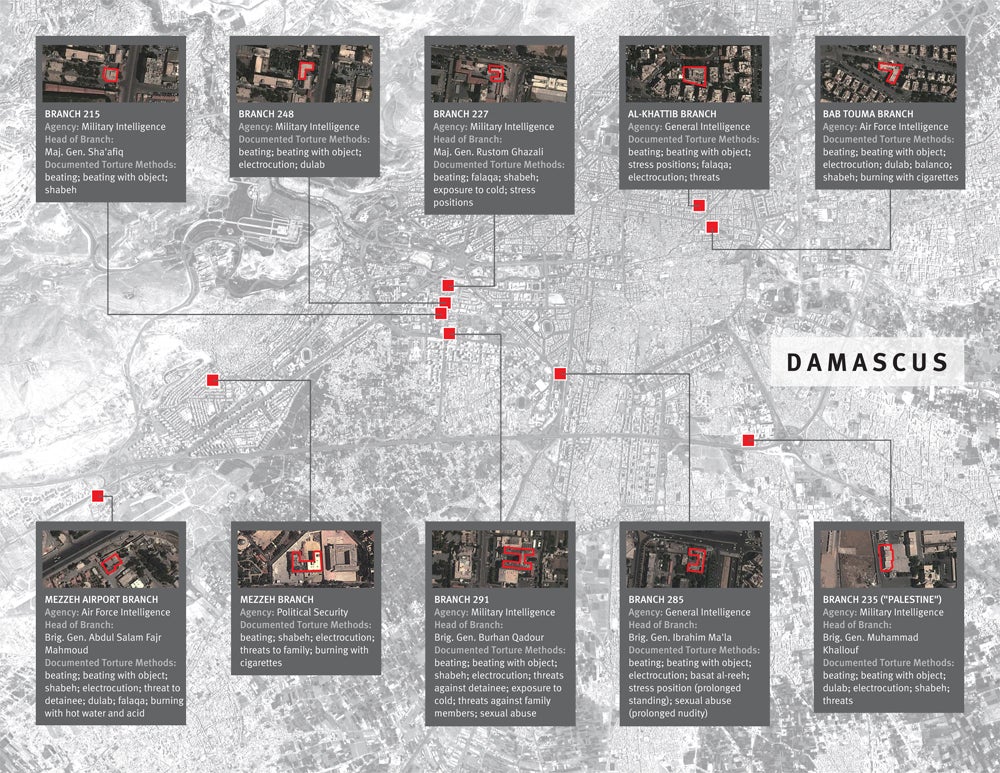
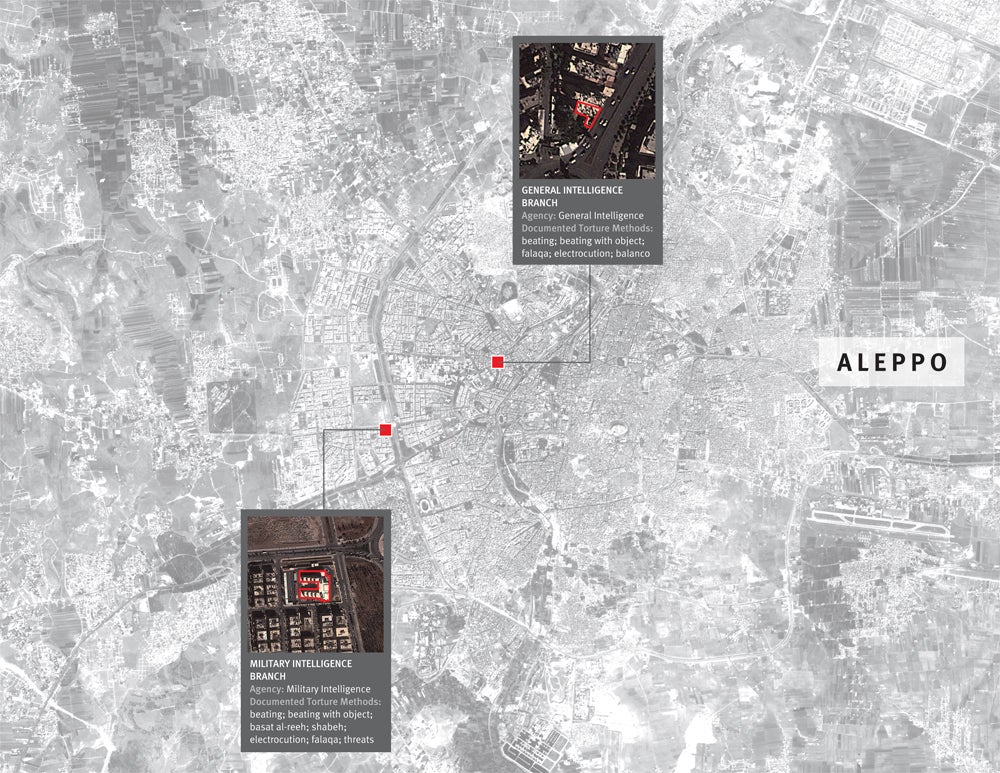
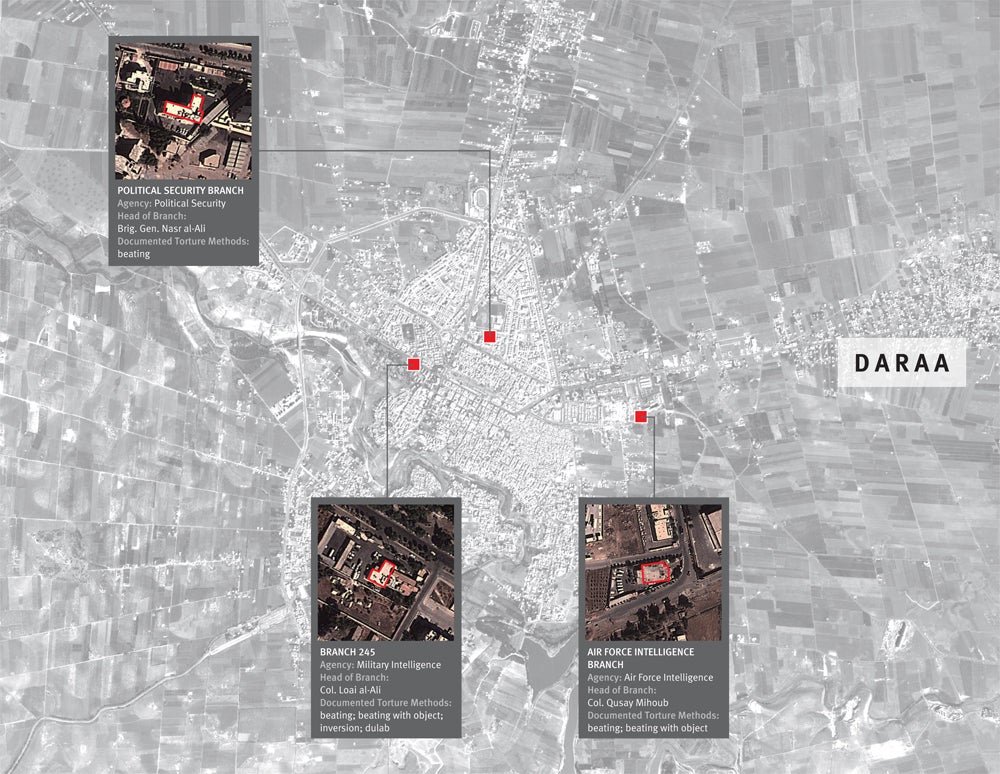
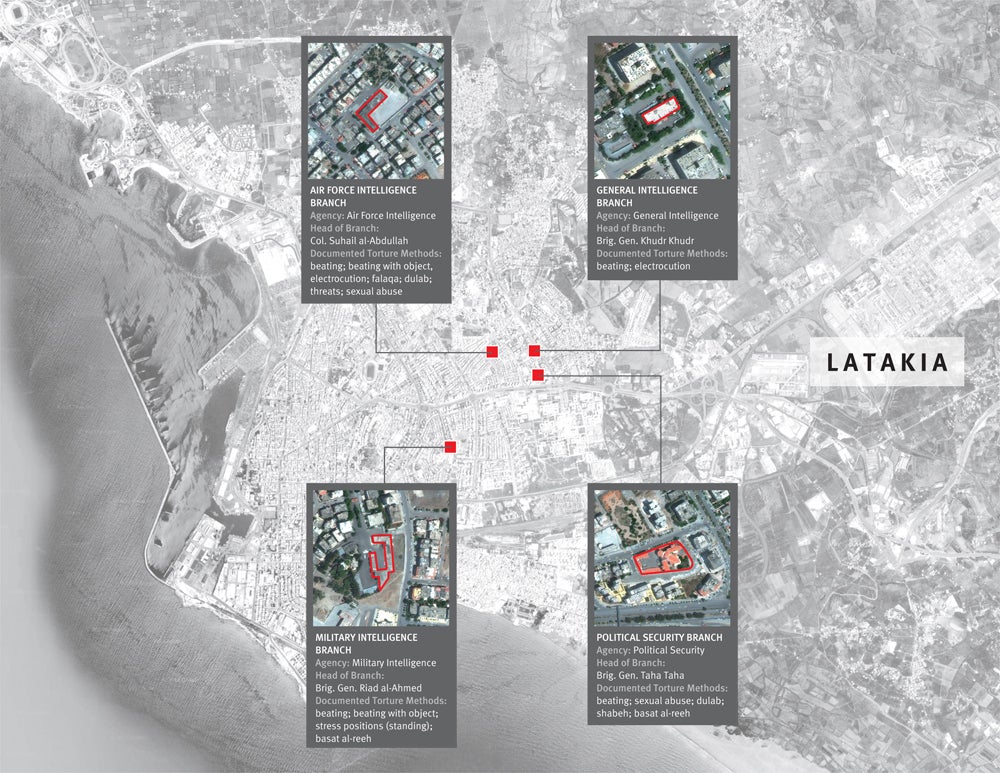
Human Rights Watch has mapped out the torture centers used by the Syrian government and identified the various techniques used on dissidents by the secret police. SMH has a good summary. Human Rights Watch says that the evidence is strong that the Syrian state is systematically practicing torture on a significant scale, and points out that this policy is a crime against humanity.

The Syrian military deployed helicopter gunships against Douma on Monday, a town on the outskirts of the capital, Damascus. Syrian troops had already stormed the town and there were bodies in the street, so the helicopters were involved in a mop-up operation.

In a one-day record, some 85 Syrian military personnel escaped to Turkey Monday, along with 300 family members. Six were officers, and one was a brigadier general (a one-star in American terms, i.e. not very high ranking).

Also on Monday, a television anchor for the regime news channel defected, and revealed that he had been for some time providing the opposition with the raw news stories

source

Syria | Douma 29 June12 Aftermath of the Massacre in Al-Hamdan Hospital

[youtube http://youtu.be/P9cvUV7UQnw?]

Syria: Torture Centers Revealed

For 27 Detention Sites: Locations, Commanders’ Names, Torture Methods
JULY 3, 2012
RELATED MATERIALS:

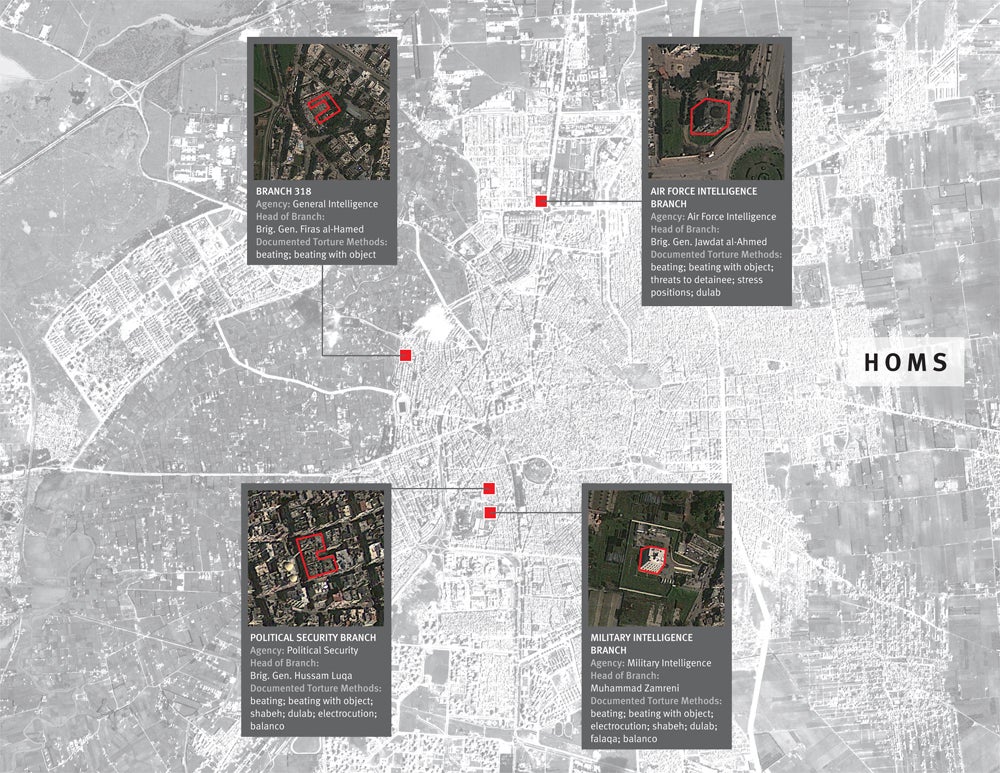
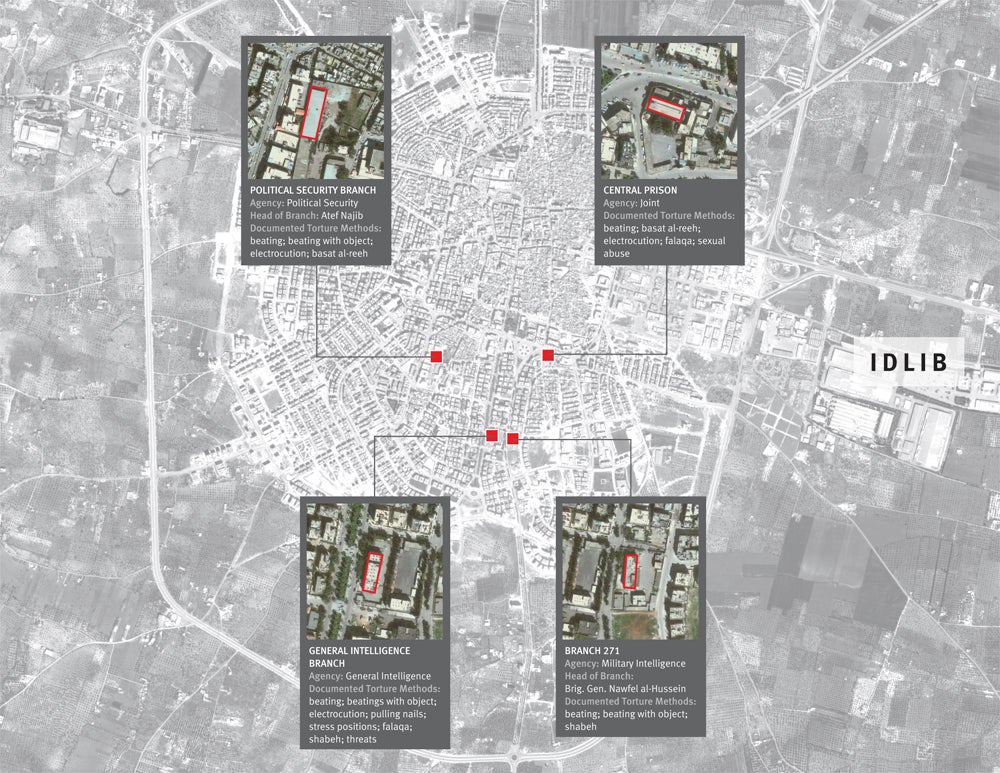
(New York) – Former detainees and defectors have identified the locations, agencies responsible, torture methods used, and, in many cases, the commanders in charge of 27 detention facilities run by Syrian intelligence agencies, Human Rights Watch said in a multimedia report released today. The systematic patterns of ill-treatment and torture that Human Rights Watch documented clearly point to a state policy of torture and ill-treatment and therefore constitute a crime against humanity.

Interactive Map – Click to Launch
(Embed this map on your blog)

The 81-page report, “Torture Archipelago: Arbitrary Arrests, Torture and Enforced Disappearances in Syria’s Underground Prisons since March 2011” is based on more than 200 interviews conducted by Human Rights Watch since the beginning of anti-government demonstrations in Syria in March 2011. The report includes maps locating the detention facilities, video accounts from former detainees, andsketches of torture techniques described by numerous people who witnessed or experienced torture in these facilities.

“The intelligence agencies are running an archipelago of torture centers scattered across the country,” said Ole Solvang, emergencies researcher at Human Rights Watch. “By publishing their locations, describing the torture methods, and identifying those in charge we are putting those responsible on notice that they will have to answer for these horrific crimes.”

Click to view in-depth, satellite images of the torture centers in the following cities: Damascus,Homs, Idlib, Aleppo, Daraa, and Latakia.

[youtube http://youtu.be/5lr-dcHOtzo?]

Human Rights Watch called on the United Nations Security Council to refer the situation in Syria to the International Criminal Court (ICC) and to adopt targeted sanctions against officials credibly implicated in the abuses.

The facilities cited in the report are those for which multiple witnesses have indicated the same location and provided detailed descriptions of torture. The actual number of detention facilities used by intelligence agencies is probably much higher.

Almost all the former detainees interviewed by Human Rights Watch said they had been subjected to torture or witnessed the torture of others during their detention. Interrogators, guards, and officers used a broad range of torture methods, including prolonged beatings, often with objects such as batons and cables, holding the detainees in painful stress positions for prolonged periods of time, the use of electricity, burning with acid, sexual assault and humiliation, the pulling of fingernails, and mock execution. Altogether Human Rights Watch documented more than 20 distinct torture methods used by the security and intelligence services.

In most cases former detainees were subjected to a range of these torture methods. A 31-year-old detainee who was detained in Idlib governorate in June described to Human Rights Watch how the intelligence agencies tortured him in the Idlib Central Prison:

They forced me to undress. Then they started squeezing my fingers with pliers. They put staples in my fingers, chest and ears. I was only allowed to take them out if I spoke. The staples in the ears were the most painful. They used two wires hooked up to a car battery to give me electric shocks. They used electric stun-guns on my genitals twice. I thought I would never see my family again. They tortured me like this three times over three days.

While most of the torture victims interviewed by Human Rights Watch were young men between 18 and 35, the victims interviewed also included children, women, and the elderly.

Human Rights Watch research shows that the worst torture has taken place in detention facilities run by the country’s four main intelligence agencies, commonly referred to collectively as the mukhabarat:

  • The Department of Military Intelligence (Shu`bat al-Mukhabarat al-`Askariyya);
  • The Political Security Directorate (Idarat al-Amn al-Siyasi);
  • The General Intelligence Directorate (Idarat al-Mukhabarat al-`Amma); and
  • The Air Force Intelligence Directorate (Idarat al-Mukhabarat al-Jawiyya).

Each of these four agencies maintains central branches in Damascus as well as regional, city, and local branches across the country. In virtually all of these branches there are detention facilities of varying size.

All of the witnesses interviewed by Human Rights Watch described detention conditions that would by themselves amount to ill-treatment and, in some cases, torture – extreme overcrowding, inadequate food, and routine denial of necessary medical assistance. A graphic model depicting an overcrowded cell described by one former detainee illustrates how the conditions fall short of international legal standards.


Diagrams produced by SITU Studio and Forensic Architecture, an ERC-funded project.

The individuals who carried out or ordered crimes against humanity bear individual criminal responsibility under international law, as do those in a position of command whose subordinates committed  crimes that they were aware of or should have been aware of and failed to prevent or punish. This command responsibility would apply not only to the officials overseeing detention facilities, but also to the heads of intelligence agencies, members of government, and the head of state, President Bashar al-Assad.

Because Syria has not ratified the Rome Statute, which created the ICC, the court will only have jurisdiction if the UN Security Council adopts a resolution referring the situation in Syria to the court. Russia and China have previously blocked Security Council efforts to push for accountability.

“The reach and inhumanity of this network of torture centers are truly horrific,” Solvang said. “Russia should not be holding its protective hand over the people who are responsible for this.”

A table with the detention facilities where torture was documented, along with their respective locations, operating agencies, and commanders follows.

Agency Name of Branch City Head of Branch
Military Intelligence Branch 215 Damascus Brig. Gen. Sha’afiq
Military Intelligence Branch 227 Damascus Maj. Gen. RustomGhazali
Military Intelligence Branch 291 Damascus Brig. Gen. BurhanQadour (Replaced Brig. Gen. Yousef Abdou in May 2012)
Military Intelligence Branch 235 (“Palestine”) Damascus Brig. Gen. Muhammad Khallouf
Military Intelligence Branch 248 Damascus Not identified
Military Intelligence Branch 245 Daraa Col. Loaial-Ali
Military Intelligence Aleppo Branch Aleppo Not identified
Military Intelligence Branch 271 Idlib Brig. Gen. Nawfel al-Hussein
Military Intelligence Homs Branch Homs Muhammad Zamreni
Military Intelligence Latakia Branch Latakia Not identified
Air Force Intelligence Mezzeh Airport Branch Damascus Brig. Gen. Abdul Salam Fajr Mahmoud (director of investigative branch)
Air Force Intelligence Bab Touma Branch Damascus Not identified
Air Force Intelligence Homs Branch Homs Brig. Gen. Jawdat al-Ahmed
Air Force Intelligence Daraa branch Daraa Col. QusayMihoub
Air Force Intelligence Latakia Branch Latakia Col. Suhail Al-Abdullah
Political Security Mezzeh Branch Damascus Not identified
Political Security Idlib Branch Idlib Not identified
Political Security Homs Branch Homs Not identified
Political Security Latakia Branch Latakia Not identified
Political Security Daraa Branch Daraa Not identified
General Intelligence Latakia Branch Latakia Brig. Gen. KhudrKhudr
General Intelligence Branch 285 Damascus Brig. Gen. Ibrahim Ma’ala (Replaced Brig. Gen. HussamFendi in late 2011)
General Intelligence Al-Khattib Branch Damascus Not identified
General Intelligence Aleppo Branch Aleppo Not identified
General Intelligence Branch 318 Homs Brig. Gen. Firas Al-Hamed
General Intelligence Idlib Branch Idlib Not identified
Joint Central Prison – Idlib Idlib Not identified

Syrian regime TV reporter defects

Ghatan Sleiba, from the pro-Assad al-Dunya channel, says he has been providing intelligence to the rebels for months

Ghatan Sleiba

Ghatan Sleiba, says opposition fighters are in control of much of eastern Syria. Photograph: Guardian

A presenter from the Syrian regime’s main television channel has defected to the opposition and revealed he has secretly provided intelligence to rebels for the past seven months.

Ghatan Sleiba, a long-time anchor and reporter for the al-Dunya channel and a contributor to the state-owned station al-Akhbariya, is believed to be the first high-profile defector from Damascus’s powerful propaganda arm. “I am the first and I will probably be the last,” he said in an interview with the Guardian in southern Turkey.

“There are some others who also want to run, but there are more who love the regime from the depths of their hearts,” he said.

Turkey’s state-run news agency reported that nearly 300 Syrians – including 85 soldiers – defected to Turkey on Monday.

Sleiba, 33, arrived in Turkey last Wednesday after a long journey from Hassaka in eastern Syria, where he had been responsible for coverage of the east of the country. He is now being hosted by rebel groups.

He claimed opposition guerillas were now in quasi-control of much of the east, especially the countryside surrounding major towns and cities.

“This is one of the things that they never wanted us to talk about. What we were doing was not reporting. It was simply acting as the tongue of the regime. I stayed as long as I could to help the revolutionaries, but I couldn’t take it any more.

Al-Dunya is part-owned and supervised by Bashar al-Assad’s maternal cousin Rami Makhlouf, a key member of the inner sanctum. It has pushed the official narrative that the Syrian uprising is a plot by the west and key Sunni Arab powers to use al-Qaida-linked insurgents to overthrow the regime.

Sleiba said that before interviews he regularly gave people answers to questions he was about to ask them. “Those answers and the subjects of things to talk about were given to us by the head of the Ba’ath party in the area, or by the political security division.”

He said he first developed doubts about the official version of events about two months into the uprising, which started in March last year. “Many of us knew then that it wasn’t terrorists they were fighting. It was people wanting their rights. But it was very difficult to do anything about it. We have families and we need to protect them.”

Last November he made contact with the Free Syria Army, first near Hassaka and then in Turkey, telling both groups that he wanted to flee. “They told me that I was more use to them if I stayed in my job. And so from then on we talked on Skype and I told them what I could about regime and military movements.”

Sleiba accused regime intelligence units in the east of sending a gang to maim him with a knife and rob him of more than $2,000 (£1,300), then blame the attack on the rebels. “I know who did this to me,” he said pointing to a deep gouge on his forehead. “The Free Syria Army needs to win people’s confidence in our area and they have done that. We know who their members and their commanders are and they did not do this, no way. It was the regime.”

Sleiba said he was now looking for a job with an opposition television channel, something he concedes will be difficult, if first contact with suspicious reporters is anything to go by.

“When I got here, I met a guy from al-Jazeera and he said I was a government spy with a psychological problem. But people will soon learn that the truth is a powerful thing and that is why I am here.”

source

Miko Peled Interview and in New York

[youtube http://youtu.be/pRAQG5mirSE?]

and Miko in New York

[youtube http://youtu.be/aw46b8v51wI?]

Former Israeli PM Yitzhak Shamir Goes to the Great Hague in the Sky

Death of a Proud, Self-Avowed Terrorist:

Author : My Photo

BROOKLYN, NY, U.S. MINOR OUTLYING ISLANDS
Staunch humanist. Opinionated egoist. Skeptical solipsist. Frustrated optimist. Hobbesian idealist.
Palestine Police Force Wanted Poster offering rewards for the capture of Stern Gang members,
including (at center) Yitzhak Yezernitzky

Sometimes terrible people live long lives. Such is the case with Icchak Yezernitsky, a Russian-born racist, terrorist and eager ethnic cleanser who is better known to the world as former Israeli Prime Minister Yitzhak Shamir.  Shamir died today, June 30, 2012, at a Tel Aviv nursing home from Alzheimer’s Disease at the ripe old age of 96.  One can only wonder if he had forgotten all the war crimes he had committed.

Nearly every mainstream media outlet has eulogized Shamir with encomiums, or at least profound respect.  Here are some of Shamir’s greatest hits, most of which have been omitted from most of the media’s effusive obituaries:

Shamir was one of the leaders of Lehi (also known as The Stern Gang), a Zionist terrorist militia which rampaged through Palestine in the 1940s.  Were anyone to dispute that Lehi was a terrorist group, Shamir proudly affirmed that particular description in a 1943 article he wrote entitled “Terror.”  Shamir wrote,

Neither Jewish morality nor Jewish tradition can be used to disallow terror as a means of war…We are very far from any moral hesitations when concerned with the national struggle.

First and foremost, terror is for us a part of the political war appropriate for the circumstances of today, and its task is a major one: it demonstrates in the clearest language, heard throughout the world including by our unfortunate brethren outside the gates of this country, our war against the occupier.

The Zionist terror campaign of Plan Dalet, put into effect in early 1948 and described by Israeli historian Ilan Pappe, consisted of “large-scale intimidation; laying siege to and bombarding population centres; setting fires to homes, properties, and goods; expulsion; demolition; and finally, planting mines among the rubble to prevent any of the expelled inhabitants from returning.”

Shamir seemed to relish the opportunity to terrorize, murder and ethnically cleanse Palestine of its indigenous population into order to make room for the nascent state of Israel.  The massacre of Deir Yassin in April 1948, during which over 100 unarmed villagers were murdered, was carried out by Zionist commandos of Shamir’s Lehi and Menachem Begin’s Irgun (of which Shamir was a former member).

Following Israel’s unilateral declaration of independence in May 1948, the United Nations reassessed its approach to the partition of Palestine and appointed a mediator, Swedish diplomat Folke Bernadotte, to come up with new proposal while taking into account “the aspirations of the Jews, the political difficulties and differences of opinion of the Arab leaders, the strategic interests of Great Britain, the financial commitment of the United States and the Soviet Union, the outcome of the war, and finally the authority and prestige of the United Nations.”  Notice that the rights of the indigenous Palestinians were not included in this mandate.

Nevertheless, while Bernadotte’s second proposal was produced in consultation with British and American emissaries, then-President Harry Truman undermined its progress in the UN due to pre-election Zionist influence in the United States.  When Bernadotte finally presented his progress report, “Mediation, Truce Supervision, Refugees, Proposals for Peaceful Settlement,” on September 16, 1948, it included this unequivocal statement:

It is not yet known what the policy of the Provisional Government of Israel with regard to the return of Arab refugees will be when the final terms of settlement are reached. It is, however, undeniable that no settlement can be just and complete if recognition is not accorded to the right of the Arab refugee to return to the home from which he has been dislodged by the hazards and strategy of the armed conflict between Arabs and Jews in Palestine. The majority of these refugees have come from territory which, under the Assembly resolution of 29 November, was to be included in the Jewish State. The exodus of Palestinian Arabs resulted from panic created by fighting in their communities, by rumours concerning real or alleged acts of terrorism, or expulsion. It would be an offence against the principles of elemental justice if these innocent victims of the conflict were denied the right to return to their homes while Jewish immigrants flow into Palestine, and, indeed, at least offer the threat of permanent replacement of the Arab refugees who have been rooted in the land for centuries. (A/648 1.V.6)

The very next day, September 17, 1948, Bernadotte was assassinated in West Jerusalem by members of Lehi, acting on Shamir’s explicit orders.

In 1969, Shamir formally joined Begin’s “Freedom Party” (Herut), which Jewish luminaries such as Albert Einstein and Hannah Arendt had decried years earlier as “a political party closely akin in its organization, methods, political philosophy and social appeal to the Nazi and Fascist parties” which “preached an admixture of ultranationalism, religious mysticism, and racial superiority.”

In April 1988, during the first Intifada, then-Prime Minister Yitzhak Shamirwarned that any Palestinian caught protesting would have his “head smashed against the boulders and walls.” He continued, “We say to them from the heights of this mountain and from the perspective of thousands of years of history that they are like grasshoppers compared to us.”

Shamir was a committed colonialist.  Even when, in September 1991, U.S. President George H.W. Bush threatened to withhold “loan guarantees sought by Israel unless the Israeli Government, which has ignored all of his previous appeals to halt settlement-building in the occupied West Bank and Gaza Strip, freezes building activity,” Shamir never halted further colonization of Palestine.

In June 1993, after being voted out of office, Shamir stated his desire to deliberately subvert any efforts to establish a Palestinian state by carrying out peace talks under false pretenses.  “I would have conducted the autonomy negotiations for 10 years, and in the meantime we would have reached half a million [Jewish] souls in Judea and Samaria.”  Lamenting the end of his administration, Shamir said it was “painful that in the coming four years I won’t be able to increase settlements in Judea and Samaria and Gaza.”

In 2005, Israelis voted Shamir the 29th Greatest Israeli in a poll conducted by Ynet.

Despite Shamir’s history of despicable violence and willful abrogation of international law, Barack Obama’s press secretary Jay Carney released a statement on behalf of the White House at the news of Shamir’s death.

“Yitzhak Shamir dedicated his life to the State of Israel,” the statement read. “From his days working for Israel’s independence to his service as Prime Minister, he strengthened Israel’s security and advanced the partnership between the United States and Israel.”

It is unsurprising that Benjamin Netanyahu praised his Likud predecessor, saying, “He was a paragon of loyalty to the Land of Israel and the eternal values of the Jewish people,” adding that “Yitzhak Shamir belongs to a generation of giants, who founded the State of Israel and fought for the freedom of the Jewish people in its land.”

One should remind Netanyahu of Shamir’s proud justification of terrorism or perhaps simply note the words of the mayor of Tel Aviv under British Mandate, Israel Rokach, who in 1944 accused Shamir’s Zionist militia of “lacking even a spark of humanity and Jewish conscience” after Lehi gunmen murdered three British police officers in a public shooting.

Shamir’s daughter, Gilada Diamant, claimed her father “belonged to a different generation of leaders, people with values and beliefs. I hope that we have more people like him in the future.”  Certainly anyone who values human rights, justice, sovereignty, and self-determination for the Palestinian people, the rule of law, the Geneva Conventions, and the Nuremberg Principles does not share Diamant’s hope.

Thomas Friedman once wrote that Shamir “exemplifies those Israeli leaders whose vision of tomorrow is yesterday.”  For all those whose innocent lives were obliterated or whose families suffered at the hands of Yitzhak Shamir due to his commitment to ethnosupremacism, colonialism and mass murder, any more visions of violence and bigotry that he may have had thankfully died today.

[youtube http://youtu.be/Whyp-GrcypU?]

SOURCE

The Syrian civilians who became rebel fighters

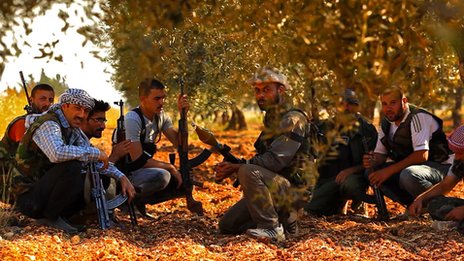
Rebels in Idlib (Photo by Darren Conway) Recruits of the Free Syrian Army have had to learn quickly

As the conflict in Syria escalates, rebel forces are growing in strength and launching increasingly deadly attacks on government targets. But how do men go from “ordinary” life to combat, from grilling kebabs to building bombs in the back yard? From Idlib, the BBC’s Ian Pannell reports.

Omar has not been lucky. A large man with a shaggy beard and tight curly black hair, he emigrated to Libya to set up a kebab restaurant. It did well so he set up another one.

Then last year the Libyan revolution erupted and one restaurant was destroyed by Nato bombing, the other by Colonel Gaddafi’s forces.

So he packed up his bags and brought his family back to his native Syria. The country was already in the throes of protests calling for change.

But as the government began to physically suppress its opponents so those calls became increasingly vociferous, by stages morphing into armed insurrection.

Like many men in his neighbourhood, he had not held a weapon since his two years national service.

But as the violence began to spiral, mechanics, shopkeepers and chefs like Omar took up arms, forming the rebel Free Syrian Army. He became a marked man and as government forces advanced he was forced to run away again, abandoning yet another business.

Olive groves

Over a lunch of salad, pitta bread, yoghurt and hummus, Omar draws a crowd in the kitchen as he effortlessly skins a tomato in one piece, expertly folding it into a decorative rose, his hands a blur as he chops cucumbers and fragrant mint leaves.

Omar, a rebel, planting an IED in Idlib, Syria (Picture by Darren Conway) Fighters like Omar see the home-made bombs as legitimate weapons

We talk about the differences between the two countries.

“In Libya you could talk about anything but not politics,” he says. “In Syria you could talk about anything but not the Assad family.”

It underlines the extent to which this has become a very personal struggle, not just against the Baath Party and Syrian government but also against President Bashar al-Assad and the family that has kept a tight grip on the country’s power and resources for more than four decades.

Continue reading the main story

“Start Quote

We build bombs because they give us strength”

Omar Rebel fighter

It has also become a violent struggle. Today Omar lives in a farmhouse, hidden amongst the vast olive groves in the north of the country. He doesn’t make kebabs anymore, he plants IEDs, improvised explosive devices. In other words, home-made bombs.

“Offence is the best defence,” he says, explaining a tactic that many find repugnant. The very letters I-E-D are redolent of the Taliban in Afghanistan or al-Qaeda in Iraq. For some Syrians, and certainly the Assad government, these men are simply terrorists.

But with little support from the outside world and just a small quantity of arms and ammunition now crossing the Turkish border, the fighters see the home-made bombs as legitimate weapons.

Fighting between rebels and government forces appears to be intensifying in Idlib, as Ian Pannell explains in this recent report

“We are weak,” he says. “We build bombs because they give us strength.” And he insists they only attack the army, not civilians.

We spent nearly two weeks with Omar and the self-styled Idlib Martyrs Brigade; men who regard themselves as freedom fighters, a latter-day band of merry men with Bassel Abu Abdu, their commander, as some sort of Robin Hood figure.

Braveheart

Curiously, in this corner of Syria, this very English folk tale of a group of outlaws taking on a wicked overlord and defending ordinary people has gripped the popular imagination.

And they certainly have some magnetism as they move through the countryside, drawing crowds of admiring children, grateful residents offering tea and bread.

Rebel commander Bassel Abu Abdu in Idlib (Photo by Darren Conway) Bassel Abu Abdu, the group’s commander, used to sell spare car parts

Bassel leads hundreds of fighters. Like Omar, he has only limited military experience.

He used to sell spare car parts. But they have fought endless battles over the last year and have grown stronger and smarter all the time. Bassel also confesses that he draws inspiration from war movies.

I ask him which film in particular. He says he cannot remember the title and apologises because it is the story of a battle against the English.

He describes a strong leader hundreds of years ago, who took on a much stronger army, fighting for independence for his people. The film, of course, is Braveheart, the story of William Wallace, a 13th Century Scottish hero who fought for the independence of Scotland.

But the terrifying reality on the ground is not the stuff of romantic tales or historical drama.

It has become a seething mire of violence and bloodshed. Artillery shells destroying homes and lives, tank rounds blasting into villages, gunfire and bomb explosions.

Whatever the rights and wrongs or reasons, both sides are now locked into a fight to the death. Both sides believe they have right on their side, that the ends justify the means, and they are willing to do almost anything to win.

How to listen to From Our Own Correspondent:

BBC Radio 4: A 30-minute programme on Saturdays, 11:30 BST.

source

Dis-Cover the Territories \ Sagi

[youtube http://youtu.be/8emYbxzcWE?]

There are five more testimonies on the site 


Israel set to impose further limits on privacy

Monday, 21 May, 2012 | 12:20

The Israeli Ministry of Justice (MoJ) is proposing a new law that would allow a small number of official organizations to access public telephone calls, emails, and the contents of personal computers. This law would open the way for the Israel Antiquities Authority and the National Parks Authority to use what is known as “Confidential Eavesdropping,” a system used by Israeli police and military intelligence  to track emails and access the content of personal computers. For Palestinians, this law is another example of the violation of the democratic principles that Israel claims to uphold. This law is racially biased targeting Palestinians while helping settlers’ organizations take over Palestinian lands, using “democracy”  as a catchword to justify the law.  In the opinion of Palestinians, there is no need to create such a law because police and military intelligence are loyal to settlers’ organizations, and the same settlers control the Antiquities and National Parks Authorities. Settlers’ organizations are the sole source of information for these authorities. A local Palestinian said that Israel is the country that most often violates the public’s right to privacy especially for Palestinians. For example, cameras have previously been planted inside Palestinians’ houses so the settlers can monitor their movements.

Avitar Cohen working for INPA ,worked for  Elad previously

Officer of INPA is in the Islamic Cemetery

INPA Officer protected by Israeli forces in a Palestinian private land

source

Blog at WordPress.com.

Up ↑