Search

band annie's Weblog

I have a parallel blog in French at http://anniebannie.net

Author

bandannie

Bradley Manning case shows that US government’s priorities are ‘upside down’

Posted: 30 July 2013

‘It’s hard not to draw the conclusion that Manning’s trial was about sending a message: the US government will come after you’ – Widney Brown

Despite an acquittal on the most serious “aiding the enemy” charge against him, today’s verdict against the US Private Bradley Manning reveals the US government’s misplaced priorities on national security, said Amnesty International this evening.

Amnesty International’s Senior Director of International Law and Policy Widney Brown said:

“The government’s priorities are upside down. The US government has refused to investigate credible allegations of torture and other crimes under international law despite overwhelming evidence.

“Yet they decided to prosecute Manning who it seems was trying to do the right thing – reveal credible evidence of unlawful behaviour by the government. You investigate and prosecute those who destroy the credibility of the government by engaging in acts such as torture which are prohibited under the US Constitution and in international law.

“The government’s pursuit of the ‘aiding the enemy’ charge was a serious overreach of the law, not least because there was no credible evidence of Manning’s intent to harm the USA by releasing classified information to WikiLeaks.

“Since the attacks of September 11, we have seen the US government use the issue of national security to defend a whole range of actions that are unlawful under international and domestic law.

“It’s hard not to draw the conclusion that Manning’s trial was about sending a message: the US government will come after you, no holds barred, if you’re thinking of revealing evidence of its unlawful behaviour.”

The court martial today found Manning guilty of a range of additional charges, including ten lesser charges relating to misuse of classified information to which he had already pleaded guilty. Amnesty insisted that any sentence imposed for the other charges must take into account information relating to Manning’s reasonable belief that he was exposing serious violations of human rights and international humanitarian law.

Amnesty believes it undermines accountability when the US government is so selective about who it chooses to investigate and prosecute. This is particularly true when they seem intent on punishing those who reveal unlawful government behaviour and protecting those who actually engaged in or ordered such behaviour.

The hundreds of thousands of documents Manning released to WikiLeaks included videos and dossiers that pointed to potential human rights violations – including breaches of international humanitarian law – by US troops abroad and the CIA closer to home.

Earlier this month Amnesty described the judge’s decision not to drop the charge accusing Manning of “aiding the enemy” as ludicrous and as a decision which “makes a mockery of the US military court system”.

I am Bradley Manning

see also Democracy Now on Bradley Manning : http://www.democracynow.org/live/bradley_manning_verdict

BBC Newsnight (09 July 2013) Debate: Should we arm the Syrian op

Qunfuz

Robin Yassin-Kassab

Here’s a Youtube recording of a full BBC Newsnight episode on Syria, in which I participated. The debate was about serious help for the resistance. The help isn’t coming.

Shocking ‘extermination’ fantasies by the people running America’s Empire on full display at Aspen Summit

Max Blumenthal Alternet.org Tue, 30 Jul 2013 08:51 CDT

Not “ogres”, but certainly snakes in suits

Security Forum participants expressed total confidence in American empire, but could not contain their panic at the mention of Snowden.

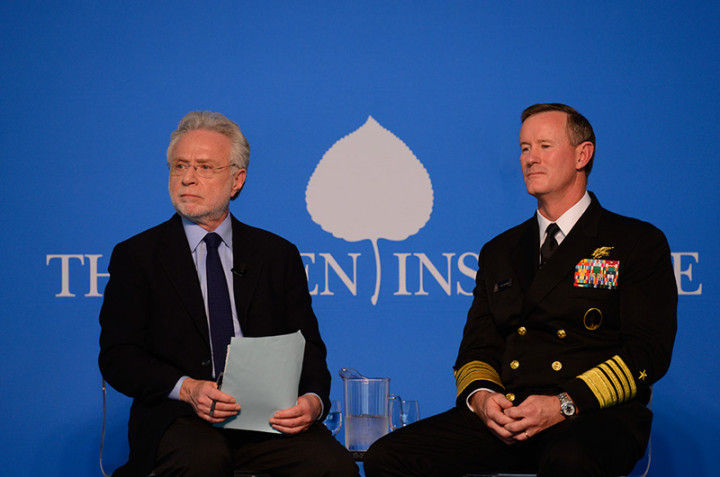
Seated on a stool before an audience packed with spooks, lawmakers, lawyers and mercenaries, CNN’s Wolf Blitzer introduced recently retired CENTCOM chief General James Mattis. “I’ve worked with him and I’ve worked with his predecessors,” Blitzer said of Mattis. “I know how hard it is to run an operation like this.”

Reminding the crowd that CENTCOM is “really, really important,” Blitzer urged them to celebrate Mattis: “Let’s give the general a round of applause.”

Following the gales of cheering that resounded from the room, Mattis, the gruff 40-year Marine veteran who once volunteered his opinion that “it’s fun to shoot some people,” outlined the challenge ahead. The “war on terror” that began on 9/11 has no discernable end, he said, likening it to the “the constant skirmishing between [the US cavalry] and the Indians” during the genocidal Indian Wars of the 19th century.

“The skirmishing will go on likely for a generation,” Mattis declared.

Mattis’ remarks, made beside a cable news personality who acted more like a sidekick than a journalist, set the tone for the entire 2013 Aspen Security Forum this July. A project of the Aspen Institute, the Security Forum brought together the key figures behind America’s vast national security state, from military chieftains like Mattis to embattled National Security Agency Chief General Keith Alexander to top FBI and CIA officials, along with the bookish functionaries attempting to establish legal groundwork for expanding the war on terror.
Partisan lines and ideological disagreements faded away inside the darkened conference hall, as a parade of American securitocrats from administrations both past and present appeared on stage to defend endless global warfare and total information awareness while uniting in a single voice of condemnation against a single whistleblower bunkered inside the waiting room of Moscow International Airport: Edward Snowden.

With perhaps one notable exception, none of the high-flying reporters junketed to Aspen to act as interlocutors seemed terribly interested in interrogating the logic of the war on terror. The spectacle was a perfect window into the world of access journalism, with media professionals brown-nosing national security elites committed to secrecy and surveillance, avoiding overly adversarial questions but making sure to ask the requisite question about how much Snowden has caused terrorists to change their behavior.

Jeff Harris, the communications director for the Aspen Institute, did not respond to questions I submitted about whether the journalists who participated in the Security Forum accepted fees. (It is likely that all relied on Aspen to at least cover lodging and travel costs). CNN sponsored the forum through a special new website called CNN Security Clearance, promoting the event through Twitter and specially commissioned op-eds from participating national security figures like former CIA director John McLaughlin.

Another forum sponsor was Academi, the private mercenary corporation formerly known as Blackwater. In fact, Academi is Blackwater’s third incarnation (it was first renamed “Xe”) since revelations of widespread human rights abuses and possible war crimes in Iraq and Afghanistan threw the mercenary firm into full damage control mode. The Aspen Institute did not respond to my questions about whether accepting sponsorship from such an unsavory entity fit within its ethical guidelines.

‘Exterminating People’

John Ashcroft, the former Attorney General who prosecuted the war on terror under the administration of George W. Bush, appeared at Aspen as a board member of Academi. Responding to a question about U.S. over-reliance on the “kinetic” approach of drone strikes and special forces, Ashcroft reminded the audience that the U.S. also likes to torture terror suspects, not just “exterminate” them.

“It’s not true that we have relied solely on the kinetic option,” Ashcroft insisted. “We wouldn’t have so many detainees if we’d relied on the ability to exterminate people…We’ve had a blended and nuanced approach and for the guy who’s on the other end of a Hellfire missile he doesn’t see that as a nuance.”

Hearty laughs erupted from the crowd and fellow panelists. With a broad smile on her face, moderator Catherine Herridge of Fox News joked to Ashcroft, “You have a way with words.”

But Ashcroft was not done. He proceeded to boast about the pain inflicted on detainees during long CIA torture sessions: “And maybe there are people who wish they were on the end of one of those missiles.”

Competing with Ashcroft for the High Authoritarian prize was former NSA chief Michael Hayden, who emphasized the importance of Obama’s drone assassinations, at least in countries the U.S. has deemed to be Al Qaeda havens. “Here’s the strategic question,” Hayden said. “People in Pakistan? I think that’s very clear. Kill ’em. People in Yemen? The same. Kill ’em.”

“We don’t smoke [drug] cartel leaders but personally I’d support it,” remarked Philip Mudd, the former deputy director of Bush’s Counterterrorism Center, earning more guffaws from his fellow panelists and from Herridge. Ironically, Mudd was attempting to argue that counter-terror should no longer be a top U.S. security priority because it poses less of a threat to Americans than synthetic drugs and child obesity.

Comment: These same people and institutions have been and are responsible for producing and pushing those drugs: Opium and the CIA: Can the U.S. triumph in the drug-addicted Afghanistan War?

Reflection was not on the agenda for most of the Security Forum’s participants. When asked by a former US ambassador to Denmark the seminal question “This is a great country, why are we always the bad guy?,” Mudd replied, “They think that anything the U.S. does [in the Middle East], even though we helped Muslim communities in Bosnia and Kuwait, everything is rewritten to make us the bad guys.”

The clamoring about U.S. invasions, drone strikes, bankrolling of Israel’s occupation, and general political meddling, could all be written off as fevered anti-Americanism borne from the desert canyons of the paranoid Arab mind.

And the wars could go on.

Delusions of Empire

Throughout the three days of the Security Forum, the almost uniformly white cast of speakers were called on to discuss recent geopolitical developments, from “Eye-rak” and “Eye-ran” to Egypt, where a military coup had just toppled the first elected government in the country’s history.

Mattis carefully toed the line of the Obama administration, describing the overthrow of Egypt’s government not as a coup, but as “military muscle saddled on top of this popular uprising.”

Warning that using terms like “coup” could lead to a reduction in U.S. aid to Egypt, where the military controls about one-third of the country’s economy, Mattis warned, “We have to be very careful about passing laws with certain words when the reality of the world won’t allow you to.”

Comment: Funny how the iron ‘Rule of Law’ bends in the minds of these authoritarian followers and psychopaths…

Wolf Blitzer mentioned that Egypt’s new military-imposed foreign minister, Nabil Fahmy, had been a fixture in Washington during the Mubarak days. “These are people the West knows, the U.S. knows,” he said of the new cabinet in Cairo. “I assume from the U.S. perspective, the United States is so much more happy with this.”

Later, one of the few Arab participants in the forum, Al Jazeera DC bureau chief Abderrahim Foukara, claimed that the Arab revolts were inspired by the U.S. invasion of Iraq. “The iconic image of Saddam being pulled out of a hole did something to the dynamic between ruler and ruled in the Arab world,” Foukara claimed.

With the revolts blurring the old boundaries imposed on the Arab world during the late colonial era, former CIA director John McLaughlin rose from the audience to call for the U.S. to form a secret, Sikes-Picot-style commission to draw up a new set of borders.

“The American government should now have such a group asking how we should manage those lines and what should those lines be,” McLaughlin told the panelists, who dismissed the idea of a new Great Game even as they discussed tactics for preserving U.S. dominance in the Middle East.

ABC’s Chris Isham asked Jim Jeffrey, the former U.S. ambassador to Iraq, why, with a recession on its hands and Middle Eastern societies spiraling out of control, should the U.S. remain militarily involved in the region. Without hesitation, Jeffrey rattled off the reasons: Saudi Arabia, Turkey, Israel, and “world oil markets.”

Comment: What, nothing about ‘fighting terrorists over there so we don’t have to fight them at home’? And what happened to ‘spreading freedom and democracy’?

“What could we have done better?” Isham asked the ambassador.

“Probably not too much.”

NSA Heroes, Saving Lives of Potential Consumers

While participants in the Security Forum expressed total confidence in American empire, they could not contain their panic, outrage, and fear at the mere mention of Snowden.

General Keith Alexander selling fuzzy wuzzies to brainwashed Americans

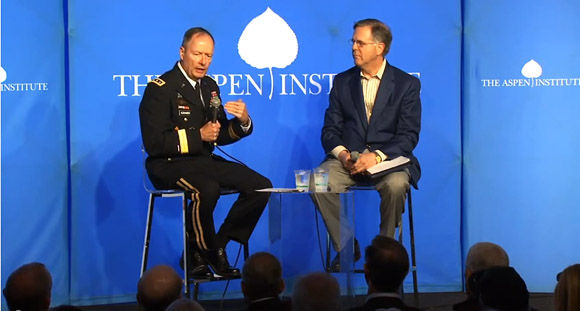
“Make no mistake about it: These are great people who we’re slamming and tarnishing and it’s wrong. They’re the heroes, not this other and these leakers!” NSA chief General Keith Alexander proclaimed, earning raucous applause from the crowd.

Snowden’s leaks had prompted a rare public appearance from Alexander, forcing the normally imperious spy chief into the spotlight to defend his agency’s Panopticon-style programs and its dubious mechanisms of legal review. Fortunately for him, NBC’s Pete Williams offered him the opportunity to lash out at Snowden and the media that reported the leaks, asking whether the “terrorists” (who presumably already knew they were being spied on) had changed their behavior as a result of the leaks.

“We have concrete proof that terrorists are taking action, making changes, and it’s gonna make our job harder,” Alexander declared, offering nothing to support his claim.

Alexander appeared in full military regalia, with colorful decorations and medallions covering his left breast. Casting himself as a stern but caring father who has the best interests of all Americans at heart, even if he can’t fully disclose his methods, he turned to the crowd and explained, “The bad guys…hide amongst us to kill our people. Our job is to stop them without impacting your civil liberties and privacy and these programs are set up to do that.”

Comment: The “bad guys”, seriously?!

“The reason we use secrecy is not to hide it from the American people, but to hide it from the people who walk among you and are trying to kill you,” Alexander insisted.

Comment: LIES! The people succeeding at controlling (and often killing) Americans are walking among us, like the snakes in suits at such rallies as the Aspen Institute Security Forum.

Corporations like AT&T, Google and Microsoft that had been compelled to hand over customer data to the NSA “know that we’re saving lives,” the general claimed. With a straight face, he continued, “And that’s good for business because there’s more people out there who can buy their products.”

Self-Reporting

So who were the “bad guys” who “walk among us,” and how could Americans be sure they had not been ensnared by the NSA’s all-encompassing spying regime, either inadvertently or intentionally? Nearly all the Security Forum participants involved in domestic surveillance responded to this question by insisting that the NSA had the world’s most rigorous program of oversight, pointing to Congress and the Foreign Intelligence Surveillance Act (FISA) courts as the best and only means of ensuring that “mistakes” are corrected.

“We have more oversight on this [PRISM] program than any other program in any government that I’m aware of,” Alexander proclaimed, ramming home a talking point repeated throughout the forum.

“I can assure these are some of the judges who are renowned for holding the government to a very high standard,” John Carlin, the Assistant US Attorney General for National Security, stated.

But in the last year, FISA courts received 1,856 applications for surveillance from the government. In 100 percent of cases, they were approved. As for Congress, only two senators, Ron Wyden and Mark Udall, demanded the NSA explain why PRISM was necessary or questioned its legality. Despite the fact that the entire regime of oversight was a rubber stamp, or perhaps because of it, none of those who appeared at the Security Forum to defend it were willing to consider any forum of independent civilian review.

“You have to do [domestic surveillance] within a closed bubble in order to do it effectively,” Dennis Blair, the director of National Intelligence conceded under sustained grilling from the Washington Post‘s Barton Gellman, one of the reporters who broke Snowden’s leaks and perhaps the only journalist at the Security Forum who subjected participants to tough scrutiny.

When Gellman reminded Alexander that none of the oversight mechanisms currently in place could determine if the NSA had improperly targeted American citizens with no involvement in terror-related activity, the general declared, “we self-report those mistakes.”

“It can’t be, let’s just stop doing it, cause we know, that doesn’t work,” Alexander maintained. “We’ve got to have some program like [PRISM].”

The wars would go on, and so would the spying.

Reinstituting Public Confidence

During a panel on inter-agency coordination of counter-terror efforts, Mike Leiter, the former director of the National Counterterrorism Center (NCC), suggested that one of the best means of preserving America’s vast and constantly expanding spying apparatus was “by reinstituting faith among the public in our oversight.”

Even as current NCC director Matthew Olsen conceded, “There really are limits in how transparent we can be,” Leiter demanded that the government “give the public confidence that there’s oversight.

Since leaving the NCC, Leiter has become the senior counsel of Palantir Technologies, a private security contractor that conducts espionage on behalf of the FBI, CIA, financial institutions, the LAPD and the NYPD, among others. In 2011, Palantir spearheaded a dirty tricks campaign against critics of the U.S. Chamber of Commerce, including journalists, compiling electronic dossiers intended to smear them. Palantir’s target list included progressive groups like Think Progress, SEIU and U.S. Chamber Watch.

In the friendly confines of the Aspen Institute’s Security Forum, Leiter did his best to burnish his company’s tarnished image, and do some damage control on behalf of the national security apparatus it depends on for contracts. Like most other participants, Leiter appeared in smart casual dress, with an open collar, loafers, a loose-fitting jacket and slacks.

“Just seeing us here,” he said, “that inspires [public] confidence, because we’re not a bunch of ogres.”

Comment: No, they not ogres, like most psychopaths in positions of power, they are well-dressed, affable, charming even, but they can’t help exposing their psychopathic nature when they speak with glee about “exterminating” and torturing normal human beings.

source

Obama Promise To ‘Protect Whistleblowers’ Just Disappeared From Change.gov

July 30, 2013

(On the day Bradley Manning’s verdict is announced, Orwell’s Memory Hole is indeed alive in the United States. This excellent article was not written by me, and originally appeared on TechDirt)

The folks from the Sunlight Foundation have noticed that the Change.gov website, which was set up by the Obama transition team after the election in 2008 has suddenly been scrubbed of all of its original content. They noted that the front page had pointed to the White House website for a while, but you could still access a variety of old material and agendas. They were wondering why the administration would suddenly pull all that interesting archival information… and hit upon a clue.

A little bit from the “ethics agenda”:

Protect Whistleblowers: Often the best source of information about waste, fraud, and abuse in government is an existing government employee committed to public integrity and willing to speak out. Such acts of courage and patriotism, which can sometimes save lives and often save taxpayer dollars, should be encouraged rather than stifled. We need to empower federal employees as watchdogs of wrongdoing and partners in performance. Barack Obama will strengthen whistleblower laws to protect federal workers who expose waste, fraud, and abuse of authority in government. Obama will ensure that federal agencies expedite the process for reviewing whistleblower claims and whistleblowers have full access to courts and due process.

Yeah. That statement seems a bit embarrassing at the very same time Obama’s administration is threatening trade sanctions against anyone who grants asylum to Ed Snowden. Also… at the same time that we get to see how whistleblower Bradley Manning’s “full access to courts and due process” will turn out. So far, it’s been anything but reasonable, considering that the UN has already condemned Manning’s treatment as “cruel and inhuman.” And people wonder why Snowden left the country…

MY COMMENT: Yeah, Hope and Change my ass.

Bonus: Make you own Hope and Change poster here.

Related Articles:

– See more at here

‘Survival sex’: How NGOs and peacekeepers exploit women in war

By Vibeke Brask Thomsen/Guest Blogger — July 29, 2013

It’s easy to associate rape with the Democratic Republic of Congo, a region torn by conflict since 1996. Dubbed the “rape capital of the world,” the country sees four women raped every five minutes, according to a 2011 study published by the American Journal of Public Health. The consequences of rape—HIV/AIDS, unwanted pregnancy, genital damage, and even rejection by communities—have ripped women and families apart.

But several women in DRC also suffer from a less recognized form of sexualized violence: “survival sex,” the exchange of sexual favors for food or other necessary goods with everyone from NGO workers to UN peacekeepers to local men who have goods that are otherwise scarce. This is not prostitution. It is neither voluntary nor equal.

“Survival sex is one in which women have no choice, where they believe that the only way they are going to make any money, where they’ll be able to keep their job or get a job, is through engaging in sex or in relationships with individuals,” according to Anneke Van Woudenberg, a DRC expert who is featured in “To Serve With Pride,” a video issued in 2006 by the United Nations Task Force for the Protection of Sexual Exploitation and Abuse by UN and Related Personnel. “It is by no means a relationship of equals.”

This kind of violence occurs around the world in warzones and refugee areas in which women are inherently made vulnerable.

Men tasked with providing assistance to refugees from war sometimes end up exploiting them, trading food and other aid for sex. (ISAF Headquarters Public Affairs Office)

On a recent reporting trip to Jordan, a source told WMC’s Women Under Siege that both local and international NGOs were trading sex with Syrian refugees for aid such as food coupons. A July 24 report on Women in the World quotes a Syrian woman in Lebanon named Maryam, 31, as saying: “One of the men at an NGO told her that if you accept to sleep with me, if we can have sexual relations, every time I have any kind of access to assistance, it will be yours. It will have your name on it.”

Holocaust scholars have also documented cases of survival sex in which women in concentration camps were forced to have sex with guards in order to obtain a bit of bread, or even with the so-called “righteous,” who hid Jewish women in their houses or fields to “protect” them.

When the very people meant to help refugees are exploiting them, alarms should be going off at the international level. But even the UN has historically had its share of peacekeepers involved in the sexual exploitation of incredibly vulnerable populations.

***

“We were walking home from school when a driver in a UN car pulled over,” a young Congolese girl’s voice says. “The driver told me he loved me. He had pints of milk in the back of his car, which he gave to my friend and me.”

The girl and her friend had sex with the men several times, and both became pregnant. The men eventually abandoned the girls and their families cast them out of their homes. Before long, they were forced to give up school to care for their children.

The story of these girls is told in “To Serve With Pride.” The video documents exploitation and abuse by UN personnel and other humanitarian workers, the people who are supposed to protect vulnerable civilians from sexual abuse and end up becoming the perpetrators of the crimes. [WMC’s Women Under Siege documented more on this subject in our May 2012 report.]

The UN is tasked with the “collective responsibility to uphold the highest standards and protect all those [it] serve[s],” according to former UN Secretary-General Kofi Annan. In 2011, the UN Security Council adopted a resolution calling for the continuation and strengthening of efforts to implement the policy of zero tolerance of sexual exploitation and abuse in UN missions. More than 10 years before that, the UN Security Council adopted another resolution calling for a gender perspective that includes the special needs of women and girls in conflict and post-conflict situations.

But statistics published by the UN’s Office of Internal Oversight Services found that of the 60 allegations of sexual exploitation and abuse reported in 2012 throughout UN missions, almost half had occurred in MONUSCO, the UN mission deployed in the Democratic Republic of the Congo. Those 25 cases had been perpetrated by personnel affiliated with the UN, the report said.

Sexualized violence in the DRC has been extensively documented, but less in the forefront are the abuses committed by humanitarian personnel—those personnel who have been sent to prevent the abuses from happening in the first place. This is yet another form of rape brought on by conflict and dire poverty.

“To Serve With Pride” tells the chilling account of one woman in a camp: “We have needs in the refugee center, and when we have insufficient relief supplies or other facilities to fulfill these needs, if someone tries to tempt us into exchanging something, then we have to agree.”

“Where there is desperation, buying sex is cheap and easy,” says the narrator of the video.

***

The reasons these abuses continue are numerous, but three main causes seem to stand out: lack of training, lack of local awareness, and impunity.

Claus Hjorth Madsen, a Danish officer deployed as a UN Blue Helmet in 2010 in South Sudan, told me in May 2013 that prior to his deployment, he took part in cultural awareness classes and gender-sensitive training, which covered sexual exploitation and abuse and included such topics as ways to interact with local women. He was instructed not to socialize with the local population and not to visit sex workers—such behavior, he said they were told, gives the wrong signal to civilians about the role of peacekeepers.

But Madsen said that not all UN national staff receive such training: “It is well known that not all countries have the time, resources, or will to provide gender and cultural training to its personnel.” India and Bangladesh, he said, are among those troop contributors that do not provide the same in-depth training that he received. This disparity between trainings highlights the need for a UN-coordinated mechanism that ensures all personnel are trained in accordance with UN standards.

Experts have also said that local women are not informed of their rights, which leads to “ignorance, illiteracy, poverty, and impunity [as] the main challenges” in stopping sexual exploitation and abuse by humanitarian personnel, according to the director of a local NGO in the DRC who spoke on condition of anonymity. In May 2013, the director, whose organization focuses on human rights and women’s rights, said that local women were not aware of existing complaint mechanisms in the legal framework and therefore didn’t seek justice after being abused.

The UN’s Protection of Sexual Exploitation and Abuse by UN and Related Personnel Task Force also acknowledges the importance of raising awareness among the local population about their rights, including, for example, their entitlement to aid without any requirement for sexual favors.

The NGO director emphasizes that victims should be granted adequate assistance, including awareness of their rights, access to safe abortion clinics, and health advice. He suggests that assistance clinics be created, places where victims can report and get fast responses to cases of sexual exploitation and abuse by humanitarian and UN workers.

The UN must also take steps to ensure that commanding officers are held accountable for their actions or those of their subordinates. In addition, stronger penalties should be enforced for perpetrators of rape. In a report for Refugees International, “Ending Sexual Exploitation & Abuse in UN Peacekeeping Missions,” Sarah Martin says that under current law, perpetrators who are UN personnel are returned to their home countries, with UN instructions to national governments to prosecute. This absence of a mechanism to ensure prosecution leaves victims with no support or reparation measures.

Unfortunately, many NGOs have no such public or institutional oversight in these cases. And women stuck in the limbo of war and survival will continue to do what they need to in order to feed their children and themselves. As long as no better options exist, women will remain vulnerable in warzones and refugee areas.

source

Chomsky praises Snowden and condemns US hypocrisy

Typ­i­cally elo­quent Noam Chom­sky, speak­ing this week­end at the Geneva Press Club:

My own opin­ion is that Snow­den should be hon­ored. He was doing what every cit­i­zen ought to do, telling. [Ap­plause] He was telling Amer­i­cans what the gov­ern­ment was doing. That’s what’s sup­posed to hap­pen.

Gov­ern­ments as I men­tioned be­fore al­ways plead se­cu­rity no mat­ter what’s going on. The re­flex­ive de­fense is se­cu­rity. But any­one who’s looked at– first of all, you take a look at what he ex­posed. At least any­thing that’s been pub­lished, it’s not any kind of threat to se­cu­rity, with one ex­cep­tion, the se­cu­rity of the gov­ern­ment from its own pop­u­la­tion. And in fact if you look at any­one who’s spent any time por­ing through de­clas­si­fied records– I have, I’m sure many of you have– you find that over­whelm­ingly the se­cu­rity is the se­cu­rity of the state from its own pop­u­la­tion and that’s why things have to be kept se­cret.

There are some cases where there’s au­then­tic se­cu­rity con­cerns. But they’re pretty lim­ited.

The plea of the US gov­ern­ment in this case for the sur­veil­lance and so on, is that it’s se­cu­rity against ter­ror. But at the very same mo­ment the US pol­icy is de­signed in a way to in­crease ter­ror. The US it­self is car­ry­ing out the most awe­some in­ter­na­tional ter­ror­ist cam­paign, ever, I sup­pose– the drones and spe­cial forces cam­paign. That’s a major ter­ror­ist cam­paign, all over the world, and it’s also gen­er­at­ing ter­ror­ists. You can read that and hear that from the high­est sources, Gen­eral Mc­Chrys­tal and schol­ars and all, so on.

Of course the drone cam­paign is cre­at­ing po­ten­tial ter­ror­ists, and you can eas­ily un­der­stand why. I mean, if you were walk­ing through the streets of Geneva and you don’t know whether five min­utes from now there’s going to be an ex­plo­sion across the street that’s run a cou­ple thou­sand of miles away and it will blow away some peo­ple and who ever else hap­pens to be around– you’re ter­ror­ized. And you don’t like it. And you may de­cide to react. That’s hap­pen­ing all over the re­gions that are sub­jected to the Obama ter­ror cam­paign.

So you can’t se­ri­ously on the one hand be not only car­ry­ing out mas­sive ter­ror but even  gen­er­at­ing po­ten­tial ter­ror­ists against your­self and claim that we have to have mas­sive sur­veil­lance to pro­tect our­selves against ter­ror. That’s a joke. It should be head­lines.

Then comes the in­ter­est­ing ques­tion of ex­tra­di­tion. The US has just an­nounced again that they’re going to pun­ish any­body who re­fuses to ex­tra­dite Snow­den.

At the same time the US is one of the leaers in re­fus­ing ex­tra­di­tion. Bo­livia is an in­ter­est­ing case. The US has im­posed pres­sure at least… to try to block the Bo­li­vian plane be­cause they want Snow­den ex­tra­dited. For years Bo­livia has been try­ing to ex­tra­dite from the United States the for­mer pres­i­dent who’s al­ready in­dicted in Bo­livia for all sorts of crimes. The US re­fuses to ex­tra­dite him.

In fact it’s hap­pen­ing right in Eu­rope. Italy has been try­ing to ex­tra­dite 22 CIA agents who were in­volved and in fact in­dicted for par­tic­i­pat­ing in a kid­nap­ing in Milan. They kid­naped some­body, sent him off I think to Egypt to be tor­tured.  And agreed later he was innno­cent…

Ex­tra­dite the peo­ple in­volved, the US of course re­fuses. And there’s case after case like this… There are a lot of cases where the U.S. just re­fuses…

In fact one of the most strik­ing cases is Latin Amer­ica, again, not just Bo­livia. One of the world’s lead­ing ter­ror­ists is Luis Posada, who was in­volved in blow­ing up a Cubana air­liner which killed 73 peo­ple and lots of other ter­ror­ist acts. He’s sit­ting hap­pily in… Miami, and his col­league Rolando Bosch also a major ter­ror­ist… is hap­pily there…  Cuba and Venezuela are try­ing to ex­tra­dite them. But you know. Fat chance.

So for the U.S. to be call­ing for oth­ers to ex­tra­dite Snow­den is let’s say a lit­tle ironic. Again, these ought to be head­lines.

100 Million Dollars And 6 Months To Live

“Called both ‘brilliantly funny’ and ‘mentally unbalanced’ by Simpsons
co-creator Matt Groening, television writer-producer Sam Simon, 58, has
become known throughout Hollywood for his philanthropy since leaving the
iconic animated series in 1993 (he retained a highly lucrative
executive producer title). A Stanford grad who grew up in Beverly Hills
and Malibu — and rose in the industry at a young age to become the
showrunner of Taxi at 24 — Simon confesses, ‘I don’t know,’ when it
comes to estimating his charitable donations to date.”*

What
would you do if you had millions of dollars and six months to live? Cenk
Uygur (@cenkuygur) and Ana Kasparian (@anakasparian) break it down.

*Read more: http://www.hollywoodreporter.com/news…

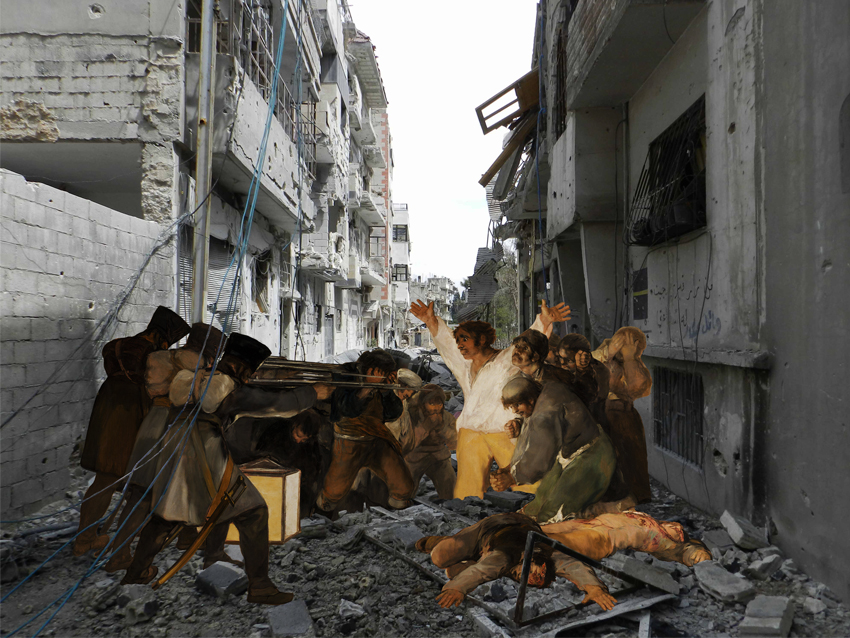
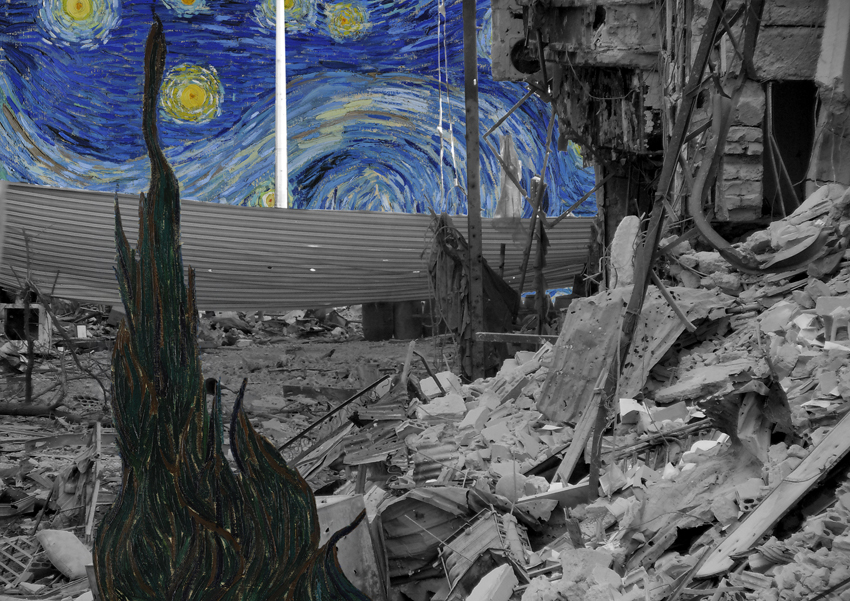
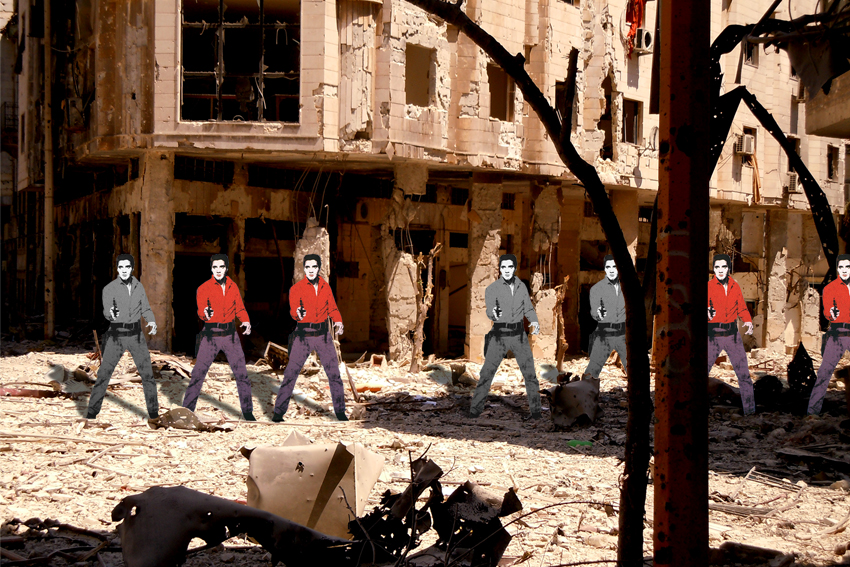
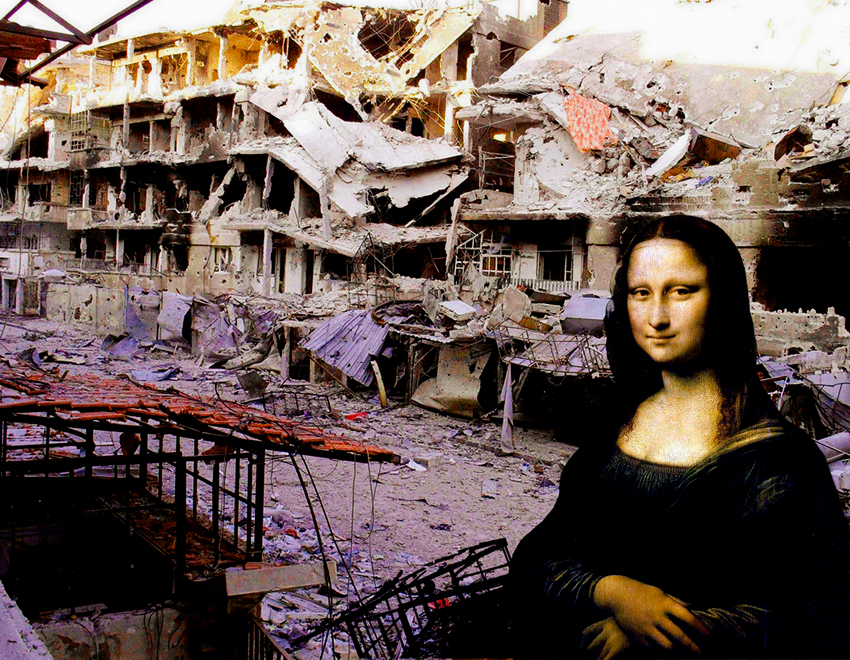
Tammam Azzam: Syrian museum

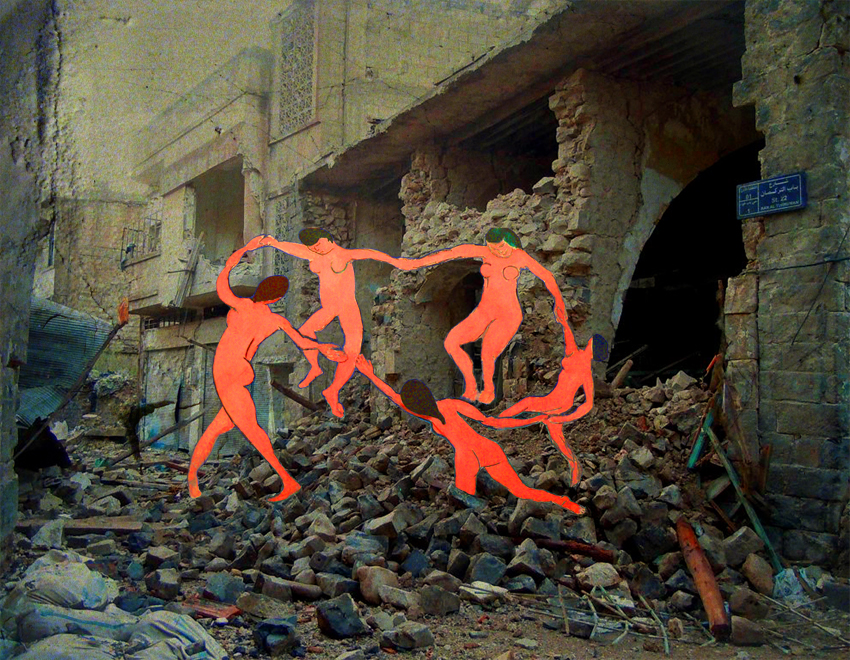
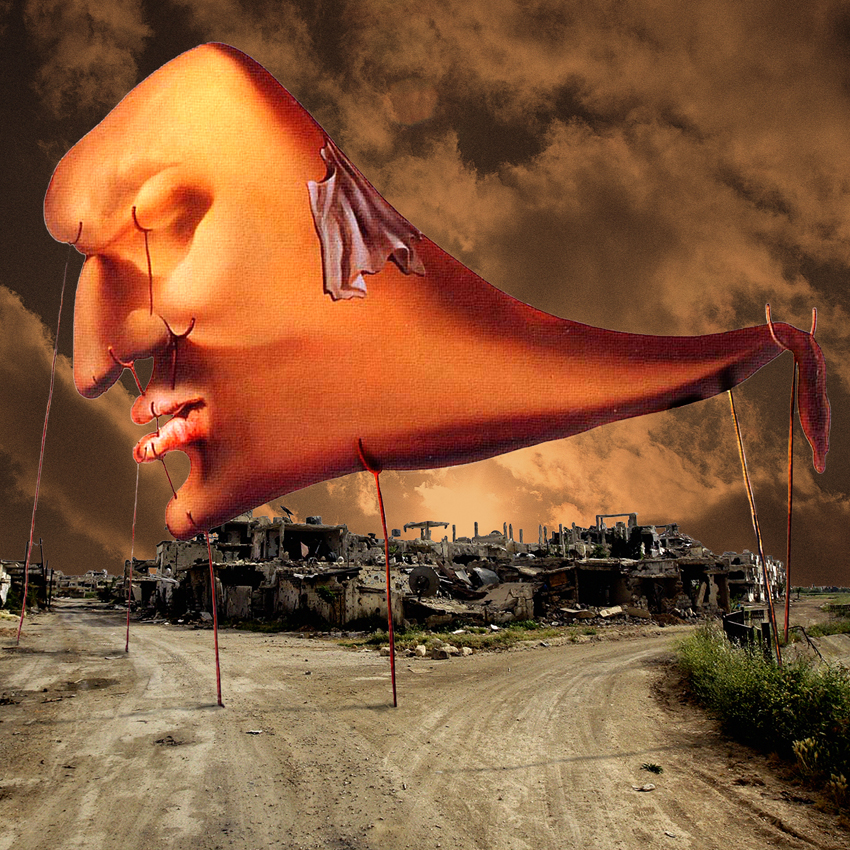
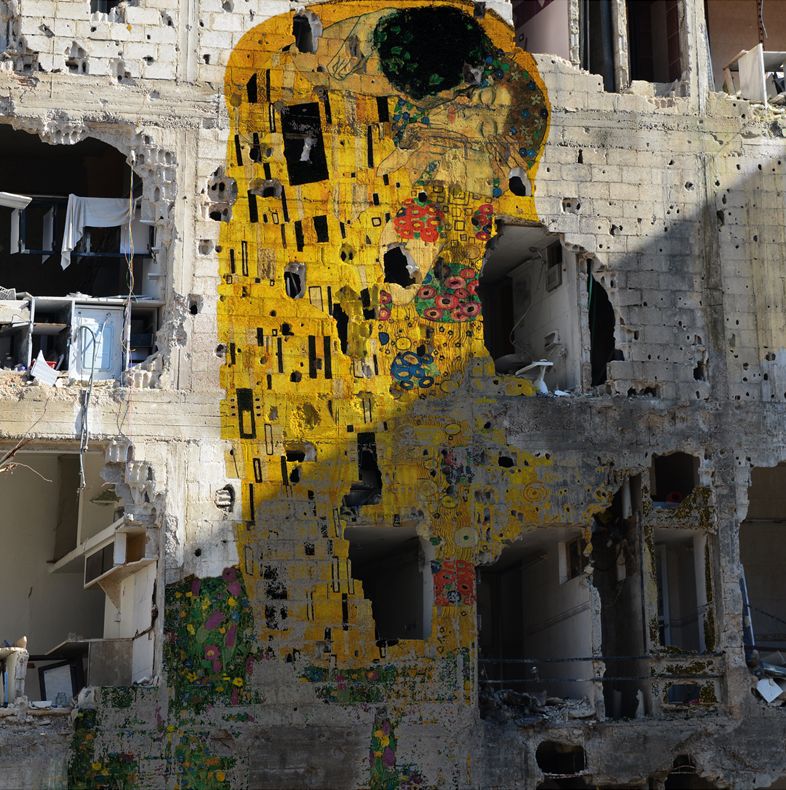
The Syrian Museum series created for the ‘Syria’ exhibition incorporates iconic subjects from the greatest European masters such as da Vinci, Matisse, Goya and Picasso – paralleling the greatest achievements of humanity with the destruction it is also capable of inflicting. Each is particularly relevant to what has befallen Syria. ‘The Syrian Museum’ series uses Western masterpieces not only for their notoriety and instant recognition, but to demonstrate that Syria has no world-class museums and the regime is presently killing its own cultural heritage. Klimt’s ‘The Kiss’ shows the love and relationship between people and I have juxtaposed this with the capacity of hate the regime holds for its people. A work from this series which has gained international popularity on social networking sites is ‘Freedom Graffiti’. Featured on Saatchi’s Facebook page, this work recieved over 15,000 likes overnight and has been featured in such publications as the NY Times and the International Herald Tribune.This digital composition appropriates Gustave Klimt’s ‘The Kiss’ upon a bullet-ridden wall, displaying the love and relationship between people and I have juxtaposed this with the capacity of hate the regime holds for its people.

text by Tammam Azzam

  Tammam Azzam: Syrian museum

Gustav Klimt’s The Kiss (Freedom Graffiti) | 2013 | archival print on cotton paper edition of 25 | 112 X 112 cm

Tammam Azzam: Syrian museum

Paul Gauguin’s Tahitian Women (On the Beach) | 2012 | archival print on canvas 45 x 40 cm

Tammam Azzam: Syrian museum

Edvard Munch’s The Scream | 2012 | archival print on canvas 100 x 70 cm

Tammam Azzam: Syrian museum

Matisse’s La Danse | 2012 | archival print on canvas | 45 x 60 cm

Tammam Azzam: Syrian museum

Dali’s Sleep | 2012 | archival print on canvas | 40 x 40 cm

Tammam Azzam: Syrian museum

Goya’s The 3rd of May 1808 | 2012 | archival print on canvas | 100 x 133 cm

Tammam Azzam: Syrian museum

Van Gogh’s Starry Night | 70 X 100 cm. Archival Print on Canvas | 2012

Tammam Azzam: Syrian museum

Andy Warhol’s Elvis | 2012 | archival print on canvas | 80 x 120 cm

Tammam Azzam: Syrian museum

Leonardo da Vinci’s Mona Lisa | 2012 | archival print on canvas | 100 x 130 cm

Comments

Post new comment

Your name: *

E-mail: *

The content of this field is kept private and will not be shown publicly.

Comment: *

Biography

Tammam Azzam
Tammam Azzam

Born in 1980, Damascus, Syria Lives and works in Dubai, UAE
Tammam Azzam graduated from the Faculty of Fine Arts in Damascus with a concentration in Oil Painting and subsequently obtained a Fine Arts Certificate in 2001 from Darat al Funun’s Al Kharif Academy, an esteemed artist workshop series led by Syrian master, Marwan Kassab Bashi. Since joining the Shabab Ayyam Young Artists Programme in 2008, he has been featured in several significant events including the group show, ‘Stories from the Levant’, Scope Art Fair, Basel, in 2009, and Art Miami 2010, and has held solo exhibitions at Ayyam Gallery, Damascus in 2010 and Dubai in 2011 and 2012.

Blog at WordPress.com.

Up ↑