Search

band annie's Weblog

I have a parallel blog in French at http://anniebannie.net

Month

October 2013

Another Problem from Hell? Adelson and Wiesel laud Rwanda’s Kagame

Billionaire right-wing donor Sheldon Adelson and Elie Wiesel celebrate Rwandan strongman at TV rabbi’s genocide panel

A run-down of terrorism in Egypt

October 08, 2013/

Nour Youssef has been trying to compile a comprehensive list of terrorist attacks reported in the Egyptian press. The problem, as she notes, is that “they keep publishing the same story under different titles, sometimes lumping a couple incidents together, throwing in an update (without saying it is an update), picking up a detail and sensationalizing it — or all of the above. The result is a flood of bad news that overwhelms readers.” After the jump, our list of reported attacks, in rough chronological order — and some jihadist videos set to really annoying music.

Sinai:

  • In Arish, masked men fired at the State Radio’s building and a bomb caused serious damage to a mosque in al-Masoura Square. Aug. 22
  • On the 26th of August, there was 9 failed terrorist attacks in one day. They arrested suspects, half of them were by Palestinians.

Should Mustafa Khalifa’s ‘The Shell’ Be Translated Into English? You Decide

bandannie’s answer You BET !

By on October 8, 2013 • ( 0 )

The And Other Stories groups in New York, Cairo, and London all held their first discussion — of Hani al-Rahib’s The Epidemic – and now are moving on to book number two, Mustafa Khalifa’s The Shell:
The New York City discussion of The Shell will be on Monday, Oct 28 at 7:30pm at Book Culture, which is at 536 West 112th Street (between Broadway & Amsterdam). The Cairo date is yet to be set.
But for those who want to get reading, you can order the book online in Arabic (here). Or you can download a pdf or word document (here). According to organizer Elisabeth Jaquette, “It’s perhaps one of the most accessible of all the books we’re reading, so if you’re going to give one of them a shot in Arabic, this could be a good one!”
If you’re looking to read in English, there is a short translated excerpt by Ruth Ahmedzai up on the And Other Stories’ website (here). Another excerpt will be up shortly.

Jaquette adds that readers should “remember to add your thoughts on the author page for Mustafa Khalifa on And Other Stories’ website! Our feedback is how AOS can decide whether they might like to publish one of these books, so please do weigh in!”

More on Mustafa Khalifa and The Shell from AOS:

Mustafa Khalifa (b.1948) is a Syrian author. He went to university in France, where he studied art and film direction, and was arrested at the Damascus airport when he returned from Paris. From 1982-1994, Khalifa was held without trial at various state security prisons, including the infamous Tadmur Military Prison, a detention center described as a “kingdom of death and madness” by poet Faraj Bayraqdar and the “absolute prison” by dissident Yassin al-Haj Salih. The Shell is his first and only book, and has been lauded as one of the finest examples of Arabic prison literature.

The Shell (Beirut: Dar al-Adab, 2008) is a gripping memoir, written in spare, stripped-down prose punctuated by introspective, poetic reflection. In it, the first-person narrator describes being apprehended by state security and the twelve years in prison that follow. He details the brutal torture at the hands of the prison guards and military police, as well as the social fabric of prison life. Early on, Khalifa tells the guards that he is a Christian, hoping they will understand that their accusation that he is working with the Muslim Brotherhood is clearly false. Yet with true catch-22 logic and a belief in the infallibility of Syria’s state intelligence, the guards tell him that if he has been arrested, it must be for good reason, and as a Christian accused of working for the Brotherhood, he is doubly a traitor. As a professed atheist, Khalifa is ostracized by his fellow inmates, members of the Muslim Brotherhood, who suspect he may be a spy planted among them by the state. Tortured by the guards and shunned by the other prisoners, he retreats further into himself, forming a protective shell around himself for which the book is named.

For more, read Shareah Taleghani’s review in the Syrian Studies Association Bulletin, or Anne-Marie McManus’ review in Jadaliyya. You can also take a look at Mustafa Khalifa’s 2012 editorial: ‘What if Bashar Assad Wins?’

source

باسل شحادة: شوارعنا احتفال الحرية Bassel Shehadeh: Streets of freedom

Freedom for Jihad and Syria’s Wretched of the Earth

On 10 August, 2013, Syrian security forces arrested Syrian journalist and Marxist dissident Jihad Asa’ad Muhammad near Athawra Street in central Damascus. News of his arrest was confirmed by his sister Lina, a fellow Marxist and anti-regime activist forced into hiding. Jihad had been among the few revolutionary activists who remained in the Syrian capital, a deceptively quiet bubble under the strangling iron fist of the regime, despite the ominous threat of arrest hovering over his head. Soon after his arrest, a Facebook page was created that both demanded Jihad’s immediate release and re-published articles he had written during and before the uprising.


There exist, according to conservative estimates, tens of thousands of Syrian civilians similarly languishing in the myriad detention centres across Syria. The vast majority of them are not well-known tech-savvy activists or writers; they do not speak a foreign language or possess social media accounts; and no-one, except for their families, will care to call for their release and will shed a tear if they die in jail. But it is precisely those – the unsung and unknown heroes and heroines of the revolution, the forgotten women and men of impoverished neighbourhoods and the marginalised countryside, and Syria’s wretched of the earth – were the protagonists of Jihad Muhammad’s pieces.

His pieces tell us about Massoud, the “Lionel Messi of the Syrian revolution,” a 17-year-old schoolboy from one of the poorest Damascene cantons. Massoud, a top-scorer of his neighbourhood’s football club, participated in demonstrations wearing Messi’s shirt for FC Barcelona. Taking advantage of his Messi-like speed and diminutive size, he raised the revolutionary flag and freedom signs on rooftops, scrawled anti-regime graffiti, and constantly dodged the security forces. Massoud was arrested from his classroom and, for two months, tortured while in custody. After his release, he joined the Free Syrian Army.

Jihad also tells us about Umm Haytham, as one of thousands of Syrian women tirelessly going to jails and security branches to look for the whereabouts of their detained and forcibly disappeared sons, brothers, husbands and loved ones. They travel every day under shelling and despite checkpoints, in scorching sun and heavy rain, and put up with insulting remarks of police officers and soldiers. And they remain steadfast, buoyed with hope.

He tells us about revolutionary women from socially-conservative and patriarchal communities. Despite their frontline role in the uprising, those women are viewed with repugnance by the self-styled “feminists” and bourgeois “leftists” who claim to promote women’s rights while not being able to see beyond a woman’s veil and looks.

He tells us about Adnan, an Alawite soldier from the Latakia Mountains who served in Assad’s army but vehemently supported the uprising. Unable to defect, he was ultimately killed in battle, prompting his bereaved mother to murmur helplessly: “Their sons are in mansions while our sons go to graves.”

In addition, Jihad explores the social, economic and political roots of the Syrian uprising and its evolution into an asymmetrical militarised civil conflict, elegantly discussing the sectarian demographics and the gluttonous neo-liberalism that characterises Assad’s ostensibly secular and socialist Syria.

Issues concerning social justice, class struggle, and critique of the urban bourgeoisie were focal points of Jihad’s articles, coupled with themes of civil and political liberties and the struggle against tyranny.

Born in 1968 to a left-wing family in Damascus countryside, Jihad is the eldest male among nine siblings. Between 2003 and 2004, the Damascus-based Radio Sawt Asha’ab aired folktales he wrote and edited. The first major turning point in Jihad’s journalistic career came in 2006 when he became Editor-in-Chief of the Qassioun newspaper, founded that year by the National Committee for the Unity of Syrian Communists, an off-shot of the Syrian Communist Party. But Jihad was more than just an editor. He encouraged young Syrian writers to contribute and kept the newspaper going through the thick and thin for five years. Jihad himself wrote columns about a plethora of subjects ranging from arts and culture to state corruption, capitalism and imperialism. His vocal criticism of the government made him a target of persecution by the police state long before March 2011.

For him, the Syrian uprising lay bare several truths. The biggest of them, as Jihad puts it, is that “long gone are the times when the omnipotent, corrupt and pretentious political and corporate elite dominated their subjects. Now that people have virtually lost what gave them the little that was left for them, people no longer have anything to lose except for the chains that used to shackle them and hinder their liberation.” Moreover, “He who kills his people and burns his country, its cities, patrimonies and historical citadels is not entitled to claim that he supports other peoples’ struggles for freedom.”

Another truth that was exposed by the Syrian revolution is that while people began to liberate themselves, the mainstream leftist elite in Syria tightened its own fetters. The communist Qassioun newspaper took a hostile stance towards the revolution ‒ Jihad’s column existed as the paper’s sole space that truly sided with the people’s demands until he left the paper and began to write independently only a few months after the revolution’s outbreak. Jihad’s writings got more radical and revolutionary as the uprising went on. Though his articles could fall into populism and excessive optimism occasionally, he always maintained a room for rational and critical analysis while never pontificating or pretending to know more than the revolting masses.

Jihad’s ex-comrade Qadri Jamil, co-founder of Qassioun paper and the national Committee for the Unity of Syrian Communists, would go on to become the Deputy Prime Minister of Economic Affairs. Many of Jamil’s fellow veteran Syrian communists, who for decades lectured the Syrian proletariat about revolution and liberation, now looked down with degradation and repulsion at the “rabble” causing chaos and riots. In one of his most eloquent and scathing symbolic texts, published on the first anniversary of the beginning of the uprising in Dara’a, Jihad used the shoe metaphor to describe those old “revolutionaries”: A privileged bourgeois man suddenly discovered a newfound empathy with the poor so he called himself a revolutionary and started seeking a way to help the oppressed and subjugated attain their rights. He started preaching to the villagers, peasants and farmers who understood nothing from his big slogans, complex language and empty rhetorics. People visited him out of pity only when he was attacked by the police, landlords and village leaders. Ostracised, hungry, naked, and disappointed that his passionate speeches failed to “inspire the masses,” the self-proclaimed “revolutionary” man sold himself out to the new affluent leaders of the village who sought to keep him in their pocket. The revolutionary man quickly began attending their bountiful feasts wearing the shoes he was gifted. With the passing of some years, he was reduced to a mere pair of shoes whose only mission is to attend meals and be worn by those who lavished him with their charity. The metaphor used by Jihad in this article articulates the situation of many self-appointed revolutionaries not only in Syria but in the Middle East and worldwide.

In another sharp piece, Jihad Muhammad addressed the artists and intellectuals who thought they are entitled to celebrity treatment within the revolutionary movement. In April of 2011 when mass protests spread to the working-class suburb of Douma in Damascus’ Eastern Ghouta, some artists, intellectuals and actors hoped to climb on the bandwagon and hire themselves as its custodians and spokespersons. Engaging the revolution as an opportunity to nurture their egos, they considered the people of Douma a worthless, ignorant mob that must be educated. To their disbelief, people in Douma did not look at them with awe. Unwilling to allow another power dictate or lecture them, the people treated them as demonstrators rather than VIP guests. Those artists would abandon the revolution when it stopped being “cool and “sexy,” and when it no longer lived up to the lofty standards of their ivory towers. Jihad’s letter to them succinctly and rigorously sums up the Syrian revolution:

“This uprising does not need the intellectual elite as masters and theoreticians. Rather, it is the elite who need the uprising to liberate them from their ignorance. And in order to deserve to be a part of the uprising, the elite must be ready to take classes in the Syrian streets about the art of giving, living and freedom.”

Having taken inventory of Jihad’s writing and of his participation on the ground, it is not surprising at all that he was eventually arrested. Perhaps some might be shocked that two and a half years into what has become a grinding military stalemate, the Syrian regime is still arresting seemingly harmless unarmed activists and writers. Certainly not all of the regime’s actions are rational, but the systematic bid to arrest or kill people with free pens and loud voices is a deliberate, concerted tactic that the regime will deploy until the end.

source

Obama Botched an Earlier Syria Peace Deal

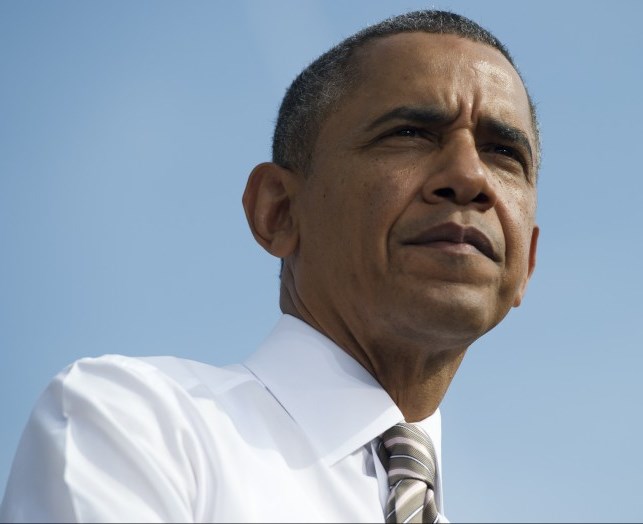
One year and 80,000 lives ago, the U.N. envoy had carved a path for a government “transition.” But the White House and Hillary Clinton rejected it.

(SAUL LOEB/AFP/Getty Images)


cdn-media_nationaljournal_com

Despite Secretary of State John Kerry’s frenetic efforts, preparations for the “Geneva II” peace conference on Syria’s civil war are already foundering. The rebel movement has become increasingly radicalized against Syrian dictator Bashar al-Assad and more fractured. A newly confident Assad, meanwhile, has somewhat relegitimized himself as a signatory to a new chemical-weapons ban negotiated by the United States and Russia under U.N. auspices, which his government is tasked with implementing over the next year. Defying global opprobrium over his use of sarin gas, Assad has also positioned himself in a series of high-profile TV interviews as a preferable alternative to Islamist rebels who want to create a fundamentalist state.

All of which should prompt a reexamination of the first Geneva conference in the summer of 2012, on which Kerry’s new push for peace is based. According to some officials involved, perhaps the greatest tragedy of Syria is that, some 80,000 lives ago, President Obama might have had within his grasp a workable plan to end the violence, one that is far less possible now. But amid the politics of the 2012 presidential election—when GOP nominee Mitt Romney regularly accused Obama of being “soft”—the administration did little to make it work and simply took a hard line against Assad, angering the special U.N. Syria envoy, Kofi Annan, and prompting the former U.N. secretary-general to quit, according to several officials involved.

Former members of Annan’s negotiating team say that after then-Secretary of State Hillary Rodham Clinton and Russian Foreign Minister Sergei Lavrov on June 30, 2012, jointly signed a communique drafted by Annan, which called for a political “transition” in Syria, there was as much momentum for a deal then as Kerry achieved a year later on chemical weapons. Afterward, Annan flew from Geneva to Moscow and gained what he believed to be Russian President Vladimir Putin’s consent to begin to quietly push Assad out. But suddenly both the U.S. and Britain issued public calls for Assad’s ouster, and Annan felt blindsided. Immediately afterward, against his advice, then-U.N. Ambassador Susan Rice offered up a “Chapter 7” resolution opening the door to force against Assad, which Annan felt was premature.

Annan resigned a month later. At the time, the soft-spoken Ghanaian diplomat was cagey about his reasons, appearing to blame all sides. “I did not receive all the support that the cause deserved,” Annan told reporters in Geneva. He also criticized what he called “finger-pointing and name-calling in the Security Council.” But former senior aides and U.N. officials say in private that Annan blamed the Obama administration in large part. “The U.S. couldn’t even stand by an agreement that the secretary of State had signed in Geneva,” said one former close Annan aide who would discuss the talks only on condition of anonymity. “He quit in frustration. I think it was clear that the White House was very worried about seeming to do a deal with the Russians and being soft on Putin during the campaign.” One of the biggest Republican criticisms of Obama at the time was that he had, in an embarrassing “open mike” moment, promised Moscow more “flexibility” on missile defense after the election.

Administration officials deny this account, as do some who were involved at the State Department. Nonetheless, Frederic Hof, a U.S. ambassador who was Clinton’s special adviser for transition in Syria at the time, agrees that the negotiations could have been better handled. The harsh demand that “Assad must go” voiced by Clinton and British Foreign Secretary William Hague was “gratuitous,” says Hof, a senior fellow at the Atlantic Council. “Perhaps a greater effort should have been made to give Annan the time to do his due diligence.” Still, Hof says he saw no evidence that the administration was posturing for political reasons.

A current senior State Department official concedes that one of the problems with making the Annan communique work may have been Clinton’s distaste for getting involved in extended direct mediation, in dramatic contrast to her successor, who has opened up negotiations on several fronts at once—with Syria and the Russians, with Iran, and between the Palestinians and Israelis. “We’ve made more trips to the Mideast in the last nine months than she made in four years,” says this official.

While Clinton excelled at “soft” power—selling America’s message abroad—one emerging criticism of her four-year tenure at State was that she consistently avoided getting her hands dirty with direct mediation. Clinton agreed to leave key negotiations in crisis spots—in particular the Mideast and south-central Asia—to special envoys such as George Mitchell and Richard Holbrooke, and she rarely stepped in as each of them failed. Veteran reporter David Rohde, in an assessment as Clinton was leaving office in January, suggested that Clinton wanted to avoid embarrassment or failure ahead of a 2016 presidential run; he quoted one State Department official as saying that he was “really happy to have someone in the job who does not retain political ambitions.”

Still, Hof and critics of the administration say a 2012 peace deal would have been a steep, uphill climb at best. “I think there were a couple of problems that raised their ugly head in the immediate wake of this thing being signed on June 30,” Hof says. “Number one, it became clear to both Annan and the Russians that Assad had no interest whatever in being ‘transitioned.’ He was able to read the text of the Geneva agreement quite accurately…. By the same token, the opposition was unhappy with Kofi’s handwork because there was no explicit language to the effect that Assad will step down.”

But what happened next was that the Geneva communique disappeared onto a dusty shelf; even Kerry when he took office chided the Obama administration for being “late” in pushing peace. And what Kerry faces now is a newly assertive Assad and a vastly more fractured opposition riddled with extreme elements that want no part of a U.S.- or Western-brokered peace. All of which makes that missed opportunity even more painful.

                            This article appears in the October  5, 2013, edition of National Journal Magazine as A Lost Chance for Peace.

source

Max Blumenthal on “Goliath: Life and Loathing in Greater Israel”

from Democracy Now click on image
amy_goodman

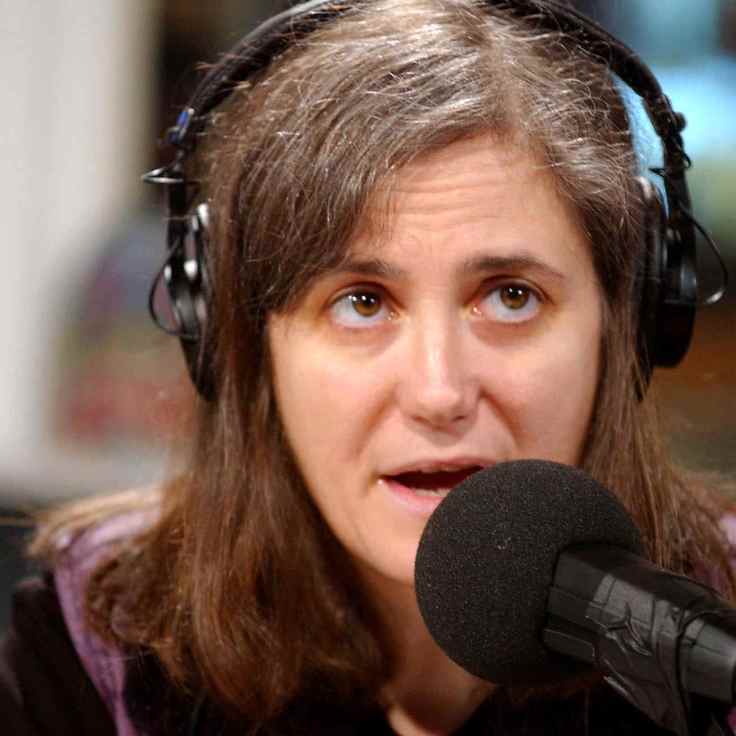
As Israeli Prime Minister Benjamin Netanyahu is continuing a public campaign to cast doubt on U.S. diplomatic engagement with Iran, we speak to journalist Max Blumenthal, author of the new book, “Goliath: Life and Loathing in Greater Israel.” Blumenthal looks at life inside Netanyahu’s Israel and the Occupied Territories. “I was most surprised at the banality of the racism and violence that I witnessed and how it’s so widely tolerated because it’s so common,” says Blumenthal about his four years of reporting in Israel. “And I’m most surprised that it hasn’t made its way to the American public … that’s why I set out to do this endeavor, this journalistic endeavor, to paint this intimate portrait of Israeli society for Americans who don’t see what it really is.” Click here to watch Part 2 of his interview.

Gaza: Crushed between Israel and Egypt

                    on October 2, 2013 35

An empty smuggling tunnels in Rafah, Gaza. (Photo: Marius Arnesen)

An empty tunnel in Rafah, Gaza. (Photo: Marius Arnesen)

The furor over the recent chemical weapons attack in Syria has overshadowed disturbing events to the south, as Egypt’s generals wage a quiet war of attrition against the Hamas leadership in Gaza.

Hamas has found itself increasingly isolated, politically and geographically, since the Egyptian army ousted the country’s first democratically elected president, Mohammed Morsi, in early July.

Hamas is paying the price for its close ties to Egypt’s Muslim Brotherhood, the Islamic movement that briefly took power through the ballot box following the revolutionary protests that toppled dictator Hosni Mubarak in 2011.

Since the army launched its coup three months ago, jailing the Brotherhood’s leadership and last week outlawing the movement’s activities and freezing its assets, Hamas has become a convenient scapegoat for all signs of unrest.

Hamas is blamed for the rise of militant Islamic groups in the Sinai, many drawn from disgruntled local Bedouin tribes, which have been attacking soldiers, government institutions and shipping through the Suez canal. The army claims a third of the Islamists it has killed in recent operations originated from Gaza.

At an army press conference last month, several Palestinians “confessed”  to smuggling arms from Gaza into Sinai, while an Egyptian commander, Ahmed Mohammed Ali, accused Hamas of “targeting the Egyptian army through ambushes.”

The Egyptian media have even tied Hamas to a car bombing in Cairo last month which nearly claimed the life of the new interior minister, Mohammed Ibrahim.

Lurking in the shadows is the army’s fear that, should the suppressed Muslim Brotherhood choose the path of violence, it may find a useful ally in a strong Hamas.

A crackdown on the Palestinian Islamic movement has been all but inevitable, and on a scale even Mr Mubarak would have shrunk from. The Egyptian army has intensified the blockade along Egypt’s single short border with Gaza, replicating that imposed by Israel along the other three.

Over the past weeks, the army has destroyed hundreds of tunnels through which Palestinians smuggle fuel and other necessities in short supply because of Israel’s siege.

Egypt has bulldozed homes on its side to establish a “buffer zone”, as Israel did inside Gaza a decade ago when it still occupied the enclave directly, to prevent more tunnels being dug.

That has plunged Gaza’s population into hardship, and dealt a harsh blow to the tax revenues Hamas raises on the tunnel trade. Unemployment is rocketing and severe fuel shortages mean even longer power cuts.

Similarly, Gaza’s border crossing with Egypt at Rafah – the only access to the outside for most students, medical patients and business people – is now rarely opened, even to the Hamas leadership.

And the Egyptian navy has been hounding Palestinians trying to fish off Gaza’s coast, in a zone already tightly delimited by Israel. Egypt has been firing at boats and arresting crews close to its territorial waters, citing security.

Fittingly, a recent cartoon in a Hamas newspaper showed Gaza squeezed between pincers – one arm Israel, the other Egypt. Sami Abu Zuhri, a Hamas spokesperson, was recently quoted saying Egypt was “trying to outmatch the Israelis in tormenting and starving our people”.

Hamas is short of regional allies. Its leader Khaled Meshal fled his Syrian base early in the civil war, alienating Iran in the process. Other recent supporters, such as Turkey and Qatar, are also keeping their distance.

Hamas fears mounting discontent in Gaza, and particularly a demonstration planned for November modelled on this summer’s mass protests in Egypt that helped to bring down Morsi and the Muslim Brotherhood.

Hamas’ political rival, Fatah – and the Palestinian Authority, based in the West Bank – are reported to be behind the new protest movement.

The prolonged efforts by Fatah and Hamas to strike a unity deal are now a distant memory. In late August the PA annnounced it would soon be taking “painful decisions” about Hamas, assumed to be a reference to declaring it a “rogue entity” and thereby cutting off funding.

The PA sees in Hamas’ isolation and its own renewed ties to the Egyptian leadership a chance to take back Gaza.

As ever, Israel is far from an innocent bystander.

After the unsettling period of Muslim Brotherhood rule, the Egyptian and Israeli armies – their strategic interests always closely aligned – have restored security cooperation. According to media reports, Israel even lobbied Washington following the July coup to ensure Egypt continued to receive generous US aid handouts – as with Israel, mostly in the form of military assistance.

Israel has turned a blind eye to Egypt pouring troops, as well as tanks and helicopters, into Sinai in violation of the 1979 peace treaty. Israel would rather Egypt mop up the Islamist threat on their shared doorstep.

The destruction of the tunnels, meanwhile, has sealed off the main conduit by which Hamas armed itself against future Israeli attacks.

Israel is also delighted to see Fatah and Hamas sapping their energies in manoeuvring against each other. Political unity would have strengthened the Palestinians’ case with the international community; divided, they can be easily played off against the other.

That cynical game is in full swing. A week ago Israel agreed for the first time in six years to allow building materials into Gaza for private construction, and to let in more fuel. A newly approved pipe will double the water supply to Gaza.

These measures are designed to bolster the PA’s image in Gaza, as payback for returning to the current futile negotiations, and undermine support for Hamas.

With Egypt joining the blockade, Israel now has much firmer control over what goes in and out, allowing it to punish Hamas while improving its image abroad by being generous with “humanitarian” items for the wider population.

Gaza is dependent again on Israel’s good favor. But even Israeli analysts admit the situation is far from stable. Sooner or later, something must give. And Hamas may not be the only ones caught in the storm.

source

Jewish Peer Attacks Violinist for Israel Apartheid Remark

Apology:  At 6:44
I called the inimitable Nigel Kennedy, Simon, the name of a guy I used
to know.  It’s too late to change it now, but it just proves that
nobody’s perfect. But still: Racist and abusive comments will be
deleted.

World-renowned violinist Nigel Kennedy has been attacked
by Baroness Deech, of Cumnor, for something that he said at a BBC Proms
concert, featuring the Palestinian Strings, a group of talented young
musicians aged between twelve and twenty-three.

REFERENCES:

Nigel Kennedy plays Spring from Vivaldi’s The Four Seasons at the 2013 BBC Proms
http://www.youtube.com/watch?v=jDXBnS…

Vivaldi, ‘il Prete Rosso’- The Four Seasons,encore… (Nigel Kennedy “fresh insights” 2013) The full concert.
http://www.youtube.com/watch?v=sFtlEH…

انظرو كيف تعامل النساء-Women in Palestine
http://www.youtube.com/watch?v=4aveeY…

Dispatches: Inside Britain’s Israel Lobby Video – Channel 4 UK – Broadcast November 16, 2009.
http://www.youtube.com/watch?v=0E70Bw…

Gresham College The Universities: Under Regulation – Baroness Ruth Deech
Published on Apr 24, 2012
http://www.youtube.com/watch?v=8sYzVl…

Blog at WordPress.com.

Up ↑