A killer story (and yet more evidence that the revelations from Edward Snowden are undeniably in the public interest).
This is by Glenn Greenwald, Laura Poitras and Ewen MacAskill in The Guardian:
The National Security Agency routinely shares raw intelligence data withIsrael without first sifting it to remove information about US citizens, a top-secret document provided to the Guardian by whistleblower Edward Snowden reveals.
Details of the intelligence-sharing agreement are laid out in a memorandum of understanding between the NSA and its Israeli counterpart that shows the US government handed over intercepted communications likely to contain phone calls and emails of American citizens. The agreement places no legally binding limits on the use of the data by the Israelis.
The disclosure that the NSA agreed to provide raw intelligence data to a foreign country contrasts with assurances from the Obama administration that there are rigorous safeguards to protect the privacyof US citizens caught in the dragnet. The intelligence community calls this process “minimization”, but the memorandum makes clear that the information shared with the Israelis would be in its pre-minimized state.
The deal was reached in principle in March 2009, according to the undated memorandum, which lays out the ground rules for the intelligence sharing.
The five-page memorandum, termed an agreement between the US and Israeli intelligence agencies “pertaining to the protection of US persons”, repeatedly stresses the constitutional rights of Americans to privacy and the need for Israeli intelligence staff to respect these rights.
But this is undermined by the disclosure that Israel is allowed to receive “raw Sigint” – signal intelligence. The memorandum says: “Raw Sigint includes, but is not limited to, unevaluated and unminimized transcripts, gists, facsimiles, telex, voice and Digital Network Intelligence metadataand content.”
According to the agreement, the intelligence being shared would not be filtered in advance by NSA analysts to remove US communications. “NSA routinely sends ISNU [the Israeli Sigint National Unit] minimized and unminimized raw collection”, it says.
Although the memorandum is explicit in saying the material had to be handled in accordance with US law, and that the Israelis agreed not to deliberately target Americans identified in the data, these rules are not backed up by legal obligations.
“This agreement is not intended to create any legally enforceable rights and shall not be construed to be either an international agreement or a legally binding instrument according to international law,” the document says.
In a statement to the Guardian, an NSA spokesperson did not deny that personal data about Americans was included in raw intelligence data shared with the Israelis. But the agency insisted that the shared intelligence complied with all rules governing privacy.
“Any US person information that is acquired as a result of NSA’ssurveillance activities is handled under procedures that are designed to protect privacy rights,” the spokesperson said.
The NSA declined to answer specific questions about the agreement, including whether permission had been sought from the Foreign Intelligence Surveillance (Fisa) court for handing over such material.
The memorandum of understanding, which the Guardian is publishing in full, allows Israel to retain “any files containing the identities of US persons” for up to a year. The agreement requests only that the Israelis should consult the NSA’s special liaison adviser when such data is found.
Notably, a much stricter rule was set for US government communications found in the raw intelligence. The Israelis were required to “destroy upon recognition” any communication “that is either to or from an official of the US government”. Such communications included those of “officials of the executive branch (including the White House, cabinet departments, and independent agencies), the US House of Representatives and Senate (member and staff) and the US federal court system (including, but not limited to, the supreme court)”.
It is not clear whether any communications involving members of US Congress or the federal courts have been included in the raw data provided by the NSA, nor is it clear how or why the NSA would be in possession of such communications. In 2009, however, the New York Times reported on “the agency’s attempt to wiretap a member of Congress, without court approval, on an overseas trip”.
The NSA is required by law to target only non-US persons without an individual warrant, but it can collect the content and metadata of Americans’ emails and calls without a warrant when such communication is with a foreign target. US persons are defined in surveillance legislation as US citizens, permanent residents and anyone located on US soil at the time of the interception, unless it has been positively established that they are not a citizen or permanent resident.
Moreover, with much of the world’s internet traffic passing through US networks, large numbers of purely domestic communications also get scooped up incidentally by the agency’s surveillance programs.
The document mentions only one check carried out by the NSA on the raw intelligence, saying the agency will “regularly review a sample of files transferred to ISNU to validate the absence of US persons’ identities”. It also requests that the Israelis limit access only to personnel with a “strict need to know”.
Israeli intelligence is allowed “to disseminate foreign intelligence information concerning US persons derived from raw Sigint by NSA” on condition that it does so “in a manner that does not identify the US person”. The agreement also allows Israel to release US person identities to “outside parties, including all INSU customers” with the NSA’s written permission.
Although Israel is one of America’s closest allies, it is not one of the inner core of countries involved in surveillance sharing with the US – Britain, Australia, Canada and New Zealand. This group is collectively known as Five Eyes.
The relationship between the US and Israel has been strained at times, both diplomatically and in terms of intelligence. In the top-secret 2013 intelligence community budget request, details of which were disclosed by the Washington Post, Israel is identified alongside Iran and China as a target for US cyberattacks.
While NSA documents tout the mutually beneficial relationship of Sigint sharing, another report, marked top secret and dated September 2007, states that the relationship, while central to US strategy, has become overwhelmingly one-sided in favor of Israel.
“Balancing the Sigint exchange equally between US and Israeli needs has been a constant challenge,” states the report, titled ‘History of the US – Israel Sigint Relationship, Post-1992′. “In the last decade, it arguably tilted heavily in favor of Israeli security concerns. 9/11 came, and went, with NSA’s only true Third Party [counter-terrorism] relationship being driven almost totally by the needs of the partner.”
I have wonderful news to share with you. After our success in persuading Congress not to invade Syria and in prevailing upon Russia to accept a peaceful alternative, we achieved an astonishing breakthrough in the Israeli-Palestinian negotiations.
Although some of the details remain to be resolved, both sides have agreed on the terms of a two-state solution. Israel has agreed to withdraw to the pre-1967 borders. The rest of the country, including East Jerusalem and Gaza, will become Palestine. All citizens of both countries will be able to travel freely in their own country and the other, as well.
This breakthrough has been accomplished through the tireless, resourceful and imaginative efforts of all the parties, with special mention to Secretary of State John Kerry. The result will be peace at last between Israel and the new state of Palestine.
The key to success has been that both Israel and Palestine will be Jewish states. Non-Jews living in these states will be invited to convert to Judaism. In fact, President Mahmoud Abbas converted years ago and has only now revealed his adoptive faith and his new name, Machlah Abimoaz. Those who choose not to convert will be ethnically cleansed, in accordance with Israeli tradition.
We are now seeking to resolve the the issue of the Israeli-occupied Golan Heights, but Prime Minister Netanyahu assures us that a Jewish state in Syria is something they are willing to consider, as well as Jewish states in Lebanon, Jordan, the Sinai peninsula and possibly even Saudi Arabia and Iraq.
Through comprehensive and sustained efforts, we are confident that we can achieve the goal of Jewish states living side by side in peace and security throughout the Middle East. This approach requires working with Israelis, Palestinians, and other stakeholders over the long term, and my Administration will do just that.
Thank you for your support in promoting peaceful solutions and helping me earn my Nobel Peace Prize.
More than 400 Detainees at Risk of Death in a Secret Detention in Syria
Violation Documentation Center in Syria – September 2013
VDC said in a report issued today entitled “Escaping Hell” that the Syrian regime forces, along with members of the Forth Military Brigade have been carrying out many extrajudicial killings against the detainees in the Air Force Intelligence Branch in Harasta. The report also pointed out that there are more than 400 detainees at risk of death penalty, respectively; all of them were detained by the above mentioned branch as they are being killed in cold blood after there are being exploited in digging trenches and barricades to protect the soldiers in the vicinity of the branch.
“Escaping hell”, the thirty-page report is based on the testimonies of five former detainees in the same branch, who managed to escape on 02.07.2013 while carrying out excavation work “hard labor”. Detailed interviews have been conducted with all the witnesses, firstly, on the tragic conditions the detainees are living in the branch, and secondly, on the extrajudicial killings that have been witnessed in the branch recently. The witnesses are: AhmadSaberHamada (27 years old), Lo’ayKamalBakour (25 years old), FawazIbraheem Badran (23 years old), HassanNasrallah (25 years old), and MouafakJandali ( 25 years old)
The Lawyer Razan Zaytouna, who has visited the witnesses accompanied by VDC Field Monitoring Team, says:” There are more than four hundred detainees are different in age and period of the arrest, are waiting death by firing squad without a sense of guilt or responsibility , and all of them who have been held for more than a year”.
Figures and statistics show that hundreds of thousands of Syrian citizens have been subjected to arbitrary arrest by members the Syrian regime’s intelligence. Moreover, many of the reports
and testimonies of former detainees show that they have all been subjected to severe physical and psychological torture resulting in hundreds of cases to death. VDC managed to document the death of more than three thousand prisoners in the cells of the Syrian Intelligence since the revolution began in March 2011
The witnesses mentioned the names of the five victims who have been killed in the branch recently. They are: Abdulmoueen Shalit, AbuKasemNaddaf, WaelSaraqbi, Mohammed Khatib and GhassanBallur. The witnesses –in their testimonies- confirmed stressed the brutal acts such as beating and torturing that have been carried out against the detainees, especially during interrogation, which in some cases lasted for months .they also mentioned the deteriorated health condition in the Branch that caused serious skin diseases to all the detainees, who have been also suffering a malnutrition till they got the “Starvation disease”
The witness Ahmad Hamadeh says describing the torture during interrogation:
In the interrogation room there was ‘Bisat Al Reeh’ (a way of torturing prisoners by laying them down, tying their feet and whipping them severely and continuously) and ‘Dulab’ (the car tire). When they put me in the ‘Dulab’, they beat me like 50 times with a hard green stick. In one occasion, they put me in the ‘Dulab’ for 16 hours and beat me 400 times and they electrified me in the genitals. The interrogator always electrified our bodies with a charged electric stick; till our burned skin smelled. In another occasion, I was hanged in the bathroom for five day in a row; it’s a very dirty place where the insects walk on our bodies and we can do nothing about it.
The health conditions of the detainees are all tragic. They get no health care at all. On the contrary, the “Devil’s Doctors” -as described in the report- contributed to the beatings and torturing, similar to other agents in that security branch. The detainee Hassan Nasrallah says describing the first moments following the severe torture he was exposed when he was being examined by the two doctors in the Branch:
I thought that the doctors would help me. One of the doctors asked me” who did this (torture and beating) to you?” I told him “the shabeeha outside” so he beat me by a huge stick. The second doctor wiped the blood on my back and gave me a pill that might be a pain killer.”
An Image showing traces of torture on the body of the former detainee Hassan Nasralla
Due to the lack of health care, many diseases have spread among the detainees, especially the chronic skin diseases. The detainees have named one of those diseases as “fish scales”. The detainee Ahmad says about this says strange disease that even detained doctors could not diagnose:
The ‘Fish Scales’ forces the detainee to constantly rub inflicted parts till they bleed. When the blood dries, it leaves a carbuncle full of pus, blood, and germs with 1 or 2cm thickness to the degree that the detainee can’t move. With time passing, these carbuncles dried up and get very hard and start ‘eating’ the skin to take the shape of fish scales.
While asking and interviewing the five detainees, they all reported that field executions are committed in the branch when a number of detainees are taken to a nearby place to dig trenches and barricades for the regime’s forces to protect them from the attacks of the revolutionary fighting battalions, and when the detainee is fatigue and can no longer work, a lieutenant colonel named “Ma’en”, known as ” the father of death” comes and carries out the execution.
In the same context, Fawaz Badran says:
When they brought Mouhamad Khair Naddaf and Abdulmueen Al Shalit from Doma, Abdulmueen was in a very difficult condition; his body was bluish out of disease and torture. He was about to die. At the barrier, he lived only for six hours, during these hours he was exposed to most horrible torture methods. I believe that no one was ever exposed to such torture like burning his body by inflamed nylon and writing the name of the tyrant Bashar Al Assad on his chest with gunpowder and “fire it up”, in addition to pouring hot water on his body. They asked him to blaspheme and insult God, but he refused and passed away after that…
After that, the five detainees managed to escape the excavation location in the dark in a dream-like journey after they had broken their chain, and arrived to the Eastern Gouta surviving the death by fire shots.
Razan Zaytouna, the General Coordinator in VDC is calling on the transfer of the Syrian file to the International Criminal Court describing the crimes committed by the forces of the Syrian regime as “extremely brutal and horrific”. She is also appealing to the international organization to intervene immediately to save the lives of all the detainees in the Air Force Intelligence Branch and other secret prisons and detention centers in Syria.
*To view the full report, together with the detailed testimonies, please visit the following link:
Five Detainees Escape from Air Force Intelligence Branch in Harasta
More than 400 Detainees at Risk of Death Successively
Violation Documentation Center in Syria
September 2013
On Tuesday, the 27th of Ramadan corresponding to 07/02/2013, five detainees managed to escape the Air Force Intelligence Branch in Harasta in a surrealistic way that even the five detainees themselves do not believe they are still alive after all the horrors they went through since their arrest until the moment they arrived to the safe liberated areas of Eastern Gouta.
VDC team conducted live interviews with the five detainees. This report narrates their detailed story since their arrest until the moment of their escape, and all the atrocities and horrors they witnessed in the Air Force Branch in Harasta, which surpass, in brutality, every imagination.
Through this report, we urgently demand all concerned human rights organizations and international bodies, especially the ICRC, to immediately intervene to save the lives of hundreds of detainees at risk of death, as had happened to the five detainees’ inmates, before it is too late.
Survivors
1-Ahmad saber hamadeh
Born in Damascus Suburbs, 1986. Unmarried. A Freelancer.
Ahmad was one of the first demonstrators in the revolution, later he joined, the early formations of the Free Army in his region, which was founded at that time to protect demonstrations, and which had only a few members then. Ahmad was arrested on 8-7 -2012 in “AlEftrees”, Damascus Suburbs, in an ambush set by the regime’s army. Following his arrest, Ahmad was transfer to one of the military brigades nearby where he was tortured and beaten brutally by soldiers of the regime until the second day at noon when a vehicle of “Air Force Intelligence” in Harasta came and took him the mentioned branch.
2-Louay Kamal Ballur:
Born in Kafr Batna, Damascus 1988, a plumber, unmarried.
He used to go out in peaceful demonstrations. On the morning of 6-2-2012, Louay got arrested at his farm in Kafr Batna, Damascus Suburbs, in a raid campaign and was accused of harboring armed men in his farm.
3–Fawaz Ibrahim Badran:
Born in Kafar Batna, Damascus Suburbs 1990, unmarried, a worker.
In the revolution, he was called “the spray man” for he was spraying the walls with revolutionary slogans. His house has been raided more than 15 times by the regime forces over one year, before he got arrested on March2012 while working in a building near the Trade Market in Kafar Batna after an informer “Awayni” set him up.
4- Hassan Nasrallah:
Born in Irbin, Damascus Suburbs, 25 years old, unmarried, he works in a sweets shop.
Nasrallah was among the most wanted by the regime forces, as he was one of the first armed men against the regime in his hometown, he also participated, prior to his arrest, in the negotiations regarding the exchange of a lieutenant colonel from “Marj Al Sultan Airport” for three detainees of the rebels.
Hassan was arrested on 26-5-2011 by lieutenant colonel “Ma’an” known as “the father of death”, through an ambush set by the regime forces in “Alsaroot Alley” in Irbin. Once he was arrested, Nasrallah was severely beaten, tortured and burned by “kerosene”, and then transferred to the headquarter of Irbeen where he was “crucified” on a troop carrier. After that, security agents burned him by a hot skewer before transferring him to the Air Force Branch in Harasta. There he was “greeted” by Colonel Mohammed Rakhmon and about 400 agents in the yard and beat and stepped on by their boots. Then they picked off his beard, and took him to interrogation at a room three meters under the ground.
5-Mouafaq Jandaly: Born in Irbin, Damascus Suburbs 1988, unmarried, a metalworker.
He was arrested on 26/03/2012 when his house was raided by members of the Air Force Intelligence as they searched the house and found a weapon. Consequently, they started beating and torturing him in front of his family before taking him to the branch.
Air Force Intelligence in Harasta
A Satellite Image Showing the Location of Air Force Intelligence Branch in Harasta
The Air Force Intelligence Branch in Harasta is a subordinate of the Department of the Air Forces Intelligence, which is considered among the most brutal Syrian regime’s security systems as it enjoys wide-ranging powers that transgress all citizens reaching the high ranks within the regime itself. Nominally, it follows the Ministry of Defense, but practically it is considered a self-contained body; a “state within a state”. It is current Commander is Major General “Jameel Hassan“. It is in the so-called “Air Force Command” in Umayyad Square, which is the headquarter of the air forces intelligence in Syria, while the Investigation Branch is in Mezzeh Military Airport. This branch has many secret places of detention within the Fourth Brigade of the Syrian army, especially the Paratrooper Division 555 in Sumeria, Damascus.
As the Syrian revolution started, the Air Force Intelligence Branch in Harasta became one of the worst notorious security branches due to the unprecedented brutal torture, which detainees including women prisons were subjected to in this branch.
In the mentioned branch, there are about 400 detainees; old detainees who have been detained for over a year on charges of “arms”, while most of the detainees who were arrested recently are charged differently by “food ” and ” oil” procurement to Gouta. Those with “weapon possession” charges were being moved to the Air Force intelligence Branch in Mezzeh Military Airport.
*The internal Parts of the Air Force Intelligence Branch:
Collective Detention “Five Collective Cells”
The Air Force Intelligence Branch in Harasta has Five “Collective cells”, one of which is the “Breathing Collective Cell”. The five cells are rooms underground “vaults” with a 3 * 4 m average space, where they put three to four times the number it can accommodate in very bad sanitary conditions. Jailers have set up a “bodybuilding gym” at the door of the cells, and when they want to train, they get several detainees out to be tortured and insulted.
1-The 1st Collective Cell:
It is the largest (4 * 4 m) that can accommodate about twenty people but had about sixty detainees.
The detainee “Fawaz Badran” says about this collective cell:” about 200 days after detention at the” cage V “of the “solitary cells”, they transferred me to “the first collective cell” where I remained for five months. There were widespread skin diseases such as infections, pus and carbuncles. The Ceiling was leaking dirty water “drain water” and the patients did not get more than a single antibiotic pill, even if they were dying”
2-The 2nd Collective Cell: the cell of hell and suicide attempts
It is a special collective cell for those charged of “arms”. It is 3 * 3 m; it can accommodate about 30-35 people, but had about 90-120 detainees. The only available light was a very dim red light. There was also one air opening; a “turbine” which jailers used to turn off as an additional punishment for the detainees.
After Ahmed Hamada was received in the Air Force Branch by extreme beatings and torturing, he was transferred to the 2nd collective cell: Ahmed says: “We were about 117 detainees in the 2nd collective cell. Every five
people sat for a break while the rest had to remain standing. The only Breathing opening was the “turbine”, which they used to turn it off whenever they heard a voice from the cell. On the first day of Ramadan 2012 i.e. in the first half of July, we staged an (esti’saa) that is we refrained from eating anything at all, believing that to be dead is better than that life we were having. Thus we started knocking on the door until assistants came and took about forty people-including me- to another collective cell”
The former detainee Fawaz Badran tells his story about the collective cell:
When I got to the branch, they started beating me and put me in the 2nd collective cell of gunmen, where there were 107 detainees. It is one of the most frustrating collectives where many of the detainees thought of or attempted to commit suicide because of the horror circumstances there. One of the detainees from Zamalka named “Abu Yasser,” tried to hang himself, yet the jailers found out, beat him and then send him to the solitary confinement. Suicide was forbidden because they wanted to keep the detainees only for executions.
They cut off water and electricity, not to mention the spread of disease. None was allowed to produce any sound; not even to whisper, and all the prisoners spent their days standing on their feet.
Once the Brigadier “Mohammed Rahmon” visited us and asked us if “we needed anything”!! Of course we did not dare to say anything for fear of assistants and interrogators. He promised us that food will be better, however, it became less and worse than before his visit.
3-The 3rd Collective cell:
The 3rd collective cell, is 3 * 3 m, where about 90 prisoners are put together. According to the former detainee Fawaz Badran, who was detained there for some time, skin diseases spread there such as “carbuncles” and ulcers that discharge “pus” continuously. Badran also adds:
“You Sleep and when you wake up you find that “a huge carbuncle” filled with pus appeared somewhere on your body, and your skin looked like it was burned. The meals are offered once a day, and they consisted of a loaf of bread, sometimes two, and in very rare occasions three, and a little bulgur was all we had all the day. ”
4-The 4th Collective Cell:
It is 3 * 3 m, in which the number of detainees is about 90, that is “the 2nd, the 3rd and the 4th collective cells have the same space, which is different from the 1st cell’s and the breathing cell’s. Hassan Nasrallah says about the situation in this cell:
“some of the detainees suffered some chronic diseases, the death rate increased so much that
about four sick detainees died every week or ten days, while others died during the interrogation due to the severity of torture carried out by ruthless interrogators. Moreover, 8 people suffocated to death in one night after 80 new detainees were brought in from Jobar that made the cell overcrowded. When we asked for medication for the elderly or sick people, the jailers
refrained and told us that when they die they would take them out. There were also some children between 13-15 years who had confessed the charges of obtaining arms under severe torture. ”
5-The 5th Collective Cell: known as “the breathing collective cell”, it is under the ground with an opening at the top.
It is a relatively big cell, yet very crowded. It is about 96 m3 i.e. 5 * 19 m, which can accommodate about a hundred people, but they put about 300 detainees in it, and lately it had 340 detainees. In the “Breathing Cell”, we defected in a 30cm wide*30cm depth watercourse passes through the cell. Ahmed Hamada says: “In the breathing cell, we defected “in public” in that watercourse. Someone ate here and the other eliminated there ………” stables are better places to live than the Breathing Cell.”
Hassan Nasrallah says:
“The situation was very bad in the Breathing Cell. Winter was pretty cold and we were forced to stay with no clothes. We all fell ill, and due to poor hygienic conditions, we had skin sores and abscesses to the degree that when we got up, pieces of our skin remained stick to the ground”
Solitary Confinement ‘Five Solitary Cells’
In Harsta’s Air Force Branch, there are five “cages” as they were called; each cage has four “solitary cells”,each has the average space of 150 * 200 cm. The total number is 20 solitary cells where about 12 detainees are imprisoned, one of which can sit down while the rest remain standing. Those cells are extremely dirty as lice and insects are everywhere.
The former detainee Louay Ballur says:
“I spent four months in a solitary cell which is 1.5*0.8 cm space where between ten and twelve detainees were held. Going to the toilet was allowed only twice in the morning and once at midnight, and we had to use the bathroom in three counts (3,2,1), otherwise, we were beaten, not to mention the spread of diseases and the bloated feet due to the long hours of
standing, in addition to skin diseases and some other diseases that no one have heard of before, and scabies and heat. ”
The former detainee Fawaz Badran has remained for about two hundred days in (cage v) of the solitary cells, it was about 1.5*0.8 cm space, in which 11 to 12 people were imprisoned, only one of them can sit down for a break while the rest should stay standing.
Medication: The Devil’s Doctors
All testimonies show the brutality acts of the “doctors” in the branch and in the hospitals to which some detainees might be transferred in very serious cases. It seems clear that leaving the detainees to suffer diseases is completely systematic and deliberate practices, as the detainees did not have any kind of treatment no matter how much their condition worsened.
Ahmed Hamadeh says: “We bought every” antibiotic pill “by five loaves of bread; that is we had to stay for several days without food to get a single pill.”
Hassan Nasrallah says that as soon as he arrived to the interrogation room, after his arrest, 15 interrogators and two doctors were waiting for him. “I thought that the doctors would help me. One of the doctors asked me” who did this (torture and beating) to you?” I told him “the shabeeha outside” so he beat me by a huge stick. The second doctor wiped the blood on my back and gave me a pill that might be a pain killer.”
Images showing traces of torture on the body of the former detainee Hassan Nasrallah–
Fawaz Badran adds:
“During the interrogation and torture, doctors stood at our heads, and when we were nearing death they stopped the torture. Doctors there are culprits. If a sick detainee requested an antibiotic pill, the doctor beat him twenty to fifty times by “a Burieh”, an iron stick-like piece saying: “you should be treated by sticks”
A Hospital Specialized in Torture!
Ahmad Hamadeh Says:
One time, they hanged me for five days in a row, and kept beating me till I fainted. They thought I was dead and brought me the doctor, as the other detainees told me later. When the doctor checked me he said “we might be able to save him if we took him to the hospital now”. They brought a car and took me there. Taking me to the hospital was the worst; I hope that they had left me in the branch insteadd.
The hospital is a room filled with sick detainees tied to their beds. I think it was Harasta Military Hospital. Doctors received us with beating. There was no medical treatment but the beating and pouring cold water on our inflamed wounds. We were fifteen detainees blindfolded and tied to our beds with Iron chains. They gave us one ‘Antibiotic’ pill each, in addition to tens of beatings every day. I stayed there for ten days before I told the doctor that I got well, so he transferred me back to the branch.
Illnesses and Infections ‘Fish Scales’
Ahmad Hamadeh says: “Many diseases spread in the branch, some of which are unknown diseases that even the doctor detainees had not heard of them before. One of the reasons behind those diseases was that they didn’t allow any showers at all. The only access of water is in the toilets were the water is polluted, in addition to the lack of food and space. Such diseases spread among old detainees mostly; the new ones had stronger bodies and could resist.”
One of the most prevailing diseases is mange in its ‘developed stages’ in addition to many other skin diseases, one of which was ‘Fish Scales’ as the detainees named it.
Ahmad Hamadeh says:
The ‘Fish Scales’ forces the detainee to constantly rub inflicted parts till they bleed. When the blood dries, it leaves a carbuncle full of pus, blood, and germs with 1 or 2cm thickness to the degree that the detainee can’t move. With time passing, these carbuncles dried up and get very hard and start ‘eating’ the skin to take the shape of fish scales.
Ahmad tried to treat himself in unexpected way, he says:
When I reached an unbearable stage, and couldn’t tolerate the smell of the skin, I decided to treat myself. I asked my cellmate to grow up his fingernails. When he was ready, I waited till one o’clock. It was snowing and the water was freezing. I took off my pants and put a piece of fabric in my mouth. My cellmate started pulling off centimeters of the dead skin. The wounds started to bleed. I couldn’t resist and started shouting out of pain; the guards took me and put me on the ‘Dulab'(a car tire in which the detainee is put while beating him).
Food: Starvation Disease!
All the former detainees in Air Force Branch in Harasta agreed that the food provided was barely enough to keep the detainees alive
Ahmad Hamadeh says: “we were inflicted by ‘starvation disease’; no matter what we ate we couldn’t have enough!”
One of the detainees, who is a military pilot officer, used to gather the peels of potatoes, when they provided 2 potatoes for each 15 detainees, and eat them!. The same was for egg peels. Every four months they provided one gram of ‘Halva’ which I used to exchange for a loaf of bread. I, also, exchanged half a loaf of bread for three musty loafs (covered with white and green rot). They tasted so bad that it took me three hours to eat them.
Ahmed relates a ‘joke‘ when he was transferred to the ‘collective cell’ with new detainees: “New detainees don’t eat at all because of their (psychological state), so I asked one of them for some bread. He gave me all the loaves he had. I ate 12 loaves of bread and he was astonished. I explained to him the ‘starvation disease’ in the cells. After a while, I told him that I’m still hungry, so he freaked out and started knocking the door of the cell asking for the guards. When they came he told them that there is ‘weird guy’ in the cell and he asked them to transfer me. They put in the ‘Dulab’ and beat me because I ate my cellmate’s share.
He continues “the starvation disease is the hardest torture, because when a person gets hungry, he approves anything in exchange for food. Some detainees have become like skeletons; their bones are showing. There is a real famine in the branch”
Extract Confessions by Torture:“Reverse Hanging” “Burning with Nylon” “Harming the Gentiles”
There is a wide spectrum of torturing methods in this branch from the traditional ones like beating with sticks, burning with lighters, and the ‘Dulab’, to the ‘invented’ ones which aim at hurting the detainee physically and psychologically like burning with inflamed nylon and gunpowder and torturing in ‘genitals’, among others.
The former detainee Ahmad Hamadeh says:
On the 10th of Ramadan 2012, they stared the interrogation which lasted for 45 days during which I was exposed to all kinds of beatings and insulting of ‘honour’. They dragged us to interrogation like animals with our eyes blindfolded. In each interrogation session, they dragged me up three stairs where I fell many time with a nonstop whipping the whole way.
In the interrogation room there was ‘Bisat Al Reeh’ (a way of torturing prisoners by laying them down, tying their feet and whipping them severely and continuously) and ‘Dulab’ (the car tire). When they put me in the ‘Dulab’, they beat me like 50 times with a hard green stick. In one occasion, they put me in the ‘Dulab’ for 16 hours and beat me 400 times and they electrified me in the genitals. The interrogator always electrified our bodies with a charged electric stick; till our burned skin smelled.
In another occasion, I was hanged in the bathroom for five day in a row; it’s a very dirty place where the insects walk on our bodies and we can do nothing about it.
One other torturing method Ahmad was exposed to was burning by inflamed nylon drops which was a true torture. Officer Ahmad Al Hasan did that method, In addition to ‘Dulab’ where they beat us with thick plastic sticks and a green ‘cable’ on the ‘shin area’. There was also the ‘Reverse Hanging’ where the detainee is hanged with his hands and legs backwards. The detainee immediately confesses whatever the interrogator wants, as no one can tolerate minutes of such torture. The detainee, after that, suffers from ‘disjointed shoulders’ and can’t move his hands for a while out of pain.
Drawing of the ‘Reverse Hanging’ an Drawing of the ‘Dulab’
invented method by some of Al Mazza officers
One of the most horrible methods was torturing in the genitals. Ahmad says:
They brought a sack of water (2 to 3 kg) and hang it in the ‘penis’ of the detainee and keep electrifying him in the same place till he confessed. I think many of the detainees have lost their ability to have children because of such practices. I don’t know if there is any more methods like that, as we didn’t talk to each other about such horrible issues.
Detainees also spoke about some interrogators who were more brutal than others in terms of treating them:
One of the most brutal officers is Ahmad Al Hasan. We always advised the detainees to confess immediately that he, his mother and his sisters had all carried weapons against the government. There was no need to quarrel with him at all; he was so brutal that many detainees were killed between his hands. He is short (160 cm) with curly hair.
The other brutal one was Tha’er, the officer that is used by Captain Basil during interrogation. He used to torture detainees inside the cells too.
About his torturing experience in this branch, Loay Ballur says:
The moment I arrived to the branch, they started beating me; they wanted me to confess bout ‘armed guys’. I had to confess that I ‘carried arms’ just to stop the torture. For three day in a row, they hanged me 50 cm above the floor with no water or food. When they brought me down, they started beating me. The officer in charge was Ahmad Al Hasan, who was beating me with an iron stick on the head, the back, and the belly. He, also, burned me with a lighter in many parts of the body and poured hot water on me till I fainted. They woke me up by electrifying me all over my body including the genitals. That was after taking off all my clothes. Among those who participated in torturing were Captain Basil and Officer Abu Al Majd.
I was about to die when the doctor cured my back. As soon as I got better, I was interrogated again. They put me on ‘Bisat Al Reeh’ till I couldn’t tolerate more; I told the interrogator that I’m ready to confess everything he wanted, and that’s when I confessed that I killed ‘the soldiers’ and did everything!.
Regarding his torturing experience and the confessions of things he didn’t do, former detainee Fawaz Badran says:
After 40 days of my detention, they called me for interrogation. Officer Hayan, the interrogator, knows every single detail about me, still he wanted me to confess that I hold weapons. After beating me, they finalized my Statement and sent me back to the cell. Seventy One days later, they asked me to prepare myself for the release.
I arrived to the interrogator’s room thinking they will release me. I was surprised when the interrogator asked the guards to tie and blindfold me and he started the interrogation right from the beginning using electric stick and the ‘Dulab’; they beat me like 300 time with an iron stick till I told him that I will confess anything he wants. I confessed of owning a rifle (Bomb-Action) just like he wanted, still he wasn’t convinced; they took me to the ‘Puncher’ which is two iron sticks by which they punch the leg of the detainee causing an unimaginable pain. This method is accompanied with electrifying and beating. They kept doing this till I said I’m ready to confess, so I admitted of possessing a ‘Rusia’ (Russian rifle) although I’ve never own a weapon and the interrogator knows that I’m ‘Al Bakhakh’ (the Spray Guy who writes Freedom slogans on the walls)
The former detainee Moafaq Jandali says:
They tortured us by ‘Dulab’ with an iron stick between the legs and push them together then start beating 150, 200 and in some cases, 300 times, in addition to electrifying and pouring boiling water. They, also, burned us with live coal of the ‘water pipe’ and cigarettes.
They asked me for names; I knew what would happen to my friend if I revealed their names. I had to stay silent, but to make them stop, I gave them the names of the ‘exposed activists’; the ones that they already knew. They wanted, however, new ones.
I was hanged many times, the least of which was three days where they hang my hands reversely and beat my legs with a plastic pipe. They, also, threw their leftover food on me. They put us in the bathroom (80*90 cm.), and poured boiling water on us. Because of starvation, torturing and tiredness, I started to hallucinate.
The beating was all over our bodies; all body parts are permissible. My torturing session lasted for three or four hours and was repeated weekly.
After four months of torture, I told them that the gun that was found in my house is mine although I knew that they put it there during the inspection. That was after 100 beatings and electrifying; we counted the beatings as the interrogator wanted. The beating that is not counted will be repeated until the interrogator hears it clearly.
To make them stop, I decided to confess more than they want. I asked the interrogator to promise me to stop the torture if I confessed, but he refused. I was fasting, and I asked him to put me out of the tire; he refused too. I kept asking to get me out of the tire till he approved. After my ‘confession’, the interrogator was so happy; I added that I have participated in making barriers in the city of Irbin not to allow the army to enter it and that there were no clashes between us and the security forces. They transferred me, then, to “the 2nd collective cell’.
Women Detained with Their Children in Harasta’s Air Force Branch
Many interviewed witnesses confirmed the fact that there are female detainees in Air Force Branch in Harasta. Regarding this issue, Fawaz Badran says:
I want to confirm that there is no difference between torturing men and torturing women in this branch; they are put in solitary cells’, one of them called ‘Om Qamar’ (later on, she was released ) was in charge of the rest women; she was asked to dress female detainees with pants before putting them in the ‘Dulab’ for interrogation, while they were wearing their Hijabs.
Women were put in the ‘First Cage’ which consists of 4 solitary cell; six or seven female detainees were put in each. There were children of some women too. When a ‘car bomb’ blew up the branch, there were a lot of women in the branch. They started screaming and crying till the guards came and beat them cruelly. Most of the women were mothers of ‘wanted activists’ and they were detained to force their sons to turn themselves in. During interrogation, they covered the women’s eyes and they are tortured by the ‘Dulab’, electricity and all the other methods. In their way to the toilet, they were exposed to insults and we always heard them screaming during interrogation.
Om Qamar and her daughters were detained for eight months. Another woman was named Roqaia from the city of Deir Ezzor whose charge was ‘enticing’. I used to see them while I was working (corvee) in the branch. There were elderly women too. Female detainees suffer very bad conditions including the lack of clothes, food and medicine.
Hard Labor
Recently, Air Forces Intelligence Branch started a new method of torturing the old detainees, by harnessing them in hard labor like trenching and building military sites with all kinds of abuses and torturing. The moment a detainee loses the power to work, he will be executed after torturing him.
Moufak Jandali says:
On the 19th of Ramadan, (26 July 2013), they took me out of the cell to some office where someone asked me to kiss his hand. When I did, he caught my throat for one minute then he looked at the others and said “he has a deep breath”. He told me that they would take me in a ten-day mission to ‘dig in the rocks’ at the Air Force Barrier. He asked me “will you be cooperative son?” I said “yes, I will”. They took my signature and fingerprint on some papers; I didn’t know that I was signing my sentence papers.
In our way there, they burned our hands and faces with lighters, and they told us that Bashar is God and the officers are the prophets and that the work is the worship. They added that I should work ceaselessly not to think of escaping.
Ahmad Hamadeh says:
I had to invent a needle out of a thick stripe by polishing it up against the wall. By this needle I wanted to help the other detainees to stitch their torn up clothes. However, someone (a fink) told them about me; I was taken and beaten by fifteen security agents then they transferred me to a ‘solitary cell’ and wrote my name in red, which means I would be executed on a charge of planning to” blow up” the branch with a needle!.
At 1:00 am they called my name along with Wael Saraqbi, Ghassan Ballur, Mohamamed Khatib, and Fawaz Badran. They tied us all with an iron chain. A bearded officer (lieutenant colonel) Ma’en or as they call him ‘ the father of death’ came to us and said “how are the guys”. “Thank God” we replied. He said “I would like to introduce myself; I am Death or you can say God himself, I will take you to the ‘other life’ but as I’m God, I will postpone this couple of days”.
We got in a car (brand Suzuki) and went to the Southern Highway where there was a bridge and a tunnel. It was the 13th or the 14th of Ramadan. The site was like 500 to 1000 m away from the branch and it was a defensive point to protect the Air Force Branch, run by a lieutenant colonel at the Forth Brigade.
At the site, there were about 60 soldiers, two captains, a lieutenant and the lieutenant colonel ‘the father of death’. They have built rooms for the soldier in the tunnel that leads to Irbin. We arrived at 2:00 am when the soldiers there started beating us with sticks, truncheons, and iron chains. In addition to burning us with hot water and inflamed nylon till early morning when they took us to dig a trench with 180 cm height to protect the soldiers from snipers.
They, also, asked us to pull out the big black stones of the sidewalk. The stone weights around 115 kg and they used them for protection. We were, already, exhausted and they forced us to carry such heavy weights. We could, however, carry the stone out of the ‘instinct of survival’ and to avoid any more torture. We carried them up to the bridge and filled many sacks of sands for protection too. There was no sleeping and to drink water, we had to kiss The Father of Death’s shoes so he decided if we could drink or not. All the soldiers, there, had a ‘green light’ to torture us.
The former detainee Loay Ballur speaks about his experience with hard labor:
I had been in the “Collective Cell” for 13 months when the guards came and took me to ‘The Father of Death’. He asked me to kiss his hand then he told me that I had to go to work and that if I didn’t work hard, I would be executed immediately. They covered my head and put me in a car (Suzuki), till we got to the site, they kept beating and ‘electrifying’ me. They, also, poured hot water on my body.
The Father of Death kept telling his soldiers “beat him, beat him, and take your revenge”. When we arrived to the barrier, he told the soldier ” I brought you someone to have fun with!”, so they started beating me till I was about to die then The Father of Death asked them to stop as ‘ I should have some strength to work’.
Later, I met my mates: Fawaz Badran, and Abou Kasim Naddaf from Zamalka. They told me that three detainees had been executed in the site. They gave us the ‘digging tools’ after tying us with one iron chain. They told us that we are ‘armed groups’ and they would kill us upon the arrival of Eid. as other detainees. During the break, which was three hours only, they hit us with stones and burned us with hot water and inflamed nylon sacks.
Cold-Blooded Executions
The execution of Saraqibi and Ballur
Ahmad hamadeh says:
In the second day of excavation, one of the detainees (Ghassan Ballur, around 40 years old) who had been detained for 18 months then got tired. I have to mention that according to a law issued by lieutenant colonel Ma’en ‘The Father of Death‘, any detainee gets tired will be killed. One other detainee (Wael Saraqibi), also, got tired and they asked for a 15 minutes break. Lieutenant colonel ‘Ma’en‘ answered “do you want to relax? Ok I will give you the permission “. He unchained them from the rest and took them to the ‘other side’ and left the others including me chained
Two hours later, he came back and said “your friends have gone by snipers”. But we didn’t believe him until the evening when they asked us to come to pick up the ‘carrions’. They took us then to a place covered with a big piece of fabric (the one that is used for making tents) and they asked us to dig tombs to bury them. During digging, we faced a hard stone. Lieutenant colonel ‘Ma’en‘ asked us to stop and called the ‘branch’ and informed them that two detainees had passed away. The answer, simply, was “bring them and we’ll give you other two ones”. When we lift up the ‘ big piece of fabric’, we were surprised by the two bodies of Ghassan Ballour and Wael Saraqibi. We picked up the bodies to the trunk of the car and they took them to the branch. Mouhamad Al Khatib, Fawaz Badran and I stayed at the barrier.
Fawaz Badran says:
While we were digging, the lieutenant colonel Ma’en went to the branch for an hour. When he came back, he found us taking a break. He asked us to grovel and started, with the help of some agents, to beat us brutally. Ballur, around 40 years old, couldn’t continue digging as his head started to bleed. The blood was all over our clothes, as we were tied with one chain. They unchained GhassanBallour and WaelSaraqibi and asked them to work near us. I heard lieutenant colonel Ma’en talking to the snipers and he asked them to shoot both of them. I thought he was joking until I saw Ghassan‘s head blown up, yet the lieutenant colonel approached him and shot him. This was in the morning; the bodies were left there till the evening when they asked us to bury them, they called asking to bring them to the branch. We picked them up and took them to the trunk of the car (Suzuki). While moving them, I noticed that they got solidified and started to stink as they were left under the sun for the whole day. While carrying the bodies, they were beating us too.
The Execution of Shalit,Naddaf, and Al Khatib:
Fawaz Badran says:
They took the two martyrs: Ghassan Ballour and Wael Saraqibi and send two detainees instead; Abu Kasim Naddaf from Zamalka and Abdulmueen Al Shalit from Doma. When get off the car, they started beating them, we could hear them screaming. Out of torture, they weren’t able to dig any more. They brought Abdulmueen and wrote the name of Bashar Al Assad with gun powder on his chest and set it on fire. They also set nylon bags on fire and burned his body with the falling inflamed drops. They hit on his neck with a stick too.
For five days in a row, they continued torturing Abu Kasim Naddaf who was unable to dig due to the severity of torture. When the lieutenant colonel The Father of Death returned from his vacation, they took Al Naddaf aside and executed him with a bullet in the head.
They also wanted to execute Al Khatib. When they called out his name, he knew he’s going to die so he bid us farewell and asked us to read ‘Alfateha’ to his soul. When we carried his body, we knew that they tortured him before they killed him as we found many bullets in his hands, legs and head.
Ahmad Hamadeh adds;
When they brought Mouhamad Khair Naddaf (Abu Kasim) and Abdulmueen Al Shalit from Doma, Abdulmueen was in a very difficult condition; his body was bluish out of disease and torture. He was about to die. At the barrier, he lived only for six hours, during these hours he was exposed to most horrible torture methods. I believe that no one was ever exposed to such torture like burning his body by inflamed nylon and writing the name of the tyrant Bashar Al Assad on his chest with gunpowder and fire it up,in addition to pouring hot water on his body. They asked him to blaspheme and insult God, but he refused and passed away after that. Seeing what happened to our mates, we knew that all of us would face the same end.
The lieutenant colonel then called the ‘Branch’ and informed them that a new detainee had passed away and that he wanted a detainee instead. We carried the body of Abdulmueen to the car to be taken to the ‘Branch’. The new detainee was ‘Loay Ballur’ from Kafer Batna, Damascus Suburbs. During this time, Mouhamed Khair Naddaf had lost his power to move or work, especially after torturing and killing his friend Abdulmueen. They took him to the ‘torture place’ where he was tortured for two days in a row.
The torturing was so horrible that we wanted to cry, but we couldn’t because it was not allowed. His body was deformed. The lieutenant colonel came and looked at us, and then he took Mohamed Al Kahtib and killed them both. Before killing them, he made ‘targets’ out of them; he asked one soldier to shoot his arm, and asked another to shoot his knee etc..
The body of Mouhamad Khair Naddaf didn’t bleed as a result of all the torture and diseases. We put them in the trunk of the car and they were taken to the ‘Branch’ to be replaced by two new detainees: Hassan Nasrallah from Irbin and Moafak Jandali. We told them, by sign language, that they have to work hard; otherwise they will be killed just like the rest. The very next day, we started thinking seriously about escaping. This idea was in my mind as I was planning to escape on 23rd of Ramadan. The percentage of success, however, was only 1 %. The decision was delayed many times before we decided finally to escape on 27th of Ramadan (AL Qader Night). One of the soldiers (from the city of Daraa) came to me, earlier, and informed me that they will execute me in the very same night (27th of Ramadan).
Escape From the Grave to the Cradle
Hassan Nasrallah relates the details of escape:
It was morning and they took us to the ‘digging site’. The officer approached and said: “If you tried to escape this way there is a military checkpoint and there are military forces around those buildings”. I was pleased to hear that information as we were planning to take that same road. We noticed that he didn’t expect that we are planning to escape. He reassured us that in this direction
there are military forces and in the other one, there are snipers for the ‘armed group’ (he meant the Free Army). He added that there is another checkpoint and snipers near the district of Qaboun and if we happened to escape all these checkpoints, we will be an easy target for the ‘Branch Snipers’. The officer continued “anyway, I’m here and I will immediately shoot whoever gets far more than four meters.”
We were so pleased to hear that information by the officer who, unintentionally, gave us the needed information about the snipers’ locations in addition to the location of the Free Army. At the evening, we heard bullets sounds and, apparently, it was towards us. We were sure then that the Free Army was in that direction and we had to get to them to be safe.
We tried to escape in the 26th of Ramadan as it was dark, but we failed because they changed the ‘digging site’ to be somewhere near Barzeh district; it was in the opposite direction of the usual place which was an empty land that is only 500 meters far from the rebels.
That same night we decided to escape the next night (the 27th of Ramadan) so I prayed the ‘Estikhara'(a prayer before an important act) with an intention to escape on the night of the 27th Ramadan as we were sure that the lieutenant colonel will execute us the very next day. We prepared ourselves for the escape. That evening, they didn’t bring us the dinner as usual. We had to eat from the food in the barrier which was adequate as they followed a policy of ‘fattening’ the detainees so that they will be able to work hard for several days in a row then execute them. The lieutenant colonel used to say “you should be fat just like sheep to be slaughtered during Eid”.
After dinner, we continued digging. It was around 10:30 pm, I asked the rest if they were prepared, they said they were fully prepared. Officer Hassan, the guard in charge of watching us, was about 15 meters away listening to music and playing with his mobile phone. One of us started acting like digging and the other started throwing soil to make dust around us. Ahmed Hamadeh and I broke the chains using the tools that are used for digging; started with other three detainees, and then we freed ourselves. We waited until the guard has to change the song in the mobile to exploit the light of the mobile phone which will prevent him from seeing us. We agreed to meet at some point in the orchard if we were dispersed during the escape to continue, afterwards, in our way to Irbin district.
The moment guard turn on his mobile phone, we ran in different directions. We knew that there were two checkpoints with snipers and PKCs.
Moufak Jandali and Lo’ayBallur went northward. Fawaz, AhmedHamadeh and I took a different direction towards Qaboun. We knew that there is a military checkpoint there. Guard Hassan didn’t notice until we were like 30 meters away from the location. He started to shout “Stop! Stop” but we continued running, so he started shooting directly at us. During that time, the two checkpoints, also, opened their fire towards us thinking that there are Free Army agents in the area. We changed our direction to the orchards northwards. I was about to collapse and, suddenly, I fell in a river. Each time I fell, I thought I was shot, in seconds I checked my body and continued running.
I swam against the current for like 100 meters in the river (in fact it wasn’t a river; it was a sewerage system). I then took off my clothes and ran towards the point we agreed to meet at. When I got there, I started calling their names. Ahmed Hamadeh and Lo’ay Ballur answered. We thought the other two were killed, yet we kept looking for them but in vain.
We continued towards inhabited areas. We were afraid of the fire of the Free Army. When we entered the ‘ pomegranate orchards’, we noticed three armed people walking towards us. At first, we thought they are military soldiers, but when I heard their dialect, I knew they are rebels from Irbin. I immediately threw the stone I was carrying and asked them not to shoot after I introduce myself. I told them that my name is ‘Abu Rami Shuker’ from Irbin and that we had just escaped from the Air Force Intelligence Branch. Their reaction was brave and natural; they asked us to grovel. I asked them for ‘protection’. I could recognize one of them; I knew his family. When he approached, he could recognize me, so he threw his weapon and hugged me.
They took us, after that, to some medical point in Irbin. We told them that we lost two other detainees during the escape and we asked them not shoot them if they happened to see them. During that time, Moufak had faced a Free Army checkpoint and they shot him after he refused the order to stop. He was shot with three bullets before they transferred him to the nearest medical point.
Fawaz Badran says:
After executing the three martyrs, they took the bodies and brought Moufak Jandali instead. That’s how the five of us met and decided to escape on the 27th of Ramadan. It was midnight and we were digging. We broke the chains. We knew, then, that there is no way back. They claimed that ‘that direction’ they have a military checkpoint, but they always shot there, so we knew that it’s a Free Army location. The guard was listening to music. We waited until the mobile lit at his face and we said “Allah Akbar” and started running.
We had decided to run separately towards the orchards of Irbin. The moment they discovered, they started shooting. Not only the military checkpoints, but also AlNusra Front’ were shooting at us as they thought that security force were sneaking to the city. There were mines all over the orchards we were running through. They, also, shelled us with mortars. We ran about 1 km, until we found a river and we crossed it to meet the Free Army agents.
Conclusion
At the end of the interview with the witnesses of the ‘Crime Branch’ of Air Force, All the survivors (Ahmed Hamadeh, Fawaz Badran, and Lo’ay Ballur) met, and they brought a piece of the chain that was supposed to join them towards an absolute death if they didn’t break it at the right time.
Ahmad Hamadeh says:
There is a story behind this chain, by which they tied our legs; it’s a story of suffering. We were not allowed to hold it with our hands; walking was very difficult as three or more were chained together; if the middle one wanted to stop, the chain would hinder the one in the front or hurt his leg. It was such a torture for all of us; it caused us a lot of cuts in our legs. We apologized to each other every time we stopped.
Our worst experience was going to toilet as we were chained together. Sometimes we refused to go to toilet due to the difficulty of the process. If any of us wanted to do anything, the rest of us should do it with him; for example, they asked a detainee, while chained with the rest, to change his place and that was impossible, so they beat him brutally. One of the worst things was asking us to run while chained together which caused a lot of cuts that left scars on our legs till now.
Breaking the chains was a terrifying mission during which the guard asked us to change our place and dig somewhere else, but we asked him to give us some time ‘to finish the hole’ so he approved. We started running when he caught his mobile phone and we saw the light of his mobile. He ordered us to stop but we didn’t, so he started shooting towards us directly.
The ring of the chain that we broke was ‘the salvation’ for us all.
A final message by Ahmed:
I want to address the organizations of ‘Animal Rights’ that there are many Humans not animals in Air Forces Intelligence Branch. They are exposed to indescribable torture.
If these organizations claim to defend rights, they should check this branch to see the diseases prevailing between detainees; I don’t want them to free the detainees, just check their diseases.
We could escape, but we left about 400 detainees that could be executed. I was detained for 15 months and I know the charges of most of them, and I’m sure that they will be executed. Their conditions are the worst. I hope this message will be delivered to humanity or any responsible organization. Regarding the digging operation, I must deliver this message to the world; the detainees, there, are extremely suffering, especially at the hands of the merciless lieutenant colonel Ma’en who deprived the detainees of water before executing them. We had to kiss their shoes to get water.
We appeal to humanity to help us to get rid of this brutal regime and to intervene to stop the executions in Air Force Branch in Harasta.
Fawaz says:
We want the world to know all the atrocities there; the detainees in that branch don’t want the Free Army to liberate them, but to carry out suicidal missions to kill everybody there; security agents, guards and detainees to end their torture…death is more merciful to them.
People might think that Assad will win, but we challenge him and his regime; God is with us. It was a miracle, what happened with us.
Hassan Nasrallah adds:
Every detainee in this branch is facing an absolute death. The execution is arranged with the coordination of Ma’en and the Commander of the branch, without informing the officers with lesser ranks, even the detainees are not informed of their sentences. They, suddenly, execute a detainee and bury him immediately without delivering his body to his family. There are about 400 detainees in Air Force Intelligence. They are all sentenced to death.
There are women too, seven of them from Irbin city. Eleven of the executed detainees were from Irbin, among them a thirteen-years-old kid called Abdurrahman Zarifa who was executed at the hands of lieutenant colonel Ma’en from the Forth Brigade.
A list of the Detainees Killed in Air Force Branch
Fawaz Al Badou, Zamalka, Damascus Suburbs
Naddaf Family, Zamalka, shortness of breath in the collective cell
A detainee from Jobar, shortness of breath in the collective cell
Abdulmueen Shalit, Duma, tortured to death after the hard labor
Abou Kasim Naddaf ,Zamalka, executed after the hard labor
Mohamamed Khatib, Kafer Batna, executed after the hard labor
Wael Saraqbi, Zamalka, executed after the hard labor
Ghassan Ballur, Kafer Batna, executed after the hard labor
A list of The Detainees Imprisoned in Air Force Branch
notes
The name of the detainee
Kafer Batna- detained for 21 months
Bilal Ezzo Enaya
Kafer Batna-detained for 13 months
Jihad Wahbe
Kafer Batna- detained for 21 months
Emad Dahboul
Qaboun-detained for two years
Muhammad Ramadan
Kafer Batna
Abdulrazzak Sa’deye
Abbadeh
Haitham Kurdi
Idlib
Fadi Othman
Kafer Batna
Mazen Arad
Kafer Batna
Tareef Bahsh
Kafer Batna
Ma’moun Zeno
Kafer Batna- a dissident soldier
Abdulrahman Kharbotli
Kafer Batna
Ala’a Albs
Kafer Batna
Ala’a Khalife
Dumair-a dissident soldier
Ahmad Nasr
Kafer Batna
Nader Zeno
Abbadeh
Tawfeek Kaheel
Ain Tarma
Mazen Doghmosh
He has a clinic in Baghdad st.
Dr.Salah, his fathers’s name’s Bashar- he could not remember his surnameا
Jisreen
Wa’el Zedan
Kafer Batna
Ayman Ja’far
Qaboun
Abdulrahman Haboul
Qaboun
Bassam Antouz
Douma
Tawfeek Beetar
Midan
Basem Mahaynee
Midan
Lo’ay Dalbeek
Tishreen neighborhood
Abdulaziz Ragheb
Tishreen neighborhood
Mhd. Fouzi Marimieh
Tishreen neighborhood
Waleed Ashtar
Douma
Sobhi Ghadyan
People’s party member- born in1973- a businessman from homs
Dr. Suhail Nshewati
Homs
Basem Shehab
Zamalka
Rami Dahla
Dumair
Omar Naqrash
Tishreen neighborhood in idlib
Muhammad Hamza
Barzeh
Khaleel Jamal
Barzeh- 16 years old
Waleed Jamal
Saqba
Qusai Doumani
Kafer Batna
Basel Asiri
Kafer Batna
Rabe’e Asiri
Hamourieh
Zaher Ghanoum
Hamourieh
Haitham Hindi
Hamourieh
Shadi Ghanoum
Qaboun- originally from Idlib
Fayad Asa’ad
Kafer Batna- detained for 18 months
Ezzo Adb Raboh
Saqba- detained from 15 months
Mahmoud Ataya
Saqba- detained from 15 months
Firas Shrar
Saqba- detained from 18 months
Waleed Safadi
Qaboun- detained from one year
Abdullah Zeno
Qaboun
Hasan Khateeb
Qaboun
Bilal Leila
Midan
Muhammad Dalbeek
Midan
Basel Mahaynee
Baghdad st.
Muhammad Ata
Irbin
Osama Herbawi
Irbin
Haitham Masri
Irbin
Sa’eed Queder
Idlib
Ibraheem Kanjo
Hamourieh
Ghyath Wanouseh
Hamourieh
Muhammad Idrees
Hamourieh
Ghyath Ghanoum
Domair
Omar Naqrash
Domair
Naser Ghazal
Domair
Muhammad Ghazal
Domair
Muhammad Shamdeen
Kafer Batna
Khaled No’aeemi
Kafer Batna
Ahmad Jadyana
Kafer Batna
Ma’moun Dofda’a
Kafer Batna
Saleh Zeno
AlTal
Nour Eddin Shawi
Douma- a medicine student, very bad health condition, sclerosis
Ahmad Saryoul
Douma- a medicine student
Taleb Nahhas
Douma- a medicine student
Ahmad Adas
Abbadeh
Subhi Ajlouni
Qeisa- paralyzed hands due to severe torture
Amer Nayfeh
Ain Tarma
Rabe’e Asiree
Idlib- he lives in Naseriyeh residentials-accused of bombing Khankhala Airport in Swedaa
Colonel Hussein
Video reportofthe five detainees testimony
All Interviews conducted and testimonies gathered by VDC Field Monitoring Team in Eastern Gouta, Damascus Suburbs
General Coordinator: Razan Zaytounah
Majd Al Deek
Tha’er Hejazi
Special Thanks : Orwa Nirabeyh
——————————————————————-
لأية ملاحظات أو أسئلة يمكن التواصل معنا عبر بريدنا الالكتروني editor@vdc-sy.info
Barack Obama, the US president, still has not made good on the promise to close Guantanamo Bay prison that he signed on his first full day in office.Since then, US Congress has raised the political price of transferring detainees – even those held without charge and already cleared for release. And the president has refused to pay it.
In this episode of Fault Lines, we travel to Yemen to meet men formerly detained at Guantanamo Bay.
Have they been tempted to “return to the battlefield”, as Congress warns? Did years of detention, isolation and torture make them want to seek revenge against the US? And how are they rebuilding their lives?
We also meet the families of some of the men still detained and on hunger strike as they continue their fight for a life after Guantanamo.
Fault Lines asks why US government officials have kept these men imprisoned for years, knowing that most of them could not be charged with a crime against the US. And we find out what the consequences of the US’ policy of indefinite detention have been.
Fault Lines can be seen on Al Jazeera English each week at the following times GMT: Monday: 0930: Tuesday: 0330; Wednesday: 1630; Thursday: 0930; Friday: 0330; Saturday: 1630; Sunday: 2230;Watch more Fault Lines
When President Barack Obama decided he wanted congressional approval to strike Syria, he received swift—and negative—responses from his staff. National Security Adviser Susan Rice warned he risked undermining his powers as commander in chief. Senior adviser Dan Pfeiffer pegged the chances of Congress balking at 40%. His defense secretary also raised concerns.
Mr. Obama took the gamble anyway and set aside the impending strikes to try to build domestic and international support for such action.
He found little of either. Congress’s top leaders weren’t informed of the switch until just an hour or so before Mr. Obama’s Rose Garden announcement and weren’t asked whether lawmakers would support it. When the president’s chief of staff, Denis McDonough, announced the decision on a conference call with congressional committee leaders, some were so taken aback they seemed at first to misunderstand it.
Outside the U.S., Arab leaders privately urged the U.S. to bomb, but few backed Mr. Obama publicly. The United Kingdom pulled the plug on a joint operation two days after indicating to the White House it had the votes to proceed. Compounding the confusion, the same day a potential breakthrough emerged via a diplomatic opening provided by Russia, the administration sent a memo to lawmakers highlighting why Russia shouldn’t be trusted on Syria.
This account of an extraordinary 24 days in international diplomacy, capped by a deal this past weekend to dismantle Syria’s chemical-weapons stockpile, is based on more than two dozen interviews with senior White House, State Department, Pentagon and congressional officials and many of their counterparts in Europe and the Middle East. The events shed light on what could prove a pivotal moment for America’s role in the world.
Through mixed messages, miscalculations and an 11th-hour break, the U.S. stumbled into an international crisis and then stumbled out of it. A president who made a goal of reducing the U.S.’s role as global cop lurched from the brink of launching strikes to seeking congressional approval to embracing a deal with his biggest international adversary on Syria, Russian President Vladimir Putin.
Mr. Obama saw the unintended outcome as better than the alternative: limited strikes that risked pulling the U.S. into a new conflict. It forestalled what could have been a crippling congressional defeat and put the onus on Russia to take responsibility for seeing the deal through. U.S. officials say the deal could diminish Syrian President Bashar al-Assad’s chemical stockpile more effectively than a strike, though it leaves Mr. Assad and his conventional arsenal in place.
“I’m not interested in style points,” Mr. Obama told his senior staff in a closed-door meeting Friday, according to a participant. “I’m interested in results.”
Not everyone is pleased. Mr. Obama infuriated allies who lined up against Mr. Assad and his regional backers Iran and Hezbollah. French officials, who were more aggressive than the U.S. in urging a strike, feel they have been left out on a limb. And Russia has been reestablished as a significant player on the world stage, potentially at the expense of the U.S.
House Intelligence Committee Chairman Mike Rogers (R., Mich.) joined a chorus of Republican lawmakers critiquing the deal, calling it a “Russian plan for Russian interests” that leaves Mr. Assad in power. “Putin is playing chess, and we’re playing tick-tack-toe,” he told CNN.
Mr. Obama was first briefed on the chemical-weapons attack on the morning of Aug. 21. As intelligence agencies began tallying the dead and reviewing intercepted communications that they say made clear Mr. Assad’s forces were to blame, White House officials knew the incident was a game changer. Later, the U.S. would say the attack killed more than 1,400.
Key U.S. allies in the region, Israel and Saudi Arabia, started applying pressure. Saudi Arabia’s influential ambassador to the U.S., Adel al-Jubeir, and other diplomats raced back to Washington from their August vacations to advocate strikes, according to officials and diplomats.
Mr. Obama initially appeared to be receptive to arguments for acting forcefully. Meeting on Aug. 24 with his national security advisers, he made clear he leaned toward striking.
“When I raised the issue of chemical weapons last summer, this is what I was talking about,” Mr. Obama said, referring to his “red line” declaration in August 2012. The Navy positioned five destroyers in the eastern Mediterranean, each armed with about 40 Tomahawk cruise missiles.
House Speaker John Boehner (R., Ohio) was in a car en route to a GOP fundraiser in Jackson Hole, Wyo., when he received his first high-level White House contact. His staff had earlier put up a blog post chiding the White House for not consulting Congress. A few hours later, White House Chief of Staff McDonough called to explain the options. No mention was made of asking Congress to vote.
The next day, Mr. Obama spoke to British Prime Minister David Cameron. Both leaders made clear they were ready to strike and agreed on an approach designed to deter Mr. Assad from using chemical weapons again, not bring down the regime. “They were ready to go,” said an official briefed on the call.
Mr. Cameron rushed politicians back from vacations. While parliamentary approval wasn’t legally required, he was conscious of the damage invading Iraq had done to one of his predecessors, Tony Blair. The U.S. military’s Joint Chiefs of Staff and British forces already had hammered out details of a “combined contingency operation,” a senior U.S. official said.
Late in the day before the parliamentary vote, Mr. Cameron was forced to change tack. Under pressure from politicians, he split the process in two: an initial vote on the principal of intervention, then a second on whether the U.K. should become directly involved.
At that point, Mr. Obama’s advisers concluded the U.K. would end up bowing out.
On the night of Wednesday, Aug. 28, Mr. Obama called House Democratic Leader Nancy Pelosi to talk through the options. Ms. Pelosi later told colleagues she didn’t ask Mr. Obama to put the question to a vote in Congress.
On Thursday, Aug. 29, the U.K. Parliament shot down Mr. Cameron, a major embarrassment to the British leader that raised pressure on the U.S. to seek other support. Opposition came from not only Labour but from Mr. Cameron’s own Conservative Party. Mr. Cameron threw in the towel, saying the British Parliament had spoken and the government would “act accordingly.”
The vote shocked Mr. Putin, who later told Russian state TV he thought legislatures in the West voted in lock-step, “just like the Communist Party of the Soviet Union.” Moscow’s alarm and frustration was growing as the move toward military action advanced, bypassing the U.N. Security Council where Moscow had veto power.
The U.K. parliamentary vote happened as National Security Adviser Rice, Secretary of State John Kerry and Defense Secretary Chuck Hagel were beginning a conference call with congressional leaders. During the call, Mr. Hagel, who was traveling in Asia, raised the question of U.S. credibility. He said South Korea was concerned U.S. inaction would make North Korea think it could get away with using chemical and biological weapons.
On Friday, Aug. 30, signs of congressional unease were mounting. Some 186 Democrats and Republicans signed letters asking the president to seek congressional authorization.
That day, Mr. Kerry made an impassioned speech defending the president’s decision to consult with Congress as the right way to approach “a decision of when and how and if to use military force.”
Five Navy destroyers were in the eastern Mediterranean, four poised to launch scores of Tomahawk cruise missiles into Syria, according to military officials. Officers said they expected launch orders from the president at between 3 p.m. and 4 p.m. Eastern Time on Saturday. To make sure they were ready to answer reporters’ questions, Pentagon officials conducted a mock news conference.
Around 5 p.m., Mr. Obama went on a 45-minute walk with Chief of Staff McDonough. Mr. Obama summoned his top advisers to meet in the Oval Office at around 7 p.m.
“I have a big idea I want to run by you guys,” Mr. Obama started. He asked for opinions on seeking congressional authorization. Everyone was surprised, except Mr. McDonough, a consistent voice of caution on getting entangled in Syria.
Ms. Rice expressed reservations. From a national-security perspective, she said, it was important the president maintain his authority to take action, according to a senior administration official. Mr. Pfeiffer, the senior adviser, gave his assessment of the political odds and the consequences of failure.
Mr. Obama called Mr. Hagel, who, like Ms. Rice, raised concerns. He thought “the administration’s actions and words need to avoid the perception of swinging from vine to vine,” according to a senior administration official.
Ben Rhodes, a deputy national security adviser, sent a draft of an announcement to the president at 1 a.m. Saturday, and it was reworked until shortly before being popped into the teleprompter. Mr. Obama also worked the phones to notify congressional leaders—but not to seek their advice.
Senate Minority Leader Mitch McConnell (R., Ky.) was preparing a turkey sandwich in his Louisville, Ky., home when he took the call. Senate Majority Leader Harry Reid was called in Nevada. Mrs. Pelosi was in San Francisco.
Mr. Boehner was in a hotel in Steamboat Springs, Colo., when the president called. According to an aide, they discussed the logistics of a House vote. Mr. Boehner told Mr. Obama it would be hard to call lawmakers back to Washington quickly, and that he would need time to sell it.
Rep. Henry Waxman (D., Calif.) was on a treadmill in a Los Angeles gym and watched the news on Fox television. When a friend asked what was going on, Mr. Waxman replied, “He’s going to Congress, and I’m sweating.”
Mr. Obama also alerted French President François Hollande, who had been waiting for Washington to launch strikes. Mr. Obama now told his French counterpart he needed to build support in Washington, from Congress, according to a senior French official.
It swiftly became clear the White House faced a fight. On Sunday, Sept. 1, members of both parties were questioning the White House proposal.
That day, the administration convened its first of several classified briefings for lawmakers. Dozens of House members and senators showed up in the middle of a congressional recess and on Labor Day weekend.
That night, the president called one of his closest friends in Congress, Sen. Dick Durbin (D., Ill.) at home in Springfield, Ill., and talked to him for more than a half-hour. Like many liberal Democrats, Mr. Durbin was torn. The situation had echoes of the war in Iraq, which he had opposed. He hung up still unsure what he would do. (He ended up approving the strikes in a Senate committee vote.)
In an effort to sway House Democrats, the administration held a conference call briefing the House Democratic Caucus. One Democrat on the call was openly critical: Rep. Rick Nolan, a freshman from Minnesota who said an isolated strike could escalate.
“Have we forgotten about the lessons of Southeast Asia and a president who said we need to have our boys fight there,” Mr. Nolan said, according to an official familiar with the exchange.
Mr. Kerry, a decorated Vietnam veteran, shot back: “No, I haven’t forgotten that. I know it pretty well. And I fought against that war. That’s not what anyone’s talking about.”
After the briefing, Mr. Nolan said he was more convinced that military strikes were a bad idea.
After a Sept. 3 meeting Mr. Boehner, Ms. Pelosi and House Majority Leader Eric Cantor (R., Va.) gave strong statements of support for the administration’s resolution. But both Mrs. Pelosi and Mr. Boehner said they weren’t going to “whip” the vote—Congress-speak for making the vote a test of party loyalty.
Mr. Obama hoped to use the Group of 20 summit in St. Petersburg to shape international consensus for a military assault. He left the conference with half the members unconvinced.
While Saudi Arabia and Turkey voiced support for the U.S. position, other Arab allies were silent, reinforcing Mr. Obama’s worries about going it alone. Diplomats from Jordan and the United Arab Emirates told lawmakers they would like to help win votes in the House. But they made clear that they weren’t prepared to endorse the idea publicly because they feared for their security if the U.S. strikes sparked a backlash or reprisals.
By the time Mr. Obama got back to Washington, his aides thought the resolution could make it through the Senate, but felt the House was lost.
The way out of the impasse came by accident during a news conference in London on Sept. 9. Secretary of State Kerry, in response to a question, ad libbed that Syria could avert a U.S. attack if it gave up its chemical weapons.
Minutes later, his Russian counterpart, Sergei Lavrov, called him. “I’d like to talk to you about your initiative,” Mr. Lavrov said from Moscow, where he was hosting a delegation of Syrian diplomats.
“I don’t know what you’re talking about,” the American diplomat jokingly replied.
Even though both sides had previously discussed such an idea, State Department and White House officials were skeptical. How would inspectors do their work in the middle of a civil war? Also, working with the Russians seemed implausible. The same day Mr. Kerry made his fateful remark, the State Department sent Congress a memo detailing: “Russian Obstruction of Actions on Syria.”
Things changed quickly once the White House realized Mr. Kerry’s inadvertent remark may have provided a way around the political impasse.
Sen. Dianne Feinstein (D., Calif.), chairman of the Senate Intelligence Committee and a supporter of the Syrian strikes, was lunching in the Senate Dining Room with the Russian ambassador to the U.S., who persuaded her the Russians were sincere. Other lawmakers also saw hope for a new diplomatic initiative—and for avoiding a vote they were dreading.
While prepping for a series of TV interviews, Mr. Obama told his senior aides of the proposal and said, “Let’s embrace this and test it.”
U.S. and French diplomats said there was an early push by the allies to seek a binding U.N. Security Council resolution that could authorize the use of force if Syria didn’t meet its obligations. French diplomats drafted a resolution with muscular language.
Russia rejected the language outright and U.S. diplomats worked behind the scenes to pull France into line with a compromise that Moscow could accept.
Hours after Messrs. Kerry and Lavrov’s London phone call, the American and Russian bureaucracies mobilized, say U.S. and Russia officials involved in the process.
Mr. Obama’s speech to the nation on Sept. 10, initially intended to sell lawmakers on supporting strikes, instead called for postponing action in Congress to explore the Russian proposal.
It infuriated Sen. Bob Corker (R., Tenn.), one of the few vocal GOP supporters of the Syria strikes, for not making the case about the risk to U.S. credibility. He snapped at Mr. McDonough in an email: “You guys are really hard to help, OK?”
On Sept. 11, Mr. Kerry spoke to Israeli Prime Minister Benjamin Netanyahu, who said he believed Russia wasn’t bluffing and that a deal was possible, according to American and Middle Eastern officials briefed on the exchange. Israel shared U.S. concerns that strikes could strengthen rebels linked with al Qaeda and allow them to seize Mr. Assad’s weapons.
Rebel leaders based in Turkey and Jordan were angry about the unfolding diplomacy, but were told by U.S. and European diplomats not to publicly reject the plan. But several spoke out. “To hell with America,” said Brig. Gen. Adnan Selou, a Syrian defector who used to head a chemical-warfare program in Syria and now is based in Turkey. “We don’t recognize this plan.”
Messrs. Kerry and Lavrov arrived in Geneva Thursday afternoon without even a broad outline of a plan. Both sides agreed on the extent of Mr. Assad’s stockpiles and began discussing next steps.
Mr. Lavrov and his deputy surprised the Americans by sticking to their position that Syrian rebel forces, rather than Mr. Assad, were behind the chemical-weapons attack, and spinning conspiracies about how Saudi Arabia and other Arab states played a role in overseeing it.
In a blow to the French, Messrs. Lavrov and Kerry hashed out a framework agreement omitting any mention of who was to blame for the chemical attacks. The agreement also made military intervention an increasingly remote possibility.
Mr. Putin celebrated with an op-ed in the New York Times, lecturing Americans on the failings of their government’s policies.
A senior administration official said Mr. Obama felt—even more so after Mr. Putin’s op-ed—that “if Putin wants to put his credibility on the line in supporting this proposal,” then the White House would make sure he owns it.
Having given up on prospects of a U.N. Security Council resolution that threatened force for noncompliance, the U.S. told the Russians it reserved the right to take military action if Mr. Assad doesn’t meet the agreement’s terms.
On Sunday, Mr. Assad’s warplanes again bombed the Damascus suburbs after a short-lived lull in air attacks after Aug. 21.
—Jay Solomon, Cassell Bryan-Low, Gregory L. White, Nour Malas, Sam Dagher, Charles Levinson and Stacy Meichtry contributed to this article.
A version of this article appeared September 15, 2013, on page A1 in the U.S. edition of The Wall Street Journal, with the headline: Inside White House, a Head-Spinning Reversal on Chemical Weapons.
Syrian Arab media controlled by the regime and its allies are celebrating a great victory. I don’t see how being forced to disarm is a victory. Perhaps it is like the triumph of 1973.
The Syrian Information Minister gave an interview to ITV, in which he was careful to not injure the feelings of his employer. The official line is that Syria will comply fully with UN directives.
Question: The deal says you must provide a full list of your chemical weapons within seven days. Will you provide this list in that time?
Answer: Syria will do what it says. Syria will accept whatever comes from the UN Security Council on this deal. Syria has accepted the Russian proposal and is joining the Chemical Weapons Convention. The rest is only detail, procedural detail and not very important.
Question: Will you provide this list just days from now?
Answer: This issue will go to the UN Security Council. Syria will commit itself and respect whatever comes from the council and it will comply.
Question: Is the timetable in the deal a timetable you accept?
Answer: Syria is serious in keeping its promises and Syria is committing itself to whatever comes from the UN. Everyone knows that Syria does what it says it will do.
[…]
Question: What do you get from this deal? Your chemical weapons are being taken away. You regarded them as a deterrent. What have the Russians promised you in return – for example, will you get the S300 missile system?
Answer: What we get is our accomplishment in avoiding a war. We have helped the whole region avoid a war.
In furtherance of the objective to eliminate the Syrian chemical weapons program, the United States and the Russian Federation have reached a shared assessment of the amount and type of chemical weapons involved, and are committed to the immediate international control over chemical weapons and their components in Syria. The United States and the Russian Federation expect Syria to submit, within a week, a comprehensive listing, including names, types, and quantities of its chemical weapons agents, types of munitions, and location and form of storage, production, and research and development facilities.
We further determined that the most effective control of these weapons may be achieved by removal of the largest amounts of weapons feasible, under OPCW supervision, and their destruction outside of Syria, if possible. We set ambitious goals for the removal and destruction of all categories of CW related materials and equipment with the objective of completing such removal and destruction in the first half of 2014. In addition to chemical weapons, stocks of chemical weapons agents, their precursors, specialized CW equipment, and CW munitions themselves, the elimination process must include the facilities for the development and production of these weapons. The views of both sides in this regard are set forth in Annex B.
The United States and the Russian Federation have further decided that to achieve accountability for their chemical weapons, the Syrians must provide the OPCW, the UN, and other supporting personnel with the immediate and unfettered right to inspect any and all sites in Syria. The extraordinary procedures to be proposed by the United States and the Russian Federation for adoption by the OPCW Executive Council and reinforced by a UN Security Council resolution, as described above, should include a mechanism to ensure this right.
Under this framework, personnel under both the OPCW and UN mandate should be dispatched as rapidly as possible to support control, removal, and destruction of Syria’s chemical weapons capabilities.
In other news, an Assad envoy to Iraqi Kurdistan sheds light on Syria’s waning influence.
Assad Envoy to Kurdistan: Damascus is a Friend of the Kurds
ERBIL, Kurdistan Region – Syrian President Bashar Assad remains a friend of his country’s large Kurdish minority and wants to keep their relatively calmer regions out of the civil war, said an envoy from Damascus visiting Erbil last week.
Omar Ose, a Kurdish member of the Syrian parliament who is close to the embattled Syrian president, said Assad “is aware of my visit to the Kurdistan Region and he is glad that I am here. In this visit I will explain the Syrian situation to Kurdistan’s leadership as it is.”
[…]
“President Assad from the very beginning warned the Syrian army to stay away from confronting or killing the Kurds,” Ose said.
[…]
Ose acknowledged that the Kurds have acted wisely by not getting involved in the war, but that they made a mistake in declining Assad’s call for negotiations at the outset of the revolution.
“A year and a half ago he (Assad) sent a plane to the Qamishlo airport to bring the Kurdish leadership to Damascus, but the Kurdish leadership made a historical mistake and refused Assad’s invitation,” Ose explained. “Back then the Kurdish leadership believed that Assad would collapse in a couple of weeks, so why meet with him.”
In an effort to reach out to regional leaders about his country’s crisis, the Syrian president invited Kurdistan Region President Massoud Barzani to Damascus last year, which the latter declined.
[…]
“The current Syrian regime is much better than the opposition for the Kurds,” he warned. “It is in the interest of the Kurds if Assad stayed in power.”
“President Assad knows the situation of Kurdistan,” said Ose. “He understands that Kurdistan has good relations with Turkey, America, and Europe.”
I think the Kurds consulted by the envoy will have nodded politely, and sighed inwardly as they were lectured about their ‘mistakes’ in not following the Assad line.
This special visit to Iraq comes days after accord was signed between the Syrian coalition and the largest of the Kurdish bodies of Syria:
The two groups agreed that Syria should be named the “Syrian Republic” instead of the “Syrian Arab Republic”
The Kurdish National Council has concluded two days of meetings with the leaders of Syrian National Coalition in Istanbul, leading to several major agreements.
A member of the foreign relations committee in the Council, Mustafa Sino described the talks as “positive”.
Most importantly, the two groups agreed that Syria is a federal state that should be named the “Syrian Republic” instead of the “Syrian Arab Republic.” They agreed Syria is a parliamentary republic that contains multiple ethnicities and religions and that cooperation in the country is based on equality that should protect the rights and identity of Kurds in the constitution.
Negotiations are also being held to include the the Democratic Union Party (PYD) in the Coalition if it clarified its attitude towards the regime.
Sino said the agreement decided to remove all discriminatory policies against the Kurds.
So, a week of great victories for the palace, with its arsenal gutted and its margin of maneuver further limited.
Samar Yazbek is the author of “A Woman in the Crossfire” and the winner of the 2012 PEN/Pinter Prize for international writer of courage. This essay was translated by Ruth Ahmedzai Kemp.
I am two women. They stand head to head, at loggerheads.
The revolutionary in me joined what started as peaceful demonstrations against the Syrian government in March 2011.
The novelist in me fled to France that July.
The revolutionary, who has several times since then furtively crossed the border back into her country, is steeped in the smell of blood. She wipes the dust off the corpses of children disfigured by violence, stops to wring out her heart, then carries on.The novelist struggles to close her eyes to the atrocities: She can’t take any more. She begs the revolutionary to stop walking through Syria’s circles of hell.But the other voice rebukes her: “It is up to you to step into this hell, to bear witness to it, darling novelist. It is up to you to work against all that is dark and violent, everything that is leading your country to ruin.”
The novelist, living in exile, in the world of politicians and diplomats, far removed from falling shells and sudden death, wonders whether Syria should be hesitant about welcoming military strikes from the West. She argues that no country has the right to interfere in the affairs of another, that independence and national sovereignty are sacred. And she questions whether hitting military targets without taking down President Bashar al-Assad, especially while Russia and Iran continue to support him, will bring a shift from the inhumanity that the regime has imposed.
The revolutionary, moving among guerilla fighters and civilian activists, stands by those who are living under the regime’s bombardment and dying at the hands of its military machine. She argues that sovereignty shouldn’t mean the freedom to kill one’s own people, to displace them or to force a sectarian wedge between them. She notes that the soldiers she overheard speaking Farsi when the rural town of Haish was annihilated are evidence that international intervention happened long ago. She adds that Syria is not the Assad regime. Syria is the Syrian people.
The novelist looks on with bewilderment at the religious extremism of groups supposedly representing the opposition: preventing women from going out in public, carrying out arrests, threats and killings, all in the name of Islam.
The revolutionary, who has met with leaders of Jabhat al-Nusra, Ahrar al-Sham and other influential jihadist battalions, is gripped by fear at what they represent. But she believes that Assad has encouraged them, knowing that an unsavory alternative to his regime makes the international community hesitant to intervene. She has interviewed dozens of jihadists who told her they had been in Assad’s prisons until they were suddenly released at the beginning of the revolution. She believes that Assad’s violence gives them legitimacy and that only the elimination of the regime can rescue Syrians from the increasing threat of extremism.
This same woman has witnessed the presence of moderate fighters and heroic civilian activists who have not received the support they need. And she recalls long talks with Syrian families who reject the exclusion of women and with the mothers who keep walking their children to school, despite the continual shelling by Assad’s warplanes.
The novelist regrets that the opposition movement has evolved from its peaceful origin. She refuses to condone, let alone applaud, armed uprisings. “Isn’t political opposition the better alternative?” she meekly suggests.
The other woman laughs in her face and rejects her logic. “What are you waiting for, you futile scribbler, when more than 100,000 people lie dead and thousands are imprisoned or missing? When hospitals are being shelled and doctors targeted, when there are massacres in bakeries and people are deprived of water and electricity? What more do you ask of your people? What kind of justice is it that you’re after?”
These two women crash about beneath my skin, colliding at every twist and turn of this unfinished narrative. But there’s one thing they agree on: Anything that might bring a definitive end to the murderous Assad and his regime is a force for good. The question is: Does the world really want to stop these atrocities, or is it happy to stand by and watch?
The Syrian city of Selemiyyeh lies to the east of Hama, where the fertile crescent becomes barren. The ruins of Shmemis castle, dating to the late Hellenistic period, cling to the cone of an extinct volcano nearby. The major historical site in the city itself is a shrine containing the tombs of Imam Taki Muhammed and Radi Abdallah. Some believe that Imam Ismail, the foundational figure of the Ismaili sect, is buried here too.
Although it’s an ancient city, with ancient links to the Ismaili faith, the ancestors of its present population were 19th and 20th Century migrants from Ismaili hill towns to the west, places such as Qadmous and Misyaf. The town, which also houses significant populations of Sunnis, Twelver Shia and Alawis, has long been a model of sectarian co-existence. Its secularism has been real – a genuine popular tolerance for difference, not the debased, propagandistic ‘secularism’ of the regime.
Along with Homs, Darayya, Dera‘a and Kafranbel (each one for different reasons), Selemiyyeh has become one of the capitals of the Syrian revolution. As a predominantly non-Sunni community which has since the start stood solidly for freedom and against the regime, its example proves both the mendacity of Assad’s sectarian narrative and the oversimplified western media discourse which portrays the fight as one between Sunni extremists and minority-secularists.
As part of its divide-and-rule strategy, the regime has spared Selemiyyeh the aerial bombardment and rocket attacks it has visited on majority-Sunni areas, but the city has suffered as much as anywhere from detentions and disappearances. Its revolutionaries, like all revolutionaries in regime-controlled areas, live underground.
Selemiyyeh has also bled (in January and February) from bomb attacks, probably organised by Jabhat an-Nusra, which targetted the regime’s shabeeha militia but also killed many innocent civilians. Despite such provocations, Selemiyyeh’s revolutionaries have cooperated with the Salafists of Ahrar ash-Sham, who have brought food aid to the city. And the community has done a great deal to house and feed its brothers and sisters of all sects fleeing violence in Homs and Hama. Pioneers of the early non-violent protests, many of Selemiyyeh’s residents are now engaged in the armed struggle.
When I met Aziz Asaad, an activist from Selemiyyeh, across the Turkish border in Antakya, I asked him why the community was so revolutionary, why it hadn’t been scared into fencesitting or even grudging support for Assad by the Islamist element of the opposition. His answer: “We read a lot. We’ve always read books.”
It’s certainly true that the city’s sons and daughters are renowned for their education and culture. Just one example: the great poet, satirist and screenwriter Muhammad al-Maghut grew up here. His verse, more cynical and less romantic than that of the slightly more popular Nizar Qabbani, was attuned to the ugly tone of the times:
“Lebanon is burning – it leaps, like a wounded horse, at the edge
of the desert
and I am looking for a fat girl
to rub myself against on the tram,
for a Beduin-looking man to knock down somewhere…”
Why did Selemiyyeh rise? For the same basic reason as the rest of Syria – in reaction against the terrible decades-long oppression of the Assad regime. Here, as illustration, is Aziz’s personal story.
When he was 19 he was a student of Information Systems Engineering, as eager as any of his townsmen to earn academic qualifications. He was also a young man with a passion for aeroplanes. When he met an Iraqi ex-pilot he was spurred to research and write a long article on the role of air power in the Iran-Iraq war. He managed to publish the article in “Avions”, a specialist magazine in France.
That was his mistake. He thinks something in the article must have upset the Iranians, Assad’s closest allies. He was arrested and tried for the crimes of “seeking to undermine national unity, and the disclosure of military information.” He was sentenced to two and a half years’ imprisonment. After the first year, and after paying a thousand-dollar bribe, his parents were able to pay him a two-minute visit. During this agonisingly brief encounter they were insulted by the guards, but at least they knew their son was alive.
Aziz spent four months of his detention in solitary confinement, in the dark. Mercifully, he forgot his sense of smell. Sight was irrelevant.
The cell was 90 cm wide and 180 cm long. It included a toilet and a tap. The terrible humidity caused mould to grow on his skin. He caught scabies from his filthy blanket. Sores filled with puss developed all over his body. Unable to see, he explored these with his fingers.
How did he survive? By exercising his memory. He remembered his parents, his brothers and sisters, his aunts and uncles, and he laughed and cried. He was tormented by guilt for hurts he’d inflicted on his loved ones, and moved to tears by their remembered kindnesses.
But imagination didn’t always help. One day (we can’t specify morning or evening, because he had no way of distinguishing), Aziz awoke in great pain. He touched his right shoulder. An insect emerged from the skin there. He grasped the thing and judged it a cockroach, but it seemed larger than a cockroach. For a timeless stretch after that he was gripped by panic. He threw himself against the walls. He imagined his face being eaten. When despairing calm returned, he considered suicide, but could think of no way to commit the act: he could find nothing sharp, nothing to make into a rope. These were the worst moments of his life.
Some days later he was taken from the cell for yet another interrogation. Because the interrogating officer couldn’t stand the smell, he ordered hot water and Aziz was able to wash. In the light for the first time, he had visual proof of his sores. The swellings, particularly those in the abdomen and thighs, held the shapes of subcutaneous worms.
At some point after that he was called again from the cell. Alcohol was thrown on his body. It stung terribly, but he knew it would help to cleanse his wounds. Then the guard brought out a lighter and set fire to Aziz. Aziz ran. Aziz screamed.
This torture did in fact get rid of the parasites. Eventually Aziz was moved to a shared cell, anointed with disinfectant in the mornings, and placed two hours daily in the sun. Until his physical wounds had healed.
Some die. In September 2008 Aziz saw a young Christian man perish under torture in the Faiha branch of the Political Security.
But what doesn’t kill you makes you stronger.
“I bore it,” he says. “I told myself to be patient, that I would get out and assert my rights some day or another. And the beautiful thing is, I didn’t have to be patient for so long. Less than a year after my release the revolution began.”
Since the outbreak of revolution, so many have been killed under torture, so many adults, so many children. Children have been raped in front of their parents; parents have been raped in front of their children. Such abuses have been a key counter-revolutionary strategy, and they have been perpetrated on an enormous scale. But as Aziz’s story makes clear, sadism has always been a normal part of the regime’s repertoire.
Given this knowledge, we must ask if it is lack of humanity or lack of imagination which makes some condemn the Syrian people’s struggle. And what kind of simplemindedness assumes that Syrians need Gulf or Western provocateurs to prod them towards rebellion? The relevant question isn’t why a community would revolt against such oppression, but why not?
Today Aziz is tormented by the fact that he was unable to complete his education. As for the revolution, he recognises that hard times lie ahead, yet he’s sure of the final victory. For that he thanks the regime. “They made us strong,” he says. “They trained us to withstand any torture.”

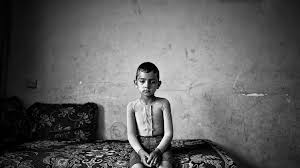


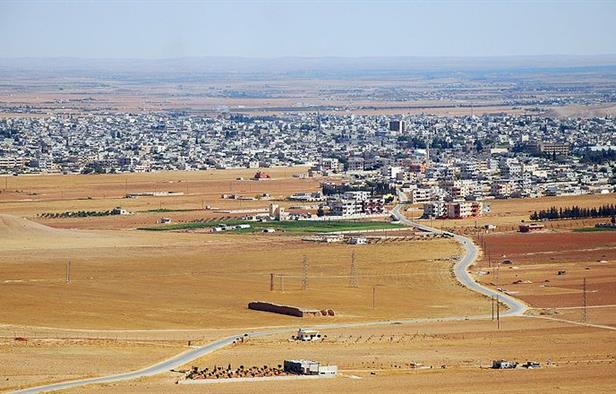

 band annie's Weblog