Search

band annie's Weblog

I have a parallel blog in French at http://anniebannie.net

Month

July 2013

Millionaire leaves comfort of his Burj Khalifa apartment for life on Dubai’s streets

Jun 21, 2013
AD20130621680402-Arif_Mirza_lear
Arif Mirza learns skills as scrap yard worker

For as long as he can remember Arif Mirza has planned to retire by the age of 40. At 39, and with an accumulated wealth of millions, he looks set to achieve that goal.

The Canadian-Pakistani, who has lived in Dubai for three years, is a highly successful entrepreneur, making his money through a series of online ventures. He is also a life coach and motivational speaker, has companies in no less than six countries and a staff of hundreds.

Yet he has recently spent 33 days on the streets of Dubai, living as a migrant worker and sharing a room sometimes with up to 12 men. Why? Because he was moved by the experiences of labourers here in the UAE and wanted to experience at first hand what it felt like to be in their position.

“I met a Pakistani man in Healthcare City one day,” recalls Mr Mirza, who first revealed his plans to The National in March.

“He had not eaten for three days when he approached me asking me for money. He had tears in his eyes.”

Then there was a young Pakistani boy Mr Mirza met on a beach, collecting scrap and selling it on. “There are so many stories like these in Dubai. But to help people like this and understand what they go through, I needed to live their life and so I took to the streets,” he explains.

Mr Mirza’s 33-day stint started on May 6 when he left his comfortable apartment in Burj Khalifa that he shares with his wife and two children and took up work as a manual labourer, pledging to live on less than Dh1,000 for a month.

He survived by buying and selling used junk, working on building sites in the searing heat, often for 12 hours at a time and undertaking welding and painting jobs in Dubai and Abu Dhabi.

“There are people living in Dubai on half of that and sending Dh500 a month home to their families. When you have to, you can do – it’s actually not that hard,” says Mr Mirza, who filmed as much of his experiences – and the people he met – as possible either with a phone or hidden camera.

“A lot of people didn’t want to be filmed. They were afraid they would be sent back to their own countries or busted by the authorities,” he adds.

Besides having his eyes opened to some illegal business practices taking place here, he was amazed at how happy the people he worked with were.

“They have no money but they have such big hearts,” he says. “They shared everything with me.”

His fellow workers also provided emotional support. “They kept me going and were extremely kind, encouraging me whenever I felt low.”

Having now returned to his wealthy lifestyle, what has he learnt from the experience?

“It has definitely made me stronger,” he says. “I no longer take anything in my life for granted.

“These people earn so little and yet they’re so grateful for what they have because in their own countries it would be considered a good salary.”

The businessman is still in touch with many of the people he encountered. He attends a cricket match in a car park in Dubai during weekends and hands out water.

He also plans to back an app, called Mobile Aid, which will enable people to donate money to help people who are struggling.

This is not the first time Mr Mirza has held a menial job. Growing up in Canada, his family struggled to make ends meet. With five brothers, one sister and a father who was a taxi driver, he had a series of part-time jobs throughout college including working at Dunkin’ Donuts and washing dishes in a restaurant. He is very close to his family still and credits his older brother Rocky with encouraging him to take to the streets of Dubai.

To record his experience, Mr Mirza has produced a 45-minute documentary called Streets of Gold, which he hopes will highlight the hard graft undertaken by menial workers. It will be shown for the first time tomorrow.

The Yemenite Baby Affair: What if this was your child?

One of Israel’s most well known journalists casts doubt on one of the most tragic affairs in the country’s history. His conclusion, reached despite self-admitted ignorance on the topic, aligns perfectly with the way the Israeli media handled of Yemenite Baby Affair from day one – glossing over evidence and unquestioningly towing the state line.

By Shoshana Madmoni-Gerber

In a 2011 interview with Jon Stewart on “The Daily Show,” award winning American journalist Bill Moyers paraphrased George Orwell: “Journalism is about what people want to keep hidden, everything else is publicity.” Case in point: famed Israeli television journalist Yaron London’s recent article in Haaretz, “Maybe the kids didn’t disappear?” [Hebrew].

London’s tone and perspective perfectly illustrate Moyers’ assertion; it is a textbook example of how the Zionist hegemonic machine constructs a public discourse to maintain the status quo. At the same time, opposing claims, however legitimate, are silenced. London has considerable influence on the public discourse. But like his colleagues in the Israeli press, instead of using his power to expose the hidden, to ask worthy investigative questions, he chose to defend the state. As Ilana Dayan told Yarin Kimor on Israel’s version of “Meet the Press” in 1996: “the state doesn’t need you… If you think nothing happened, move on to a different topic!”

London admits to having limited knowledge about one of the most tragic affairs in Israel’s history. But his lack of knowledge, and apparent inability to comprehend the magnitude of the tragedy, doesn’t prevent him from forming a conclusion. To no one’s surprise, it aligns perfectly with the state’s efforts to obfuscate and conceal the issue by saying: most of them died; this is really just a one big misunderstanding. This, despite hundreds of testimonies of parents to the contrary, including mothers testifying that their babies were physically kidnapped from their hands, such as Naomi Gavra and Miriyam Ovadia. And despite clear cases such as Miriam Shuker [Hebrew], who was kidnapped and given for adoption, all while her father, David, was looking for her all over the country.

This is the same conclusion all state-appointed commissions reached. And not investigative bodies, by the way – the first two commissions were only inquiry commissions with no subpoena power and no intention to investigate; all commissions, including the last, were exceptional only in how slowly they worked and how little new information they could discover[i].

At the same time, the press showed a remarkable lack of interest in the state’s obvious conflict with a clamor of Yemenite and other Mizrahi voices. With the exception of Haolam Haze in 1967, and a few articles in Haaretz and Ha’ir in the mid 1990s, inquiry into public outcry was nearly non-existent. From the 1960s until the last commission’s findings were published in November 2001, state press releases and media reporting show incredible consistency with each other.

When I examined the media narrative for my book, based on my Ph.D. dissertation, Israeli Media and the Framing of Internal Conflict: the Yemenite Babies Affair (Palgrave Macmillan, 2009), I found a discourse that was overwhelmingly supportive of state efforts to quash discussion of the affair. Starting with the first articles in the 1960s, writers were eager to dismiss claims of kidnapping. “Don’t you think that if these accusations were true the police would have opened some files to investigate these matters” (Maariv, October 9, 1966). In other words, if there was no investigation, there was no crime in the first place. Others dismissed all calls for an investigation, saying, “all people working in the camps, with no exception, were honest people” (Maariv April, 1, 1966), or, “no child was ever released from the hospital without identification” (Tel-Aviv, December 20, 1985).

Reinforcement of negative racial stereotypes was the other major theme when the media bothered to mention the affair. New Yemenite immigrants were shown as primitive, at best incapable of caring for themselves properly, and at worst, not even caring if a child lived or died. One article in Davar (February 24, 1966) describes the Yemenite immigrants as “peeking through the window and seeing for the first time how to bathe a baby and how to change a baby’s diaper.” Another quoted a nurse as saying Yemenite parents had a cavalier attitude towards the death of a child. “If a child died in the tent they would say, ‘God gives and God takes’” (Davar, February 26, 1966). From this perception, the road to thinking they were unfit parents was very short. Moreover, these racist sentiments, as Naama Katii rightly noted [Hebrew], were echoed years later during nurses’ testimonies to the commission and the press. “Maybe we did them a favor,” said 92-year-old Ahuva Goldfarb, former head nurse in the absorption camps in an interview with me back in 1995. Another head nurse, Sonia Milshtein, told the commission the Yemenite parents “were not interested in their children.” This same nurse shocked even the sleepy Judge Cohen when, during her testimony, she called the babies “carcasses” and “packages.” And further, she added, “oh, after 40 years, I would just be happy that my child got a good education.”

The biggest issue here is not that the commission supposedly disproved an institutional conspiracy. Sanjero’s main contribution is the complete discrediting of this commission’s work. As he writes, “the commission was lacking the most central tool for any investigation: an epistemology of suspicion.” (Page 48, Hebrew) If any journalist bothered to read the last commission’s report, it would have been crystal clear that referring to any conclusion made by this commission using the term “determined with great certainty” is, how should I put it… embarrassing.

But, more importantly, we must realize that in the absence of an honest discussion about the past, the same racist attitudes continue to dictate the present and future. The same racist attitude that likely led to these terrible acts are also motivating the years-long silencing, and the rejection of a legitimate cry for answers. Both the government and the media legitimize this sentiment. This is where London should have focused his deconstruction efforts. There was a massive cover up; this is a fact. And this should have gotten any qualified reporter asking, “why?”

The Kedmi commission’s report, just like the previous commissions, is full of contradictions and factual errors; too many to detail in this short space. Important lines of inquiry were dropped, including an important investigation in the U.S., crucial testimony was given behind closed doors and remains classified for the next 70 years. Source files, hospital archives and burial records were mysteriously lost and even burned.[ii] Birth files requested by the commission from Hillel Yaffe Hospital, for instance, were “accidently burned,” not in the 1950s, but in the late 1990s and during the so called investigative work. Rather than flagging the event, or investigating who corrupted these records, the commission merely dismissed it as an “administrative failure.” I ask, as Sanjero did, how, during a working investigation, could such an overt flouting of procedure remain uninvestigated? I think that even the Hasamba boy would have known what to do here.

The state’s efforts to silence discussion of this perspective has only been possible with the media’s full cooperation over a long period of time. As Claris Harbon noted, in her review of my book[iii], this affair is also part of a larger system of oppression that is consciously maintained and back up by the legal system. What Harbon is offering is a new way to examine the law breaking, “perceiving it as a viable language, as a legitimate form of resistance, invoking greater principles of justice… and aimed at correcting past/present injustices.” It’s important to understand in this context that Rabbi Meshulam’s vilification and ridicule by the media, and his ultimate demise was deliberate and complete, in an effort to delegitimize his protest. In the public eye, the issue at hand was his “insanity,” not the moral obligation of the media and public to demand answers to the question  – why and how hundreds if not thousands of babies were forcefully removed from their parents to never be seen again?

Ignorance fuels racism. Not knowing isn’t the weapon for conspiracy theorists, as London wishes us to believe, less than it is a weapon for those who were actively squelching and preventing a legitimate demand for proper investigation. Kidnapping, or the forcible transfer of babies/children from one group to another, is not only a violent act, it is defined by the UN as genocide. This fact alone should have gotten not only the media going, but also the whole country out in protest.

But instead of being motivated by a healthy dose of suspicion, the media eagerly helped by recycling the lame “immigration mess” excuse. Which, by the way, paradoxically didn’t prevent the Kedmi Commission from producing the definitive conclusion that all documentation from that time is accurate. So which is it? Messy or accurate? But why bother with little unimportant terminology when it is so easy to blame the victim. And this is just what the Kedmi Commission did. As Sanjero noted: “throughout the report the commission detailed a dry description of severe actions without the slightest bit of criticism… in the whole entire report the commission doesn’t name even one person, flesh and blood, responsible… but blaming the parents they did…”

What any citizen of Israel, including reporters, should ask him or herself is why as a society we sympathize with one pain, and not another? Why in the case of Yosale Schumer, the Haredi boy who was kidnapped by his grandparent in 1962, the entire state, government and the Mossad got involved until he was brought back to his parents. No effort was too big to get one boy, while hundreds of Yemenite parents were not worthy of a fraction of this sympathy or willingness to fight?

So “what’s between Shmita to Mount Sinai?”, you ask – compassion and humanity. A true fight against injustice should put on its agenda all systems of oppression, for they are interconnected. As Martin Luther King said in 1963: “injustice anywhere is a threat to justice everywhere.” When the Israeli Left will fight against intra-Jewish injustices and racism with the same enthusiasm and passion often used to protest the occupation, we might have a chance at a better future here.

Shoshana Madmoni-Gerber is an associate professor of communications and journalism at Suffolk University in Boston.

This article was first published in Hebrew on Haokets, a non-profit, independent, progressive Israeli web magazine that hosts critical discussion where hundreds of writers publish professional and original pieces on socioeconomic, cultural and philosophical issues, human rights activism, feminism, and Mizrahi politics. Visit their English-language blog.


[i]
The constant usage of the inaccurate phrase “three investigative commissions have investigated this affair…” only made the Yemenite look like nudniks who are standing in the way of closing this story, instead of criticizing the lack of investigation.

[ii]
For detailed examples read Shoshi Zaid’s book And The Child id Gone, Geffen (2001) and Rfai Shubeli’s many articles in the journal Afikim, as well as my book.

For additional original analysis and breaking news, visit +972 Magazine’s Facebook page or follow us on Twitter. Our newsletter features a comprehensive round-up of the week’s events. Sign up here.

source

End Game full length version

Get the DVD at: http://infowars-shop.stores.yahoo.net… For the New World Order, a world government is just the beginning. Once in place they can engage their plan to exterminate 80% of the world’s population, while enabling the “elites” to live forever with the aid of advanced technology. For the first time, crusading filmmaker ALEX JONES reveals their secret plan for humanity’s extermination: Operation ENDGAME.
Jones chronicles the history of the global elite’s bloody rise to power and reveals how they have funded dictators and financed the bloodiest wars—creating order out of chaos to pave the way for the first true world empire.     * Watch as Jones and his team track the elusive Bilderberg Group to Ottawa and Istanbul to document their secret summits, allowing you to witness global kingpins setting the world’s agenda and instigating World War III.     * Learn about the formation of the North America transportation control grid, which will end U.S. sovereignty forever.     * Discover how the practitioners of the pseudo-science eugenics have taken control of governments worldwide as a means to carry out depopulation.     * View the progress of the coming collapse of the United States and the formation of the North American Union.


    Hacktivism and its price

    CLICK ON IMAGE

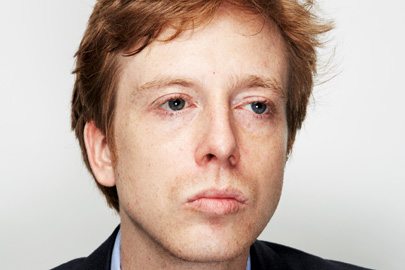
    barrett brown

    TRANSCRIPT /

    Journalist Barrett Brown spent his 300th day behind bars this week on a range of charges filed after he used information obtained by the hacker group Anonymous to report on the operations of private intelligence firms. Brown faces 17 charges ranging from threatening an FBI agent to credit card fraud for posting a link online to a document that contained stolen credit card data. But according to his supporters, Brown is being unfairly targeted for daring to investigate the highly secretive world of private intelligence and military contractors. Using information Anonymous took from the firm HBGary Federal, Brown helped discover a secret plan to tarnish the reputations of WikiLeaks and journalist Glenn Greenwald of The Guardian. Brown similarly analyzed and wrote about the millions of internal company emails from Stratfor Global Intelligence that were leaked in 2011. We speak to Peter Ludlow, professor of philosophy at Northwestern University, whose article “The Strange Case of Barrett Brown” recently appeared in The Nation. “Considering that the person who carried out the actual Stratfor hack had several priors and is facing a maximum of 10 years, the inescapable conclusion is that the problem is not with the hack itself but with Brown’s journalism,” Ludlow argues. He adds that the case against Brown could suggest criminality “to even link to something or share a link with someone.”
    Transcript

    This is a rush transcript. Copy may not be in its final form. FOR FULL TRANSCRIPT CLICK HERE

    also on DN :

    Details continue to emerge on U.S. surveillance of the global Internet. The Washington Post reports the National Security Agency’s PRISM program mining the servers of major Internet companies like Google and Facebook has run in parallel with a separate operation called “Upstream.” Through Upstream, the NSA taps directly into the fiber-optic cables that carry the vast majority of global Internet traffic. The United States has ensured access by sending a group of federal officials dubbed “Team Telecom” to reach agreements with global telecom providers. A 2003 agreement with the Asia-based Global Crossing imposed “an internal corporate cell” of Americans to make sure surveillance requests were approved. Global Crossing was also forced to establish a U.S.-based “Network Operations Center” where U.S. agents could show up with just 30 minutes’ notice.  The United States has used the Federal Communications Commission as leverage to hold up the approval of cable licenses sought by foreign firms.

    The tech giant Google has confirmed the National Security Agency furnished some of the code installed in its new Android phone. The NSA says the code is intended to enhance security against hackers and marketers, but will not confirm whether it also aids the agency’s PRISM program monitoring the global Internet.

    Yassin-Kassab versus Landis

    Qunfuz

    Robin Yassin-Kassab

    Thanks to Joshua Landis for posting (at Syriacomment) this dispute, which originally took place on Sultan Saoud al-Qassimi’s facebook page. I earlier took issue with Syriacomment’s coverage here.

    Sultan Sooud: Great read by Joshua Landis on Obama’s three options on Syria. The one, two and three state solutions.

    Racan Alhoch: I love orientalist solutions. They are always a modified version of the Sykes-picot. The best solution would be for people like Landis to fuck off.

    Joshua Landis: Rocan, I am not sure what is orientalist about these possible outcomes. If Assad hangs on to the south is Syria and the rebels hold the north it will not be because of the west. It will be a Syrian solution. If the rebels are able to conquer Damascus it will probably be thanks to help from the West.


    Ruba Ali Al-Hassani: Joshua, a solution and an outcome are two different things. Not all outcomes are solutions to the problems which created them. The current civil war is not an outcome of deep divisions amongst Syrians. Rather, it is an outcome of external meddling in a conflict between the people and their dictator. Foreign militants have been brought in, recruiting a few Syrians, with the funding of external players, pitting them against each other on the basis of sectarianism. This is what escalated matters.
    Borders in the Middle East have a long history with being drawn and redrawn by colonial powers, or in resistance to them. Therefore, it is Orientalist to come along and tell Syrians that they cannot solve their problems, and that the best way is to keep them apart from each other through another attempt to redraw their borders. Only when the Syrians ask for that kind of “solution” will it ever be okay…

    Robin Yassin-Kassab: this is not at all a great read, for several reasons. the first is that it contains a plain untruth. the coastal region does not have an alawi majority. the mountains of the coastal region have an alawi majority, though there are also christian and sunni communities. the coastal cities have sunni majorities.

    Joshua Landis: Robin, so do Lebanon’s coastal cities have a majority Sunni population. I am not sure what your point is. The Ottoman legacy is that there is a Sunni majority in the cities and the plains. In 1920 Alawites and Sunnis shared no town of over 200. Demographic segregation was very stark. There is much greater mixing today. It is hard to see where this bloodshed ends. That is the problem. There are no good solutions. Do you think the US should pump in the weapons until Sunni rebel militias have conquered Damascus and the coast?

    Dick Gregory: “Do you think the US should pump in the weapons until Sunni rebel militias have conquered Damascus and the coast?” – I think not calling the FSA a Sunni rebel militia would be a start. I assume the point is that to create a mini-Alawite state would require the ethnic cleansing or cowing of the majority, and so is an even more impractical alternative to a revolution for all Syrians.
    The suggestion that Obama could get the F̶S̶A̶ Sunni militias to fight one war against Assad and another against radical Islamists simultaneously is also highly questionable, and that they are likely to massacre non-Sunnis en masse in the event of victory re-writes the history of the conflict. Not a well written article

    Robin Yassin-Kassab: i am not sure what landis’s point is. so what if lebanon’s cities have majority sunni populations? i never argued for the separation of lebanon from syria (I wasn’t here, obviously). lebanon is lebanon, with its own sectarian set up, and even with that set up, it isn’t supposed to be a shia or druze or maroni or sunni or alawi state. landis writes in his article that there is an alawi majority in the coastal region. i pointed out that this is not true. that’s my point: the truth. the importance of not twisting facts to fit our poor arguments. beyond that, i do not think that setting up an alawi state is a good idea or an acceptable outcome. it would involve a massive ethnic cleansing of sunnis from tartus, banyas and lattakia, and of alawis from homs and damascus. it would also leave syria without a port. it would also destabilise turkey. if it were under the control of this criminal family, it would be a threat to humanity. so far there has been no mass slaughter of alawi civilians, no ethnic cleansing of alawis to mirror the massacres and ethnic cleansings perpetrated by the regime. yet landis keeps on scaremongering. the revolution certainly has a sectarian aspect now, after the best efforts of assad and his allies, setting up sectarian death squads, attacking sunni heritage, etc. landis has been painting it as sectarian from the very start, however, ignoring the coordination committees in favour of salafists. thankyou, Dick, for your comment. it’s a slander to call the fsa a sunni militia. yes, it has a sunni majority (like syria) and a sunni character. i’ve just been in syria and turkey where i spent time with ismailis and christians amongst others. the ismaili was telling me in detail about the armed struggle (led by ismailis) around selemiyyeh. yes, i think the us, europe, the arabs, japan… should allow the syrian people to arm themselves to defend themselves from genocide and to end this child nmurdering regime. because the child murderers represent a tiny majority of the population, they lose as soon as the other side gets any sort of weapons supply. i don’t agree that it would take forever for the resistance to liberate damascus. or the coast for that matter – but the coast could be ‘won’ by negotiation once the people there see the regime has no future.

    Robin Yassin-Kassab: you always say, ‘i don’t know what your point is.’ when you reported hussain harmoush’s tv post-torture ‘confession’ as if it meant something, and even discussed it… ‘hmm, harmoush says he was paid by the muslim brothers, and by the martians… very interesting’, and then i complained, your answer was something like…’everyone who reads syria comment is well educated and they understand that he was tortured and that his words don’t mean much.’ that’s a great response. so when you write that the coastal region has an alawi majority, it doesn’t matter that it isn’t true because you expect your audience to be intelligent enough to understand. you should write that the fsa is a communist organisation backed by nepal, just for fun, because your audience is clever enough….

    Joshua Landis: Robin, lots of accusations. Let’s take the first one – the ethnic or religious population of the Coastal region. Can you tell me what the religious make up of the Coastal region is? Until 1960, when the last census was taken that listed Syrians by religion the Coastal region was predominately Alawite. Of course this depends on where you draw the line in the East, but your argument is that the Sunni majority in the coastal cities is larger than the Alawi majority in the Mountains. This has never been true so far as I know, but I welcome being corrected by any statistics you can provide. I quote the following from something I wrote in 1997. I highlight the sentence most important for our discussion:

    “Although Alawites constituted roughly seventy percent of the region’s population [The Alawite state created by the French] of 350,000, they held sway over no town with more than 1000 inhabitants. “

    “When the French arrived in the Alawite territory in 1920, the separation between the Alawite and Sunni communities could hardly have been more profound, a fact used to justify their policy of dividing the region from the rest of Syria. In the “Dawla al `Alawiyyin” (the State of the Alawites) established in 1922, not one Alawite was registered as a permanent resident of Latakia, the regional capital (26,000 inhabitants in 1935), or in the other Sunni dominated coastal cities: Jablah (6,300), Tartus (4,500), and Banyas (2,170). The only city that permitted Alawites to live within its walls was Safita, a Christian town high in the Alawite Mountains (total population 2,600, with 300 Alawites).

    Although Alawites constituted roughly seventy percent of the region’s population of 350,000, they held sway over no town with more than 1000 inhabitants.

    The division of urban and rural populations along sectarian lines in the Alawite region was almost absolute. The Sunni population was entrenched in the cities, where it exercised a monopoly on political power, education, and prestige. Sunnis, Weulersse writes, lived like “parasites” off the Alawites who were scattered in small hamlets throughout the countryside and mountains. Even in 1945, the year the muhafaza of Latakia was finally united with Syria, the number of Alawites who lived permanently in major Syria cities was minuscule. Latakia had a population of only 600 Alawites; Aleppo had 480, and Damascus only 40. These numbers indicate the extent to which the Alawite community remained a closed society, inward looking, and cut off from the main currents of Syrian intellectual and urban life right up to independence.

    Today, most Alawites over the age of 45 can recount personal stories of Sunni school children throwing stones at Alawites as they walked to or from school. The alienation of Alawites from Sunni society and their bitter experience of persecution made creating a common sense of nationalism particularly difficult following independence. Even within the most progressive political parties which took shape during the 1940s, tension and mistrust between Alawites and Sunnis was never far below the surface and often threatened to rise to the surface.”

    Robin Yassin-Kassab: i don’t know why you are telling me about the historical persecution of alawites. as you know, i have myself written about this on several occasions. I have often pointed to this as necessary historical context to the sectarianism of the assad regime. you don’t need to prove yet again your emotional ties to the alawi community. it’s perfectly obvious and always has been. yes, i would presume that an urban majority constitutes more people than a rural majority. that seems like plain logic to me. in any case, you yourself on previous occasions have described the coastal region as having a sunni majority. i’m sure that if you were to draw a line around the mountains you could find an alawi majority, but i don’t think that would be in the interests of alawis, sunnis or anyone else…..it’s always important to recognise past oppressions, but these do not justify present genocides or ethnic cleansings, nor carving up countries on ethno-sectarian lines. the holocaust does not excuse slaughter in sabra and shatila or gaza. the safavids do not excuse saddam hussain. saddam hussain does not excuse the exclusion of iraqi sunnis. ibn taymiyya does not excuse assad.

    Robin Yassin-Kassab: in any case, in perfect orientalist style you are ignoring contemporary history in favour of the distant past. ‘alawis’ have been in charge for over 40 years.alawis have been living in the cities, making friends with sunnis, in some cases marrying sunnis. in this time the regime actually oppressed alawi ulama and community leaders and deliberately kept sectarian hatreds bubbling for divide and rule reasons. they had four decades to address the problem, to manage a public conversation and reconciliation. they chose to do the opposite. and when challenged by a democratic movement for secular rights, they deliberately lit the fuse of sectarian conflict by implicating alawis in their death squads and massacres, and by their propaganda.

    Joshua Landis: Robin, I couldn’t agree with you more about oppression. I in no way wish to defend the Assad regime, which is guilty of brutal and indiscriminate killing of the worst kind. I have emotional ties to all Syrians. My point is about the demographic realities of Syria. If one draws a line down the Eastern side of the Alawite mountains, where the Alawite majority population gives way to a predominantly Sunni majority and counted the religious distribution of all those to the West of that line, the Alawites would be the majority. That is my simple contention. It does not mean that they deserve a state or could maintain one or that it would be fair for the Sunnis of the coastal cities. I am simply trying to establish some basis for understanding the region. Would you agree to that simple statistic?

    Joshua Landis: Robin, You are absolutely correct about the deeply sectarian nature of this regime and its response to the uprising. In fact, my first article for the Economist, dated, Jun 14th 2011, was entitled “Deeply Sectarian.” We are in perfect agreement about the sectarian nature of the regime and ensuing mess it has created.

    Robin Yassin-Kassab: joshua, i think of you as a well-meaning person, but i can’t help but think too that your skewed commentary on the revolution has helped assad confuse the issue in the west. no, i don’t think i would agree with your simple statistic. i think the sunni majority in the cities probably outweighs the alawi majority in the mountains – but of course i can’t prove it, and it may be that now, at this precise moment, there is a slight alawi majority because so many alawis from damascus and homs have moved to tartus to flee violence.

    Robin Yassin-Kassab: ruth – i very nearly ‘liked’ your comment but didn’t for the simple reason that most alawis have not actually benefitted from the regime. some certainly have, but many more haven’t. they’ve been terrified by regime propaganda and implicated in the regime’s crimes. now they are losing thousands of young men fighting for this monster. most are victims of the regime. if over the last decades the community had been allowed to develop itself, to produce its own leaders, to initiate its own dialogue with sunnis, it (and all of us) would not be in this situation now

    Joshua Landis: Why don’t we leave this on the happy note that you consider me “well meaning.” I, of course, do not think my analysis has been skewed. On the contrary, my warning that this struggle would end up much like Iraq or Lebanon — i.e. going sectarian — has proven to be the case. You have argued from the beginning that my commentary has caused this, but I would humbly suggest that is to give me much too much agency and importance. I have simply described what I believe to be the reality of the Syrian situation. I believe that I have been fairly accurate. Of course, I have made my share of mistakes, but not, for the most part, on the big things. I wrote early that this would go sectarian, that the regime was deeply sectarian, and would turn this into a sectarian struggle because Alawites feel persecuted and have a history of being persecuted, which they have not gotten over. I have tried to inject as much history into this as possible – and I think the history is important and not just some distant baggage that should be ignored. The Alawites should have gotten over their persecution and “minority complex” and Assad should have given up power in the first weeks of this uprising in favor of a constitutional convention, but he did not.

    So we are where we are, which is very ugly. Sunnis now feel like a persecuted minority, and with good reason, they have been persecuted. I doubt there will be an “Alawite state” – even one with a big Sunni minority residing in it – established on the coast. Most probably the “status quo” will prevail for some time.

    The status quo is the division of Syria into a revolutionary forces controlled North and North-East and government controlled South and Southwest. This will leave the Assad government ruling over a large Sunni majority and Damascus, which will be very unstable. I suspect the North will also be very unstable because the FSA and other militas agree on little beyond their desire to rid themselves of the oppression of the regime.

    The US and the West wants to hurt Hizbullah and Iran, but I am not sure if it has “Syria’s” interests uppermost in its calculations. My essay about the three possible scenarios is meant to underline this. I try not to pick “a best scenario”, but simply point out the difficulties with each.

    Maxwell Ryder: Robin, you are a sharp knife in a drawer full of dull knives. Thank you for each post. I couldn’t agree more, though I did not like the “dick” part.

    Robin Yassin-Kassab: of course i don’t think your commentary caused this. i think (like you, it seems) that assad and his allies caused this. i think your commentary (indirectly) helped assad get his sectarian message across to the west from the earliest days. you didn’t so much bear witness to the ways in which assad lit the sectarian fuse as focus on the sectarianism of the opposition, even at the start when the remarkable thing was how a sectarian society was able to produce such a non-sectarian discourse. you focussed on obscure salafists rather than the central local coordination committees. you are probably right about the status quo, which is a disaster for syria and, increasingly, for the region and the wider muslim world. my contention is that the opposition has the vast majority on its side. it has been able to conquer vast swathes of the country for this reason, despite being so poorly armed. therefore i believe that a serious effort to arm the opposition would allow it a reasonably speedy victory. then syria could start the difficult process of picking up the pieces. because commentary like yours is dominant, however, there probably won’t be a serious effort to arm the opposition, and the status quo will continue. even now after hixbullah’s open involvement, the west and the arabs are only talking about ‘restoring the balance’. in other words, let syria bleed. let the wound expand.

    Robin Yassin-Kassab: Maxwell – thanks. the ‘dick part’ was not the insult you think it was. i was referring to my friend Dick Gregory, who commented above.

    Joshua Landis: I agree that Alawites, to the extent that we can generalize, are oppressed and have little if any freedom of choice. Assad treats Alawites as he treats the rest of Syrians, as his slaves. But I would caution that this does not mean that Alawites will turn against the regime any time soon. They feel like the knife is at their throat. At least that is what many say, now that this struggle has become very sectarian. Almost every Alawite i have talked to gives me a five minute soliloquy on how he or she is not an Assad supporter and how Assad has gotten them to this terrible situation, but then they go on to reproduce the Assad line about Sunni extremism and how they must defend themselves, etc. I think understanding their dilemma is important to any solution. One cannot just dismiss their fears or this war will drag on for a very long time.

    Robin Yassin-Kassab: i agree with that. we must also remember the brave minority of alawites who, despite their well-founded fears, are working for the revolution in public or in private. during my recent trip i heard about alawis secretly providing food and medicine to the besieged areas.

    source

    Young Turks and cnn : Mos Def Force-Fed Gitmo Detainee Style

    …………….

    Yasiin Bey (aka Mos Def) force fed under standard Guantánamo Bay

    please spread this !

    Along Sectarian Fault Lines, a ‘New Normal’ Emerges

    QALAAT AL-MADIQ, HAMA PROVINCE / Just a few years ago, Syrian students in this Sunni town had to pledge allegiance to Baath party principles and express loyalty to Bashar al-Assad. Now the graffiti on classroom walls here points to the transformation of Syrian culture and identity over two years of war.

    Qalaat al-Madiq is surrounded by Alawite villages and ringed by Syrian Army checkpoints. But the regime’s control stops there.

    An ancient castle overlooks the sectarian fault lines in modern Syria. Courtesy Mohammed Sergie

    An ancient castle overlooks the sectarian fault lines in modern Syria. Courtesy Mohammed Sergie

    At the local high school, slogans expressing love for death and martyrdom are wedged between calls for freedom and the names of various rebel groups operating in the region. Photographs celebrating top graduates from years past have been partially defaced, removing any sign of the posters of Bashar and his father Hafez al-Assad that students were forced to pose with over decades of the family’s rule.

    “We can’t control this generation even if we wanted to,” says a teacher at the school. “These kids are living the revolution.”

    Teachers try to stick to the curriculum, preparing students for national standardized tests that are still offered in the town, which sits at the foot of an 800-year-old castle overlooking the sectarian fault line of the Orontes River in Hama province. But many older students have abandoned their studies to link up with rebel groups, or have fled to safer areas near the Turkish border.

    “We are trying to lead normal lives, but there’s a lot of death and poverty around us,” the teacher says.

    Syrian soldiers stationed at the castle and further east routinely shell the Sunni town, damaging two classrooms at the elementary school and a mosque in April. (Both locations were empty at the time.)

    At the time, Bassel, a fifth grade student, rushed to his school to inspect the damage. Still a typical kid, he says he was disappointed to find out that his classroom wasn’t hit. “It isn’t fair that I have to go to school when the other kids get to play.” Life continues as normally as possible in this town, increasingly punctuated by violence and deepening sectarian tensions.

    Government employees report for duty at the water plant and grain silo, and technicians look after the electric grid. Many shops have reopened after government soldiers and militias from neighboring Alawite villages looted and burned the market in the fall.

    Abdul Kareem owned a children’s clothing store on the town’s main street, but he lost his goods in the last government offensive and couldn’t afford to restock the business. Now he lives off his dwindling savings and rents out the space to a food vendor for a meager income.

    “We know the people who looted the Qalaat. They are the same people we used to visit and drink [alcohol] with, and I never imaged they had so much hatred in their hearts,” he says. The pro-Assad militia members left their own graffiti in the town. Alongside  the familiar pro-Assad slogans, there is this message: “We ruled you and oppressed you, if you rule us don’t show us mercy.”

    The town’s castle soars over the Ghab plain surrounding the Orontes River, a strategic perch that controls the entrance to Alawite land in the mountain range that separates  the Orontes from the Mediterranean Sea. Many residents trace their heritage to the castle. (It was inhabited by 300 families until 2012, when it was shelled and occupied by the Syrian military.)

    Abdul Kareem grew up inside the castle, and his father was still living there last year. His eldest son, a scrawny 17-year-old who was once a promising student, has dropped out of school and spends most of his time with the Farouq Brigade, one of the largest rebel groups in Qalaat Al-Madiq.

    “I’ve tutored him for years, and he should be on his way to medical school,” Abdul Kareem says. “I wish he didn’t have to lose his future.”

    War has transformed this town. Abdul Kareem and other men in the town used to visit friends in the nearby Christian village of Al Suqaylabiyah for nights of drinking, but now even government employees are reluctant to venture there for fear of harassment from soldiers at checkpoints.

    In response, Sunni Islamic identity has been resurgent, and people have become more pious. Many families send their children to the mosque for religious lessons, and much of the graffiti on the school walls carry Islamist and Sunni themes.

    Hama, Homs and Latakia provinces are tinder boxes for potential sectarian conflict. They’re expected to be “ground zero” of a coming sectarian war between Sunnis and Alawites. Tensions are already running high. Few residents in Qalaat al-Madiq can imagine a return to the pre-conflict structure, with Alawites in control of the government and state-owned industries.

    Grain silo and cemetery in Qalaat al-Madiq. Courtesy Mohammed Sergie

    Grain silo and cemetery in Qalaat al-Madiq. Courtesy Mohammed Sergie

    Omar, a government employee who still collects a paycheck from his job at the town’s grain silo, says his work is a necessary function and that remaining on the payroll doesn’t mean he supports the Assad regime.

    “I saw the shabiha looting and arresting people in the Qalaat from my window at work,” he says. “It’s impossible for me to trust Assad’s army or the Alawite shabiha in our areas again.” The grain silo is running low this year, a result of the collapse of Syria’s agriculture industry.

    Omar doesn’t have much to do at work. His view of the historic castle and lush valley provides an idyllic escape, but it’s only a momentary relief. As with many other Sunni towns in Syria, residents here have opened new graveyards to bury their dead. Qalaat al-Madiq’s “martyr’s cemetery,” housed at the grain silo, is always expanding. A constant reminder of war, it spoils Omar’s view.

    Intellectuals, Help Syrians! (updated translation)

    Introduction by OTW

    Yassin

    Syrian Opposition Intellectual Yassin Al Haj Saleh, who spent 16 years in the Assad dynasty regime jails as political prisoner.

    A few weeks back, I posted a medical report from Yassin Al Haj Saleh, the Syrian intellectual and winner of  Prince Claus Award for 2012, in which he described the chemical weapon attack by the forces of war criminal Bashar al-Assad in the Eastern Ghouta region of Damascus country side. For a few months, Yassin lived there among the people of the Eastern Ghouta, and he recently summed up his experiences there to cast light on what is happening, and at the same time to issue a last call, or better yet, a plea for decency and humanity to western intellectuals and public opinion makers admonishing them to actively take the only humane and progressive act, which is to support the overthrow of the Assad criminal clan and crime partners and to force the stoppage of importing killers from the regime’s allies in Lebanon, Iraq, Iran, and elsewhere. Yesterday, Yassin’s letter was published in the French newspaper Le Monde under the title “Intellectuels, aidez les Syriens !” after being translated from Arabic to French by the Lebanese intellectual and supporter of the Syrian Revolution, Professor Ziad Majed and his colleague Nadia Aissaoui. The letter, written on June, 28, 2013,  appeared earlier today in its Arabic  original in the Republic for Syrian Revolution Studies as well as in the Lebanese newspaper النهار . I tried to find English translation and failed, so I translated the letter from Arabic to English. I do apologize for the rough edges of the translation, and would be more than happy to replace the text with better translation if someone is kind enough to edit it.

    Rabi Tawil (AKA Abu Kareem) has kindly offered to edit the translation. The version posted on (8 July, 2013) is the result of his kind and generous help.  It definitely reads much better.


    By Yassin Al Haj Saleh

    A letter from Syrian writer Yassin Al Haj Saleh to Western Intellectual and Opinion Makers.

    Dear friends

    About three months ago, I headed to the “liberated” Eastern Ghouta region, leaving behind the capital city of Damascus where life has become suffocating. My clandestine departure necessitated weeks of prior-arrangements in a city , which had been dismembered by hundreds of security barricades, and which Bashar al-Assad is determined to keep as the center of the rule he inherited from his father thirteen years ago.

    The Eastern Ghouta region is now inhabited by nearly half of  out of the two million who lived there before the revolution. It has been transformed during the past three months from a bastion  where the armed revolution was first launched in the capital  into an area besieged from all sides. This reversal is largely due to the military and logistical support of  the regime has received from Russia and Iran and from Lebanese and Iraqi Militia that are connected to the latter state. During that time, I myself witnessed the cruel lack of weapons, ammunition and even adequate food supply on the side of the rebel fighters. Many of the fighters on the fronts barely receive two meals a day. If they weren’t mostly local residents defending their towns and their families and living off what also sustains their families, the situation would have been immeasurably worse

    968817_543585005704460_1726781563_n

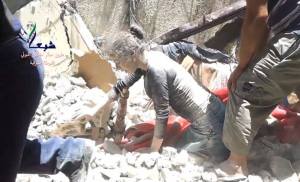
    Destruction of lives and livelihood are the hallmarks of the Assad clan response to the Syrian uprising., The photo was uploaded today (7, July, 2013) showing the aftermath of one of Assad’s bombing raids earlier today in the Eastern Ghouta.

    The towns and villages which I visited and lived in during the past months are subjected to daily random shelling from airplanes, artillery and rocket launchers. Every day, victims, a majority of whom are civilians, succumb to the violence.  I spent a month at a civil defense authority site, and there, I saw all of those who were killed. Some of them, including children, were blown into unrecognizable pieces. Among the victims was a fetus of six months whose mother suffered a miscarriage from the the terror she suffered during the shelling near her house. Not a day went during that month without civilians getting killed. Usually it is two or three, but on one day it was 9, 28 on another, and 11 on a third. The numbers killed continue to rise and they are rarely less than half a dozen a day, again including a small fully formed fetus. It was said that he was also six month old, also miscarried by yet another terrorized mother.

    In addition to civilians, many young fighters die every day to the weapons of a brutal and more powerful military force that receives  far superior support than they do.

    The whole region has been without electricity for 8 months. This has caused a reliance on frequently malfunctioning generators with excessive consumption of fuel, which in itself is becoming increasingly scarce commodity due to the tight blockade. Consequently, cooling and storage of food, vitally necessary in the scorching summers of the region, must be dispensed with. Cellular and landline connections are cut-off;and in recent weeks, flour has become scarce. Two weeks have now passed during which we had barely ate any bread,getting by with crushed wheat or rice instead, or by purchasing our meals from the few restaurants that remain.

    For my part, I was content with two meals a day, at least temporarily, as it helped reduce my weight by around 10 Kilos (nearly 21 pounds)

    We manage communications via Satellite Internet equipment, smuggled in with great difficulty. We use the equipment to deliver news and information to other Syrians and to the world. Such communication equipment is, however, available to only a small percentage of the population. A shell landed nearby few days ago and disrupted the internet connection for some time. It could have been much worse had the shell  landed on our roof and destroyed two month worth of efforts to secure the equipment. But the ultimate tragedy happens every day to an increasing number of inhabitants. Hastily buried, their funeral processions are joined by few hasty mourners, terrorized by the prospect of another shell falling upon their heads. Such has happened more than once; and in one case, which I witnessed, the martyr was buried within less than an hour of his death without his wife and children taking a final look at him. His body was mutilated and some of his limbs were missing, prompting the elders to decide that this should not be the last sight of him to remain in his  wife’s and childrens’ memory.

    We, I and a number of friends, both men and women, are still alive. In Damascus we were threatened with arrest and horrific torture which we may not survive. Here we are safe from that, but not from a shell falling on our heads at any time.

    Here, we are partners with nearly a million people having lost complete control of our own destiny, and constantly at the edge of the  abyss of the worst possibilities. Each time I reach the threshold of the house returning from the outside, I feel that I have barely survived death by a shell or a  shrapnel.  And yet  death remains a probability entering randomly through the window or the door.

    Today, Friday, June 28, three mortars fell between twelve noon and twelve thirty  on a place not far from where we are staying. The timing is too close to the Friday prayer time observed by faithful Muslims, to be a coincidence. I was most struck in my early days here that calls for Friday prayers in one mosque started about nine thirty in the morning, three hours earlier than the usual time, and this were followed by calls from other mosques each within a half an hour of the next. When I inquired about it, I received a surprising explanation: “The purpose is to avoid gathering large numbers of worshipers in the city’s mosques at any specific time to deprive the regime of the opportunity to kill maximum number of people as it usually desires”. The regime has done this before, in the city where I stayed, there are five destroyed mosques.

    More painful is that more than two-thirds of the children here do not attend school, their parents fearing for their safety or  because of the the lack of schools nearby. The few functioning schools operate in underground cellars to avoid bombardment.  But this also prevents the children from playing and running in the open air.

    All of the hospitals are also underground.

    People engage in this struggle with a sense of desperation because of they realize that a terrible massacre awaits them if the regime succeeds in regaining control. Those not murdered immediately will face arrest and torture that is extreme in its brutality. Their choices are limited to death while resisting the fascist aggression of the criminal regime or death, in the ugliest of manners, at the hands of this same regime if they stop resisting.  The  souls of people shiver, as my own soul shivers from its depth at the mere thought of being ruled by the same regime once again, should the people stop their resistance.

    During this long stretch in the life of the Syrian revolution, which has gone through a peaceful phase lasting for more than six months, the outcome of the policies of the influential powers of the world were to let Syrians be murdered at an escalating rate, and to reassure the regime that it can do anything with complete impunity. This is reminiscent of the Western Democracies’ behavior regarding Hitler before the Second World War. The current situation is a direct consequence of the failure of those influential powers to support the Syrian rebels, whilst failing to stop the support for the regime from the powers that provide it with  weapons, money and men, even as they continue to step up their support by intervening more openly and directly. Finally, after it became known to the whole world that the Assad clan regime used chemical weapons, which I myself documented two months ago,  as did other friends on the basis of personal experience, and after the regime was assured that its use of air power and long-range missiles against cities and neighborhoods will result in  nothing but faint and timid protest; after all of this,  Western powers decided to support the Syrian rebels with weapons. However, the objective of this support is to restore balance, a balance that they helped tip in the regime’s favor  in the first place.  Restoring balance means prolonging the Syrian conflict so that both sides lose in ways that have known  precedents in the history of Western Democracies, while what is needed is support that guarantees the overthrow of the regime, or at least force its allies to back-off from supporting its openly criminal war.

    Restoring balance is not just a short-sighted policy leading not only to prolonging the conflict, but it is utterly inhumane  as well. There are no two equal evils in Syria, as it is unfortunately portrayed in the Western media, and contrary to what United Nations and international organizations reports, notwithstanding that the Syrian conflict is not one between demons and angels.  There is a tyrannical fascist regime, which has murdered approximately 100,000 of its subjects, and there is a varying spectrum of those rebelling against it. The prolonging and increasing cruelty of the conflict has radicalized some of the rebel groups, whilst weakening the resilience of the Syrian society to extremism. The longer the Syrians are left to their fate, the more likely extremists gain strength and  the moderating logic and rationality among Syrians weakens. From both field and personal experience, this is what is actually happening. At the Civil Defense Authority, and whenever new martyrs fell, especially children, I am met with reproachful looks. These looks are from people  who are skeptical about the value of the calm and “rational” words I usually utter and about their utility in such circumstances.

    There is only one correct approach that is in the general interest of Syria and from a humanitarian point of view, and that is to help Syrians get rid of the rule of the Assad dynasty that is acting as if it owns the country and as if Syrians are merely its serfs.  Everything will be difficult in post-Assad Syria, but ridding the country of the public criminal incites more moderate interactions within the Syrian society, and allows Syrians to stand in the face of the extremists among them. It is immeasurably worse to prolong the conflict and extend its human and material costs. Even worse is to watch Syrians being murdered with Russia’s weapons, at the hands of local thugs, as well as Lebanese and Iranian militias. Worse also is to impose a settlement that does not punish the criminals, and that doesn’t seriously address any of Syria’s problems.

    I hear American and Western politicians sometimes say that there is no military solution to the conflict in Syria. But where is the political solution? And when did Bashar al-Assad , after about 28 months of the revolution, and after the murder of about 100,000 people, state that he was actually ready for serious negotiations with the opposition and to share power? When did he refrain, even for a single day, from committing murder  in the past 850 days? The truth is that there is no political solution without forcing the slaughterer to step down, now and immediately, and along with the leaders of the slaughter in his regime. While this may give rebellious Syrians something important, which is what they have demanded from the outset by peaceful means, it strengthens the position of moderates in their ranks, making it possible to isolate the extremists, leading to a fair Syrian settlement, something that is badly needed in the region, the world, and by Syrians  before anyone else.

    Dear friends

    We would not have called upon you if it wasn’t for the fact that the Syrian issue is one of the major and most dangerous issues of the world in recent decades. It has caused the uprooting and internal and external displacement of about a third of the population. There are hundreds of thousands of wounded and disabled, and up to quarter of a million prisoners are subjected to horrific torture, including the raping of women and children as documented in the reports of Amnesty International and Human Rights Watch, and by the more reliable of Syrian organizations. The Assad forces have committed numerous massacres, some of which were documented in United Nations reports. All of this so that a ruler, who inherited power without right and without merit from a father who seized power by force and ruled the country with blood,can remain.

    Today, we look to you as leaders of public opinion in your countries to pressure your governments to take a strong stand against the killer, a stand that supports the overthrowing the regime of the Assad dynasty. This is the only humanitarian and progressive thing to do. There is nothing more reactionary and fascist in today’s world than a regime that kills its own people, brings in killers from its allied countries and organizations, and incites a sectarian war, which while easy to incite, may be impossible to halt before it it leads to the death of hundreds of thousands of people.

    We look forward to your support today. Tomorrow may be too late.

    Yassin Al Haj Saleh
    June 28, 2013
    Eastern Ghouta, Damascus, Syria

    translation by OTW and Rabi Tawil (Abu Kareem)


    source

    Blog at WordPress.com.

    Up ↑