Search

band annie's Weblog

I have a parallel blog in French at http://anniebannie.net

Month

June 2013

Public ignorance over Iraq carnage largely due to media blindness

When count­less jour­nal­ists refuse to take re­spon­si­bil­ity for ac­cu­rately re­port­ing on the re­al­ity of wars in Iraq, Syria or Libya, it’s un­sur­pris­ing that the ef­fect on civil­ians can be so easy ig­nored. Me­di­alens ex­plains:

Last month, a Com­Res poll sup­ported by Media Lens in­ter­viewed 2,021 British adults, ask­ing:

‘How many Iraqis, both com­bat­ants and civil­ians, do you think have died as a con­se­quence of the war that began in Iraq in 2003?’

An as­ton­ish­ing 44% of re­spon­dents es­ti­mated that less than 5,000 Iraqis had died since 2003. 59% be­lieved that fewer than 10,000 had died. Just 2% put the toll in ex­cess of one mil­lion, the likely cor­rect es­ti­mate.

In Oc­to­ber 2006, just three years into the war, the Lancet med­ical jour­nal re­ported ’about 655,000 Iraqis have died above the num­ber that would be ex­pected in a non-con­flict sit­u­a­tion, which is equiv­a­lent to about 2.5% of the pop­u­la­tion in the study area’.

In 2007, an As­so­ci­ated Press poll also asked the US pub­lic to es­ti­mate the Iraqi civil­ian death toll from the war. 52% of re­spon­dents be­lieved that fewer than 10,000 Iraqis had died.

Noam Chom­sky com­mented on the lat­est find­ings:

‘Pretty shock­ing. I’m sure you’ve seen Sut Jhally’s study of es­ti­mates of Viet­nam war deaths at the elite uni­ver­sity where he teaches. Me­dian 100,000, about 5% of the of­fi­cial fig­ure, prob­a­bly 2% of the ac­tual fig­ure. As­ton­ish­ing – un­less one bears in mind that for the US at least, many peo­ple don’t even have a clue where France is. Noam’ (Email to Media Lens, June 1, 2013. See: Sut Jhally, Justin Lewis, & Michael Mor­gan, The Gulf War: A Study of the Media, Pub­lic Opin­ion, & Pub­lic Knowl­edge, De­part­ment of Com­mu­ni­ca­tions, U. Mass. Amherst, 1991)

Alex Thom­son, chief cor­re­spon­dent at Chan­nel 4 News, has so far pro­vided the only cor­po­rate media dis­cus­sion of the poll. He per­ceived ‘ques­tions for us on the media that after so much time, ef­fort and money, the pub­lic per­cep­tion of blood­shed re­mains stub­bornly, wildly, wrong’.

In fact the poll was sim­ply ig­nored by both print and broad­cast media. Our search of the Lexis media data­base found no men­tion in any UK news­pa­per, de­spite the fact that Com­Res polls are deemed highly cred­i­ble and fre­quently re­ported in the press.

Al­though we gave Thom­son the chance to scoop the poll, he chose to pub­lish it on his blog viewed by a small num­ber of peo­ple on the Chan­nel 4 web­site. Find­ings which Thom­son found ‘so stag­ger­ingly, mind-blow­ingly at odds with re­al­ity’ that they left him ‘speech­less’ ap­par­ently did not merit a TV au­di­ence.

Les Roberts, lead au­thor of the 2004 Lancet study and co-au­thor of the 2006 study, also re­sponded:

‘This March, a re­view of death toll es­ti­mates by Burkle and Garfield was pub­lished in the Lancet in an issue com­mem­o­rat­ing the 10th an­niver­sary of the in­va­sion. They re­viewed 11 stud­ies of data sources rang­ing from pas­sive tal­lies of gov­ern­ment and news­pa­per re­ports to care­ful ran­dom­ized house­hold sur­veys, and con­cluded that some­thing in the ball­park of half a mil­lion Iraqi civil­ians have died. The var­i­ous sources in­clude a wide vari­a­tion of cur­rent es­ti­mates, from one-hun­dred thou­sand plus to a mil­lion.’

Roberts said of the lat­est poll:

‘It may be that most British peo­ple do not care what re­sults arise from the ac­tions of their lead­ers and the work of their tax money. Al­ter­na­tively, it also could be that the British and US Gov­ern­ments have ac­tively and ag­gres­sively worked to dis­credit sources and con­fuse death toll es­ti­mates in hopes of keep­ing the pub­lic from uni­fy­ing and gal­va­niz­ing around a com­mon nar­ra­tive.’ (Email to Media Lens, June 12, 2013. You can see Roberts’ com­ments in full here)

In­deed, the pub­lic’s ig­no­rance of the cost paid by the peo­ple of Iraq is no ac­ci­dent. De­spite pri­vately con­sid­er­ing the 2006 Lancet study ‘close to best prac­tice’ and ‘ro­bust’ the British gov­ern­ment im­me­di­ately set about de­stroy­ing the cred­i­bil­ity of the find­ings of both the 2004 and 2006 Lancet stud­ies. Pro­fes­sor Brian Rap­pert of the Uni­ver­sity of Ex­eter re­ported that gov­ern­ment ‘de­lib­er­a­tions were geared in a par­tic­u­lar di­rec­tion – to­wards find­ing grounds for re­ject­ing the [2004] Lancet study with­out any ev­i­dence of coun­ter­vail­ing ef­forts by gov­ern­ment of­fi­cials to pro­duce or en­dorse al­ter­na­tive other stud­ies or data’.

Un­sur­pris­ingly, the same po­lit­i­cal ex­ec­u­tives who had fab­ri­cated the case for war on Iraq sought to fab­ri­cate rea­sons for ig­nor­ing peer-re­viewed sci­ence ex­pos­ing the costs of their great crime. More sur­pris­ing, one might think, is the long-stand­ing media en­thu­si­asm for these fab­ri­ca­tions. The cor­po­rate media were happy to swal­low the UK gov­ern­ment’s al­leged ‘grounds for re­ject­ing’ the Lancet stud­ies to the ex­tent that a re­cent Guardian news piece claimed that the in­va­sion had led to the deaths of ‘tens of thou­sands of Iraqis’.

source

Watch the NSA leak like a sieve

There is a world of in­tel­li­gence gath­er­ing that stag­gers in terms of size and depth.Here’s James Bam­ford in Wired on a fu­ture over which cit­i­zens have no say:

Phys­i­cally, the NSA has al­ways been well pro­tected by miles of high fences and elec­tri­fied wire, thou­sands of cam­eras, and gun-tot­ing guards. But that was to pro­tect the agency from those on the out­side try­ing to get in to steal se­crets. Now it is con­fronting a new chal­lenge: those on the in­side going out and giv­ing the se­crets away.

While the agency has had its share of spies, em­ploy­ees who have sold top-se­cret doc­u­ments to for­eign gov­ern­ments for cash, until the last few years it has never had to deal with whistle­blow­ers pass­ing top-se­cret in­for­ma­tion and doc­u­ments to the press be­cause their con­science de­manded it. This in a place where no em­ployee has ever writ­ten a book about the agency (un­like the pro­lific CIA, where it seems that a book con­tract is in­cluded in every exit pack­age).

As some­one who has writ­ten many books and ar­ti­cles about the agency, I have sel­dom seen the NSA in such a state. Like a night prowler with a bag of stolen goods sud­denly caught in a pow­er­ful Klieg light, it now finds it­self under the glare of non­stop press cov­er­age, ac­cused of rob­bing the pub­lic of its right to pri­vacy. De­spite the stan­dard de­nials from the agency’s pub­lic re­la­tions of­fice, the doc­u­ments out­line a mas­sive op­er­a­tion to se­cretly keep track of every­one’s phone calls on a daily basis – bil­lions upon bil­lions of pri­vate records; and an­other to reroute the pipes going in and out of Google, Apple, Yahoo, and the other In­ter­net gi­ants through Fort Meade – fig­u­ra­tively if not lit­er­ally. 

But long be­fore Ed­ward Snow­den walked out of the NSA with his trove of doc­u­ments, whistle­blow­ers there had been try­ing for years to bring at­ten­tion to the mas­sive turn to­ward do­mes­tic spy­ing that the agency was mak­ing. Last year in my Wired cover story on the enor­mous new NSA data cen­ter in Utah, Bill Bin­ney, the man who largely de­signed the agency’s world­wide eaves­drop­ping sys­tem, warned of the se­cret, na­tion­wide sur­veil­lance. He told how the NSA had gained ac­cess to bil­lions of billing records not only from AT&T but also from Ver­i­zon. “That mul­ti­plies the call rate by at least a fac­tor of five,” he said. “So you’re over a bil­lion and a half calls a day.” Among the top-se­cret doc­u­ments Snow­den re­leased was a For­eign In­tel­li­gence Sur­veil­lance Court order prov­ing the truth to Bin­ney’s claim and in­di­cat­ing that the op­er­a­tion was still going on.

I also wrote about Adri­enne J. Kinne, an NSA in­ter­cept op­er­a­tor who at­tempted to blow the whis­tle on the NSA’s il­le­gal eaves­drop­ping on Amer­i­cans fol­low­ing the 9/11 at­tacks. “Ba­si­cally all rules were thrown out the win­dow,” she said, “and they would use any ex­cuse to jus­tify a waiver to spy on Amer­i­cans.” Even jour­nal­ists call­ing home from over­seas were in­cluded. “A lot of time you could tell they were call­ing their fam­i­lies,” she says, “in­cred­i­bly in­ti­mate, per­sonal con­ver­sa­tions.” She only told her story to me after at­tempt­ing, and fail­ing, to end the il­le­gal ac­tiv­ity with ap­peals all the way up the chain of com­mand to Major Gen­eral Keith Alexan­der, head of the Army’s In­tel­li­gence and Se­cu­rity Com­mand at the time. 

With­out doc­u­ments to prove their claims, the agency sim­ply dis­missed them as false­hoods and much of the main­stream press sim­ply ac­cepted that. “We don’t hold data on U.S. cit­i­zens,” Alexan­der said in a talk at the Amer­i­can En­ter­prise In­sti­tute last sum­mer, by which time he had been serv­ing as the head of the NSA for six years. Di­rec­tor of Na­tional In­tel­li­gence James Clap­per made sim­i­lar claims. At a hear­ing of the Sen­ate In­tel­li­gence Com­mit­tee last March, he was asked, “Does the NSA col­lect any type of data at all on mil­lions or hun­dreds of mil­lions of Amer­i­cans?” To which Clap­per re­sponded, “No, sir.” The doc­u­ments re­leased by Snow­den, point­ing to the na­tion­wide col­lec­tion of tele­phone data records and not de­nied by gov­ern­ment of­fi­cials, prove the re­sponses un­true.

The de­cep­tion by Gen­eral Alexan­der is es­pe­cially trou­bling. In my new cover story for Wired’s July issue, which will be pub­lished on­line Thurs­day, I show how he has be­come the most pow­er­ful in­tel­li­gence chief in the na­tion’s his­tory. Never be­fore has any­one in Amer­ica’s in­tel­li­gence sphere come close to his de­gree of power, the num­ber of peo­ple under his com­mand, the ex­panse of his rule, the length of his reign, or the depth of his se­crecy. A four-star Army gen­eral, his au­thor­ity ex­tends across three do­mains: He is di­rec­tor of the world’s largest in­tel­li­gence ser­vice, the Na­tional Se­cu­rity Agency; chief of the Cen­tral Se­cu­rity Ser­vice; and com­man­der of the U.S. Cyber Com­mand. As such, he has his own se­cret mil­i­tary, pre­sid­ing over the Navy’s 10th Fleet, the 24th Air Force, and the Sec­ond Army.

The ar­ti­cle also sheds light on the enor­mous pri­va­ti­za­tion not only of the in­tel­li­gence agen­cies but now also of Cyber Com­mand, with thou­sands of peo­ple work­ing for lit­tle-known com­pa­nies hired to de­velop the weapons of cyber war, cyber tar­get­ing, and cyber ex­ploita­tion. The Snow­den case demon­strates the po­ten­tial risks in­volved when the na­tion turns its spy­ing and eaves­drop­ping over to com­pa­nies with lax se­cu­rity and in­ad­e­quate per­son­nel poli­cies. The risks in­crease ex­po­nen­tially when those same peo­ple must make crit­i­cal de­ci­sions in­volv­ing choices that may lead to war, cyber or oth­er­wise.

At a time when the NSA has lost its way and is in­creas­ingly in­fring­ing on the pri­vacy of or­di­nary Amer­i­cans, it shouldn’t come as much of a sur­prise that NSA em­ploy­ees —  whether work­ing for the agency or for one of its con­trac­tors — would feel the oblig­a­tion to alert the pub­lic to the se­cret acts being car­ried out in its name. The only sur­prise is that we haven’t seen more such dis­clo­sures. Gen­eral Alexan­der will surely use all his con­sid­er­able power to pre­vent them. Don’t be sur­prised if he fails.

Word Play – Farah Chamma – “How Must I Believe?”

19yr old Farah Chamma gets political with power of spoken word and kicks off the season debut of the new poetry show, Word Play!

Poem entitled: How must I Believe. Word Play airs every 2nd Monday! (Arabic Poem w/Subtitles) – Translated by: Laith Aqel

DON’T FORGET TO SUBSCRIBE TO THE FLEX!

Poem Translated:

How Must I Believe?

How must I believe when you have made belief more like blasphemy

As you separated countries, killed, and spread corruption

All in the name of religion and devotion

You, who in the name of God, orphaned children

You, who in the name of God, have stolen, lied, demolished homes

Only to live in castles built with bricks of injustice and slavery

Are you going to respond to this, o summoned ones?

For we have tired of your senseless speeches

We have tired of poetry, of songs, of chants,

We have tired of reform movements, of extremism, of neutrality

We have tired of presidents, security councils, and leadership

We have tired of religious adherence and apostasy

We have tired, grown weary in excess

For is there value in a Constitution under the shadow of tyranny?

I sat with myself but didn’t find myself

For I too, have been colonized

Within me, there’s a political prison

Within me, there’s a settlement

Within me, there’s a man carrying a weapon

And another looking for backwardness

Within me, a woman breathes a letter that falls on deaf ears

Within me, there are airplanes and explosions

Within me, there are worshippers bowing before God, within them hearts that do not soften

Within me, there are Arab countries from which only harm befalls

So how must I believe when within me, there’s an enemy that fears nothing at all

My Arab identity antagonizes me,

It melts in my chest like ice, as a another Cold War;

It antagonizes me…

It stops me from passing and never stamps my passport

It antagonizes me… as it roams in the streets searching for a Foreign government to shelter her

It roams… from officer to officer, from embassy to embassy, completely ignored

My Arab identity antagonizes me,

It melts in my chest like ice,

As another Cold war

For how must I believe When my Arab identity

Has become as shameless as a woman astray:

A beseeching, imploring whore

We have abandoned knowledge and so

Have been abandoned

As we rejoice in mere oblivion and pleasure O Ummah of Iqraa,

What have you read?

You have preferred everything over the mind instead

We have sought knowledge abroad

And so too will do our children

So how must I believe while I yearn to live in countries other than my own?

How must I believe when you have made belief more like blasphemy?

As you separated nations, killed, and spread corruption

All in the name of religion and devotion

You, who in the name of God, orphaned children

You, who in the name of God, will obtain nothing

As long as you oppress mankind

Do what you wish and claim what you wish,

For I have believed in Him,

So why must I believe in you?

Withdraw your belief systems,

For I declare my disbelief in you.

Translated from Arabic by Laith Aqel
FARAH CHAMMA https://www.twitter.com/FarahChamma

https://www.facebook.com/farah.chamma
THE FLEX https://www.facebook.com/howweflex

https://www.twitter.com/HowWeFlex http://www.HOWWEFLEX.com
Animation Audio Produced By: Basil Hanson –

https://www.facebook.com/basil.hanson

Meet Edward Snowden : SNA PRISM whistleblower

Booz Allen Statement on Reports of Leaked Information

Whistleblower hunt: NSA launches criminal inquiry into PRISM leakRT

Hague: Law-abiding Britons have nothing to fear from GCHQBBC

Annie Machon: More Young Whistleblowers 2 0 to Seek Justice Through Maximum ExposureRT

NSA surveillance as told through classic children’s books@Darth Via Guardian

***

BILDERBERG 2013

Alex Jones Talks Bilderberg on BBC, Confronts Member Ed Balls – LeakSource

(VIDEO) Alex Jones @ Bilderberg 2013Via MrGlasgowTruther

780240302

Noam Chomsky (2013) on “Silicon Valley, the Internet, Google, Wikileaks and other topics”

Israeli female soldiers break the silence

If videos turn out black  go straight to the Youtube link on the right side below

………………..

…………………..

See the whole collection of shovrim videos here

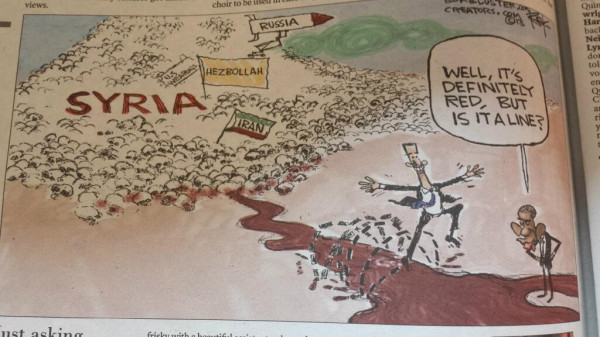
A Leftist Response to Leftist Delusions on Syria

June 8, 2013 § Leave a Comment

This excellent piece was written by Shiar in response to Stop the War’s Lindsey German (who can’t even get the Syrian president’s first name right) and was first published at the Syria News Wire.

“Being anti-imperialist yet West-centric,” writes Shiar, “just does not work: it is still Orientalism. This Orientalist (and statist) world view is so dominant within the Western Left that even a mass, popular uprising is reduced to a Western-manufactured conspiracy (which is, incidentally, the same line as that the Syrian regime has been repeating). It not only ignores facts on the ground and the complex political dynamics at play in those countries, but also overlooks those people’s agency and reduces them to either some inferior and stupid stereotype (Islamist terrorists) or some romanticised mythical version that is compatible with the dominant Western values (pro-democracy, peaceful, etc.).”

I have no idea where you get your news about Syria from, but it strikes me that it’s probably mostly from the Guardian, BBC and other establishment mouthpieces (when it comes to foreign policy anyway). For how else can one explain your sudden realisation that Syria is only now “descending into hell”? Really?! All this death and destruction over the past 26 months has not been hellish enough for you? Only now, when your beloved mainstream media start to recycle some state propaganda nonsense about the conflict in Syria taking (yet another) dangerous turn or crossing some ‘red line’, do your alarm bells start to ring?

You see, information sources are not just about information; they also shape your perspective. As a Leftist activist, one would have thought you would mention – at least once, in passing – the popular uprising or the revolution, what Syrians think and want, or anything remotely related to people. Instead, all you obsess about is big politics from a statist perspective: regime change, foreign intervention, regional war, Israel, Iran, bla bla bla.

If you’d argued that, after Tunisia, the prospect of mass, popular uprisings bringing regimes down seemed too frightening for Western and regional powers, so they opted for pushing the revolutions into prolonged armed conflicts or wars (mainly by not intervening when they could), I might have paused and thought a bit about your argument. If you’d said that the prospects of progressive governments emerging from mass uprisings demanding freedom and social justice seemed too frightening for the conservative, neoliberal forces, both regionally and internationally, so they converged to divert the revolutions and paint them as something else, I might have listened to you. But dismissing everything people have been fighting for because of some archaic geo-strategic equations… that’s just too much to swallow.

The only time you seem to remotely allude to people’s agency is when you fall into the trap of Western media’s obsession with Middle Eastern sectarianism, reducing complex political dynamics to a savage ‘civil war’ between religious sects: “Syria, locked into a bitter civil war between the government of Bashir Assad and the various opposition forces…” Here is what a friend posted on Facebook a while ago:

“Dear friends everywhere, We, Syrians, or a vast majority of us, do not accept using the term ‘civil war’ when talking about our revolution. We hope that you can take serious note of that. It is a popular revolution against a mass-murdering dictatorship. Calling it a civil war is unacceptable to us. Thanks.”

Your misinformed, or disinformed, sources of information may also explain your simplistic analysis of the political games unravelling in Syria, such as your talk about the imaginary “alliance of Saudi Arabia, Qatar, Israel, Jordan and the Western powers.” Had you bothered to look a bit closer, check some more informed and reliable sources, or even talk to some Syrians, you would have realised that this ‘alliance’ is riddled with power struggles, with different regional and international powers supporting different factions fighting in Syria, with very different agendas and strategies. The only thing that seems to unite them is their opposition to the regime.

But even this does not mean that ‘the Syrian people’ are united in their position regarding these factions. Had you bothered to look or ask, you would have discovered that many Syrian Leftists are fighting alongside members of the Muslim Brothers, that there have been numerous protests inside Syria against Jabhat al-Nusra when its members have gone too far in their authoritarian or sectarian practices, and so on and so forth. Instead, you chose to quote Robert Fisk – who has long lost it, as far as I’m concerned – saying: “The rebels so beloved of NATO nations are losing their hold of Damascus… This war – beware – may last another two, three or more years. Nobody will win.”

The same can be said of your eye-opening revelation that the sole aim of the Syrian revolution, as a Western conspiracy, is “a transformation of the Middle East aimed at permanently weakening Iran and its allies.” I do not want to comment on this any further but you might want to commission one of your coalition members to investigate the complex and changing attitudes of Syrians towards Hizbullah and Iran. A cursory look at recent images posted on Facebook of Syrian banners and placards ridiculing Hasan Nasrallah and Hizbullah might be a good start.

My point is that your objections to a military intervention in Syria seem to stem from the same place as the intervention: that ‘we’ (Europeans, Westerners, whatever) know better than Syrians what should be done about Syria. Had you bothered to talk to some Syrians, they might have told you how complex and nuanced the issue of foreign intervention is for most Syrians (I’m obviously not talking about a few sell-outs or parasites who are capitalising on the events for their own advantage). Their angry responses to the Israeli air strike on Damascus last week are just one example.

Did it not cross your mind, for instance, that ‘those people’ have already experienced Western colonialism and have grown up with strong anti-imperialist discourses (Leftist, pan-Arab nationalist and Islamist)? That they too might have learnt something from the Iraq war like you? (even though I would object to equating the invasion of Iraq with the recent popular revolutions in the region, but that’s another discussion.)

I doubt any of this has ever crossed your mind. Because had it done so, you might have paused for a moment and thought: what is that pushes these people to resort to the support of antagonistic regional and Western powers, knowing full well that the conditions of this support or the price they would have to pay is very high? I can tell you what I think the main reason is.

If you and your comrades had shown the Syrians who started the revolution any sort of support from the beginning – I mean serious, material support, not conditional solidarity and empty, confused slogans – they might not have had to resort to the US, Turkey, Saudi Arabia and other powers, and to form coalitions with ‘backward’ forces. Instead, all you and your comrades have been obsessing about is an imaginary peaceful or civil society movement that would mysteriously succeed in bringing down a blood-thirsty regime just like that. Then you turn to slag off those who join the Islamists or whoever is actually fighting the regime. This is not only delusional, allow me to say, it also does not exactly strike a chord with the majority of Syrians at the moment, given the context of extreme violence.

Every time I hear people here talking about a peaceful uprising being hijacked by militant Islamists or great Western powers or whatever, I cannot help thinking that it is not just their ignorant arrogance that is making them so blind to what is actually happening on the ground; it is, rather, an ideologically driven habit of twisting facts so that they conveniently fit into a pre-constructed narrative about ‘those people’ and how they do things. It is, in other words, Orientalism.

Here is another example from your article: “The impact of Western intervention in Syria is becoming more destructive as time goes on. […] Syria… is continuing its descent into hell, aided and abetted by outside powers whose concern is not humanitarian nor democratic, but is about reshaping the region and especially destroying Syria’s ally in Iran.”

To me, the position of Western anti-war activists and politicians vis-a-vis the Arab revolutions can be best descried as ‘schizophrenic delusion’. On the one hand, they stand against ‘the war’; on the other, they find themselves not only supporting repressive regimes but also supporting the wars waged by these regimes against their peoples because they are stuck in an archaic anti-imperialist discourse.

Being anti-imperialist yet West-centric just does not work: it is still Orientalism. This Orientalist (and statist) world view is so dominant within the Western Left that even a mass, popular uprising is reduced to a Western-manufactured conspiracy (which is, incidentally, the same line as that the Syrian regime has been repeating). It not only ignores facts on the ground and the complex political dynamics at play in those countries, but also overlooks those people’s agency and reduces them to either some inferior and stupid stereotype (Islamist terrorists) or some romanticised mythical version that is compatible with the dominant Western values (pro-democracy, peaceful, etc.).

Regional and Western powers will, of course, try to capitalise on the Syrian revolution and attempt to hijack or utilise it for their own ends (they’ve always done so; that’s politics.). But by imposing your own values and political agendas on the revolution, instead of showing real, unconditional solidarity with the people living it, you do exactly the same, dear comrade: you use it to feel better about yourself; to feel you’re still relevant, superior and intelligent.

source

Charismatic Leaders – Ahmadinejad vs. Netanyahu.

[youtube http://youtu.be/joJO-elfztM?]

Blog at WordPress.com.

Up ↑