Search

band annie's Weblog

I have a parallel blog in French at http://anniebannie.net

Month

July 2012

Champagne Flows While Syria Burns

Jul 9, 2012 1:00 AM EDT

A country at war with itself. Bombs and civilian massacres. Yet, in Damascus, the music plays on.

By the pool, glistening, oiled, and muscular bodies gyrated to a juiced-up version of Adele’s “Someone Like You.” Atop huge speakers, a Russian dancer swayed suggestively in front of the young, beautiful Syrian set drinking imported Lebanese beer with salt and lemon. Behind them, columns of smoke were rising—signs of car bombs and explosions, of an encroaching war.

One woman in a tight swimsuit playfully squirted a water gun, joking that she belonged to the pro-government militia, the Shabiha, meaning ghosts or thugs, which is believed to be responsible for a recent massacre of more than 100 people, many of them women and children. “The opposition wants to kill us—they even announced it on Facebook,” the woman said, and blithely went back to spraying herself with water.

The pool party at the Dama Rose Hotel in Damascus was just getting started.

For 15 months now, Syria has been engaged in increasingly bloody fighting, pitting antigovernment rebels against the brutal regime of President Bashar al-Assad, costing the lives of at least 10,000 people, according to the United Nations. What began as a protest against his autocratic rule has developed into a violent conflict with sectarian overtones that now threatens to spill into neighboring countries.

For journalists, Syria has been difficult and dangerous to cover, and many dispatches have focused on the rebels’ fight to overthrow the dictator in cities and villages such as Homs and Houla. Life in the capital among the pro-Assad elite is less known to the outside world. What emerges from a recent trip to Damascus, and conversations with dozens of people there who say they still support the government, is a deep sense of dread, kept at bay by distraction and, perhaps, delusion. Damascus has long been a stronghold of Assad supporters who count many Alawites and Christians but also (mostly secular) Sunnis. To them, Assad is a guarantor of stability. And many express fear that if the rebels win, they will turn Syria into a more conservative religious country, along the lines of Saudi Arabia or Yemen. But with government forces unable to quell the uprising, the scariest scenario now also seems the most likely: continued fighting widening into a civil war.

For days, I listened to the thumping music and watched the beauties in their fluorescent Victoria’s Secret bikinis partying at the pool at the Dama Rose Hotel, where I was staying. (More than once, I thought of Nero fiddling as Rome burned.) Syria, I realized, has become a schizophrenic place; a place where people’s realities no longer connect.

 While Syria Burns
At a Damascus wedding, as elsewhere in the capital, citizens try to tune out the violence. (Kate Brooks for Newsweek)

On one hand, there are the (in Damascus, largely invisible) activists who are trying to bring down Assad. By the time I arrived, shelling, gunfire, and a spate of “sticky bombs”—handmade bombs taped to the bottom of a car at the height of rush hour—had spawned fear in the capital and solidified anger against the opposition, which the government claims is supported by “foreign interventionists.”

There were daily clashes in suburbs such as Douma and Barzeh, and, according to human-rights groups, there are currently as many as 35,000 people being held in Syrian detention.

On the other hand, there is a class of Assad supporters who go about their daily business—pool parties included—while the skyline burns. As if the war is happening in some other place, people drink champagne in the Damascus neighborhood of Mezzah and partake in glamorous fashion photo shoots and go shopping for Versace and Missoni at the luxurious boutiques that line the Shukri al Quatli Street. Despite armed checkpoints and the threat of kidnapping, some still go out at night, attending the opera, meeting friends for dinner, and hosting elaborate wedding parties at the upscale restaurant Le Jardin.

“I have more work than ever,” says Dima, a television star who was being elaborately made up to be photographed by Gala Magazine. “I would love to work in Lebanon or the United States, of course, but at the moment, there is a lot of shooting here.” She laughs and lets the makeup artist—the best in Syria, she points out—apply another layer of purple eye shadow and tease her long, dark hair into a high chignon.

The jeunesse dorée of Damascus seem not to see that they are at war. Despite reports of civilian massacres by government fighters, the uprising has, thus far, not tainted their lives, and they don’t intend to let it. “Look, I still get my hair done when I go to a big party, which is about twice a week,” says a young woman I met. “I still get a manicure every week. I am still alive! Either you choose to be afraid all the time or you choose to live.”

Four years ago, Damascus was chosen as the Arab world’s Cultural Capital by UNESCO, and some people seem determined to hold on to that sobriquet, despite the many dead. Indeed, at the Damascus Opera House, the orchestra’s musicians believe it is their noble duty to keep playing. “People say that we should not make music while people are dying; I say it is imperative to give people hope,” says one violinist. “Even to have the house one quarter full in these times is a great achievement. People have to drive at night through dangerous checkpoints to get here, and most people just want to stay home and be safe.” A female musician agrees. “I don’t want to give the impression that we are like the Titanic—the orchestra plays on while the ship sinks,” she says. Her fate in Damascus has more in common with the Russian musicians who kept playing during the German siege of Leningrad, she says. “Music and art, in times like these, fuel the soul.”

 While Syria Burns
Displaced by the violence in Homs, residents take refuge in schools and orphanages elsewhere in the city (Kate Brooks for Newsweek)

One night I attend a classical concert at the elegant boutique hotel, Art House, in Mezzah, an area dominated by chic boutiques, gilded restaurants, and diplomatic villas. Built on the site of an old mill, the hotel has water streaming over glass panels on parts of the floor and would not be out of place in the Hamptons or Beverly Hills—except that, before the program begins, everyone rises to pay homage to the “war dead” with a minute of silence. The 34-year-old violinist and director general of the opera, Maria Arnaout, and a pianist then perform pieces by Bach, Gluck, and Beethoven for the select audience of bohemian-looking men in sandals and chinos and fashionable women in evening dresses and spiky shoes by Christian Louboutin, the French designer who keeps a summer residence in Syria and whose shoes are favored by the first lady, Asma al-Assad. Arnaout, in a strapless red silk dress and high heels, gets a standing ovation.

Afterward, as everyone files out to the hotel’s open-air restaurant, sipping champagne, I overhear hushed conversations about what has happened that day in Damascus; of bombs and fighting. This part of the city, a wealthy neighborhood of mixed ethnic and political persuasion, has been a particular place of tension. Lately, residents have noticed the sound of explosions, machine-gun fire, and helicopters in the sky.

A few days later, I’m standing with an architect on the balcony of her elegant, Italianate villa, watching people line up for gasoline down below. (International sanctions have created severe economic problems—even for the wealthy.) As we hear the ominous choppy noise of helicopters overhead, she comments, “This is the music we live by. And I fear this will be our symphony for the next few years.”

Bashar Hafez al-Assad, 46, is something of an enigma. Rarely seen in public, his long face is ubiquitous: portraits of the president hang on most government walls, and giant posters of Assad are displayed from downtown buildings.

Shy as a child, he was said to have had no intention of following his father, Hafez, into politics. Instead, he studied medicine in Damascus and London, specializing in ophthalmology. But when Bassel, the heir apparent, was killed in a car crash in 1994, Bashar was called home. In 2000, he inherited the presidency from his father and married Asma al-Akhras, a British-Syrian beauty who had been brought up in the U.K. To many it appeared that Asma modeled herself on Princess Diana and tried to win the hearts of the people through charity work and understated glamour. “She was really loved until this started,” one activist told me. “People admired her greatly.” Rumor in Damascus has it that, at one point during the early days of the uprising, Asma tried to flee the country with her children but was prevented by Assad’s brother, Maher, who commands the Republican Guard.

But gauging the truth is hard. As in neighboring Iraq under Saddam Hussein, or in Libya during the days of Col. Muammar Gaddafi, even ardent supporters of Assad worry about speaking their minds about the dictator for fear of retaliation and torture, and most of the people I meet only speak on the condition that their names not be printed.

The secret police, the Mukhabarat, hover in hotels, restaurants, and cafés. They bug telephones and hack into people’s emails, trying to weed out those who may not sympathize with the regime, clouding everything with suspicion.

One steaming Saturday morning, I drive to Barzeh, one of the hotspots around Damascus, where protests, arrests, and shootings are frequent. It’s also the home of a large military hospital, and on this morning I watch as men silently load the mangled bodies of 50 government soldiers—disfigured and broken by car bombs, explosives, bullets, and shrapnel—into simple wooden coffins. They drape the coffins with Syrian flags and march in procession into a courtyard to the sound of a military marching band. Here, the soldiers’ families and members of the regiment stand in attendance, most of them weeping. It’s an acute reminder of how hard Assad’s forces are getting hit by the opposition, whose guerrilla tactics are proving fatally successful. The hospital director, who refuses to give his name, says around 100 soldiers are killed every week.

 While Syria Burns
At the Dama Rose Hotel, the young elite parties hard—despite the signs of war. (Kate Brooks for Newsweek)

On the seventh floor of the hospital, Maj. Firas Jabr lies in a hospital bed, his anxious fiancée standing attentively nearby. His right leg and right arm have been blown off.

At the end of May, the 30-year-old Alawite soldier fought the rebels during a battle in Homs; he says he was ambushed by “foreign fighters,” including men from Lebanon and Yemen. “After I lost my leg and hand, I knew I was wounded, but I kept on shooting until [government forces] came to evacuate me,” says Jabr.

His favorite story, he says, is the story of King Arthur and the Knights of the Round Table. “This is Camelot,” he says. “Assad is King Arthur, and I am a knight.” Despite the fact that much of his body is gone, Jabr has a huge smile on his face. Like nearly all the Assad supporters I meet, Jabr says he believes in the Syrian dictator, and he will continue to fight, he says, once he gets his prosthetics. “I have two loves,” he tells me, trying to lift himself up: “My fiancée and Syria.”

It’s a common belief among the elite that the bombs and chaos spreading throughout the country are caused by a “third element”: an influx of foreign fighters with radical Salafist beliefs who want to turn Syria into an oppressive and conservative state. After one car bombing during my stay in Damascus, the paranoia of the regime supporters was suddenly on full view. “Our only friend is Russia!” one well-dressed man shouted, his face contorted with rage, at the site of the bombing that left the smoking skeleton of a car but injured no one. “These are foreigners that are exploding our country! Syria is for Syrians!”

Maria Saadeh, a political novice who was recently elected to Parliament, is among those who doesn’t believe Assad or his cronies are behind any atrocities, despite mounting evidence of regime forces massacring civilians in Houla and destroying the Baba Amr district in Homs. “Do you think our president could put down his own people?” she asks incredulously. “This is the work of foreign fighters. They want to change our culture.”

Educated in France and Syria as a restoration architect, Saadeh lives in Star Square in the old French section of Damascus, in an elegant 1920s building that she helped renovate. Sitting on the roof terrace of her chic apartment—a Filipina maid serving tea and her two children, Perla and Roland, peeking their heads through the windows—she looks like a model in a lifestyle magazine: tall and blonde and successful, a yuppie member of the elite. When I ask her about regime change, she simply says, “Now is not the time.”

One night, over dinner with an affluent family in its villa in Mezzah, which has several terraces and elaborate shrubbery in the garden, the 17-year-old son lays out his firmly pro-Assad views. “Look at what happened in Tunisia, look at what happened in Libya, look at the results of Egypt,” he says. Ahmed, who wears a pink Lacoste shirt and faded jeans and trainers, is about to do his military service; after that, he plans to study political science at a university in the United States. Like his mother, grandmother, aunt, and cousin, he is educated, multilingual, and the holder of two passports. He doesn’t believe that everything Assad does is right, but he is 100 percent behind the government because he believes, like Saadeh, that the time isn’t right for change. And, he says, in any case, change shouldn’t be imposed by other states, some which may not be democratic themselves. “Why should we take democracy lessons from Saudi Arabia, who arms the opposition?” he says, helping himself to hummus. “They don’t even let women drive!”

Outside on the streets of Damascus, there are gas lines and rising inflation, with the price of some imported goods rising almost 60 percent.

While Syria Burns
The Syrian army held funeral services for 50 soldiers at a military hospital one day last month. An estimated 100 government soldiers are killed every week. (Kate Brooks for Newsweek)

The sprawling bazaar of the historic Old City, once teeming with tourists, now rarely gets visits from travelers. The beautiful, old Talisman Hotel is without guests, empty and quiet except for birdcalls and the sound of running water in the fountain.

Still, a certain class of Damascenes lives life untouched by the violence, in beautiful, spacious homes, hosting grand dinner parties underneath glistening crystal chandeliers, seeing friends during the balmy summer evenings on outdoor terraces fragrant with jasmine—too stubborn or too afraid to see their world has irrevocably changed.

“I’m still jogging and swimming every day,” says Wael, a wealthy businessman who’s eager to argue that this isn’t a civil war or a sectarian conflict. He is a Shia but members of his family are Sunni, and his list of friends includes Christians, Armenians, and Alawites, he says. “This is not a war. Our regime is strong. Seventy percent fully support Assad.” His wife, Nadia, who wears a headscarf and goes to the opera as often as she can, says the rebels threaten people—telling them to close their shops and join the protests. If they refuse, “they burn them down,” she says. “This is why I am supporting the government.”

When I ask them if they’re afraid, they deny it. “Not at all,” says Wael. “Last week we had a party of 20 people on our balcony. We were all relaxing and smoking the nargila,” the water pipe. “We heard gun shots in the background—but it seemed a long way off.”

Like The Daily Beast on Facebook and follow us on Twitter for updates all day long.

For inquiries, please contact The Daily Beast at editorial@thedailybeast.com.

Wikileaked: Lobbying firm tried to help Syrian regime polish image as violence raged

Posted By Josh Rogin  

The lobbying firm that brought you a Vogue story featuring the Syrian first lady was still trying to help the Syrian regime improve its image abroad two months after the notoriously ill-timed article was published and then scrubbed, as the country descended into violence, according to a document revealed by Wikileaks.

The international firm Brown Lloyd James (BLJ) was officially employed by the Office of the First Lady of the Syrian Arab Republic Asma al-Assad in Nov. 2010 for $5,000 per month to help arrange and execute the article, which appeared in the March 2011 edition of Vogue. The fawning piece, entitled, “Rose of the Desert,” was actually scrubbed from the Vogue website out of embarrassment when Assad began a brutal crackdown on non-violent protests that month. But you can still read it here.

BLJ’s contract with the Assad regime, signed by BLJ partner Mike Holtzman and Syrian government official Fares Kallas, expired in March of last year, according to documents posted on the Foreign Agents Registration Act website. The firm had claimed its work on behalf of the Assads ended in Dec. 2010.

But in May 2011, BLJ sent another memo to Kallas and the Syrian government, giving them advice on how to improve their image and institute a more effective public relations strategy amid the exploding violence in Syria. The memo was published by the Wikileaks website in their dump of 2.4 million Syrian documents this week.

“It is clear from US government pronouncements since the beginning of the public demonstrations in Syria that the Obama Administration wants the leadership in Syria to survive,” begins the May 19, 2011, memo. “Unlike its response to demonstrations in some other countries in the region, there have been no US demands for regime change in Syria nor any calls for military intervention, criticism has been relatively muted and punitive sanctions — by not being aimed directly at President Assad — have been intended more as a caution than as an instrument to hurt the leadership.”

The memo was sent only days after Syrian military forces stormed the town of Baniyas and moved into the cities of Hama and Homs, where civilian massacres soon followed. Three days before the memo was sent, 20 bodies of murdered civilians were discovered in a shallow grave in the city of Daraa.  President Barack Obama called for Assad to step down that August.

The memo goes on to warn the Assad regime that the mood in Washington is turning against the regime, as evidenced by tougher statements coming from Sen. John Kerry (D-MA) and increasingly critical stories in the U.S. media. BLJ warns the Assads that if they don’t get smart about public relations quick, the U.S. system might just turn against them.

“[Increasing bad PR] not only reinforces the Administration’s change of tone, it is emboldening critics — who maintain that Syria’s reform efforts are not sincere–and building up pressure on the US government to take further, more drastic steps against the country,” the memo states.

BLJ then goes into an extensive set of recommendations for how the Assad regime can put a better spin on the largely government-led violence.

“[S]oft power is needed to reassure the Syrian people and outside audiences that reform is proceeding apace, legitimate grievances are being addressed and taken seriously, and that Syria’s actions are ultimately aimed at creating an environment in which change and progress can take place,” BLJ explains.

The Assad regime should appoint one figure to “own” the reform agenda to convince Syrians and the outside world the reform effort is “sincere,” BLJ advised.

“Refocusing the perception of outsiders and Syrians on reform will provide political cover to the generally sympathetic US Government, and will delegitimize critics at home and abroad,” the memo reads.

BLJ even recommends that First Lady Asma al-Assad should “get in the game,” do a “listening tour” with the president, and start doing press interviews to create an “echo chamber” in the media that reinforces the idea that Assad is reform-minded.

“The absence of a public figure as popular, capable, and attuned to the hopes of the people as Her Excellency at such a critical moment is conspicuous. The key is to show strength and sympathy at once,” BLJ writes.

BLJ also recommends that the Assad regime get more serious about containing negative media stories and the voices of the Syrian opposition around the world, which the memo calls “the daily torrent of criticism and lies.” BJR told the Assads they should institute 24-hour media monitoring in the United States and challenge and then remove any websites that are “false.”

Overall, the memo recommends that the Assad regime get smart on messaging and start trying to convince the world that the Syrian government is benevolent, that all killings by the military were not officially sanctioned, and that the crisis is not as bad as the international community believes.

“Efforts should be made to convey ‘normalcy’ and a contrast to current news depicting Syria as being on the verge of chaos,” the memo reads.

Contacted for comment by The Cable Friday, Holtzman said that their official work with the Syrian government came at a time when many, including the U.S. government, had high hopes for progress in opening up Syria. He also said that the May 2012 memo was a “last-ditch” effort “to encourage a peaceful outcome rather than violence.”

Holtzman said that BLJ was not paid for writing the memo and that the firm hasn’t done any work for the regime since. He framed the memo as an attempt to get the Assad regime to behave better.

“We noted that if the regime was serious about dramatic reform that ‘reform-oriented outreach must be dramatically improved’, and recommended that Syria begin to directly ‘engage families and young people’ in these reforms,” Holtzman said. “Unfortunately, our advice was ignored and our professional involvement in the country ended, just prior to new U.S. sanctions being put into effect.”

David Kenner contributed reporting to this article.

رسالة الشيخ رائد صلاح إلى الشعب السوري (in Arabic)

[youtube http://www.youtube.com/watch?v=vAq0-g4QZiQ&feature=colike?]

Miko Peled, interview

[youtube http://youtu.be/tdJK8uSimmg?]

Expelled priest turns diplomat for Syrian opposition

(Reuters) – An Italian priest may seem an unlikely champion of Syrian national unity, yet Paolo Dall’Oglio’s efforts to bridge deep sectarian divisions have gained him a following among a people shattered by conflict.

Bashar al-Assad’s government expelled Dall’Oglio last month, three decades after he revived a monastery on a rocky outcrop overlooking the Syrian desert that became a centre for dialogue between the country’s myriad ethnic and religious communities.

Nouri al-Jarrah, a London-based Syrian poet, called the expulsion a “shameful act”. “He should be given Syrian nationality the day he returns,” he said.

A big man with a loud voice and a calm manner, Dall’Oglio, 57, has reinvented himself as an unofficial diplomat on behalf of Assad’s opponents abroad.

As a deeply-divided opposition movement tried to narrow their differences at a meeting in Cairo on Tuesday, the bearded Dall’Oglio was a key fixture, hurrying among the delegates and relaying messages from embattled activists back home.

“Assad’s regime is so full of lies and spies that it no longer knows what is true or right,” he told Reuters. “I am urging all diplomats I see to help the people and demanding that their countries force Assad to stop the violence and leave.”

Admirers hope the priest can help achieve what Western powers have not – heal deep divisions between Assad’s Muslim, Christian, Islamist and secularist opponents, who often seem united only by their hostility to Assad.

“I perceive faith as a bridge that we all must cross to be better people,” he said. “The drive for power and personal glory is what makes people stray from religion and the extremists among them turn into tyrants like Bashar al-Assad.”

REVIVAL

Dall’Oglio revived Deir Mar Musa monastery in 1982. The site 80 km (50 miles) north of Damascus, established by Greek monks in the 6th century, had lain abandoned since the 19th century.

“It was a desolate place filled with insects and snakes, but I saw in it what I needed to convey my message,” he said.

Its small community works with Muslim groups to improve prospects for young people, promote dialogue between religious leaders and instill respect for the local environment.

Opposition leaders say over 15,000 people have been killed since Syria’s uprising began in March 2011. The government says it is fighting an Islamist insurgency.

Dall’Oglio was expelled after visiting the al-Qusair area of Homs city when it was under heavy attack.

“They got angry because I went to support my courageous people in Homs against those liars and violent thugs,” he said. “I am sure that eventually the protesters will win as they are on the right side, fighting for their freedoms.”

Dall’Oglio was told to leave Syria more than a year ago but pressure from supporters, who set up a Facebook group entitled “No to the Exile of Father Paolo”, helped delay his departure.

Dall’Oglio’s email address now begins with “matrudzaalan”, meaning “expelled and angry” in Arabic, “the language of the region I love with all my heart”, he said.

During the Cairo conference, the priest was seen urging western diplomats to step up pressure on Assad. Delegates took him aside repeatedly to ask news from home as he fielded calls from Syrian activists.

“Hang on there,” he told one who called from the town of Talbisa as it came under heavy attack. Asked for the identity of the caller, he said: “One of my children in Syria but I don’t know his name because I never ask. They are all my children.”

To Dall’Oglio, Syria is a country whose hatred of military dictatorship will overcome the fear of chaos and sectarian strife that Assad’s government has encouraged.

It is, he says, a country that can one day bring solutions to region-wide tensions, “rather than a corrosive cancer”.

“People there are very open-minded and mingle very well with one other,” he said. “I have sat with many Islamists and they all say they want a democratic civil state and are very keen to protect the rights of Christians.”

(Additional reporting by Edmund Blair; Editing by Tom Pfeiffer)

source

Steve Jobs’ 2005 Stanford Commencement Address

Drawing from some of the most pivotal points in his life, Steve Jobs, chief executive officer and co-founder of Apple Computer and of Pixar Animation Studios, urged graduates to pursue their dreams and see the opportunities in life’s setbacks — including death itself — at the university’s 114th Commencement on June 12, 2005.

[youtube http://youtu.be/UF8uR6Z6KLc?]

Assad’s Downfall

July 7, 2012 § Leave a Comment

It seems like the beginning of the end for the Baath regime. Its closest ally Iran is already looking to a future beyond Assad. General Manaf Tlass, a scion of the Tlass family — the keystone for four decades of the Sunni-Allawi alliance – has also had enough of the regime brutality and defected to Paris. Wikileaks has also started releasing Syria Files, a trove of documents that include 2,434,899  email exchanges between regime officials and some cronies. So far there isn’t much that’s particularly interesting, except evidence of continuing Italian support for the regime and this PR advice that the regime received from Brown Lloyd James (BLJ) to brush up its image after its bloody crackdown.

source

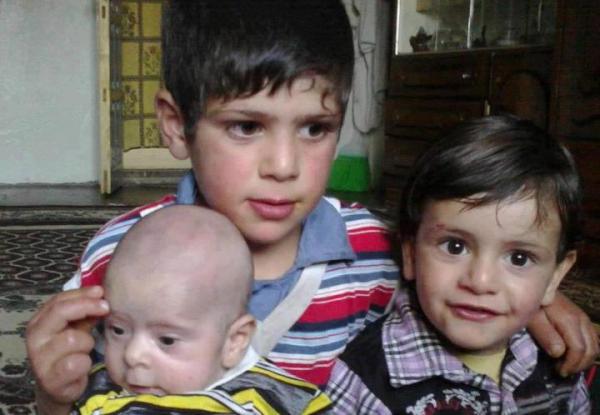
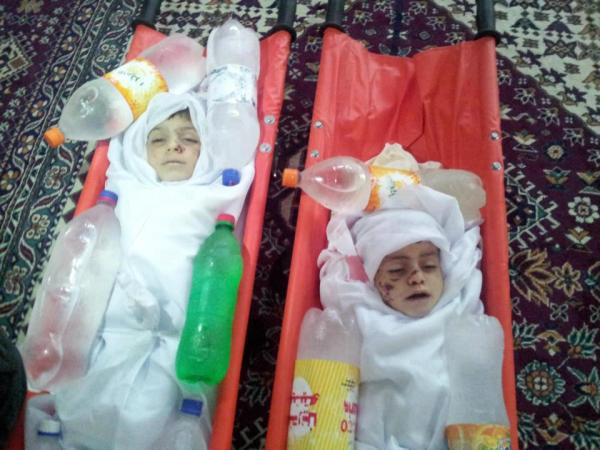
Little brothers Hasan and Husam, from #Daraa … two photos

Little brothers Hasan and Husam, from #Daraa … the before photo.
Little brothers Hasan and Husam, from #Daraa … the after photo.

WikiLeaks releases 2.4 million Syria e-mails

wikileaks comment on fb : Lip Biting Coverage on Syria Files from CNN – 2 Paragraphs devoted to new Leaks, rest about “sex allegations “

see also this article in The Guardian

and here is the press conference

[youtube http://youtu.be/9rICDiQTE7I?]
By the CNN Wire Staff
July 5, 2012 — Updated 1155 GMT (1955 HKT)
Julian Assange, pictured here on October 8, 2011, is the founder of WikiLeaks, which facilitates the anonymous leaking of secret information.

STORY HIGHLIGHTS
  • NEW: The WikiLeaks founder has been fighting extradition
  • The e-mails are in a range of languages including Arabic and Russian
  • WikiLeaks says the e-mails come from different government ministries

London (CNN) — WikiLeaks said Thursday it has begun publishing some 2.4 million e-mails from Syrian politicians, government ministries and companies dating back to 2006.

The e-mails, which are in a range of languages including Arabic and Russian, come from the ministries of presidential affairs, finance, information and foreign affairs, among others.

According to WikiLeaks, the e-mails “shine a light on the inner workings of the Syrian government and economy, but they also reveal how the West and Western companies say one thing and do another.”

WikiLeaks, which facilitates the anonymous leaking of secret information, has published about 250,000 confidential U.S. diplomatic cables, causing embarrassment to the government and others. It has also published hundreds of thousands of classified U.S. documents relating to the conflicts in Iraq and Afghanistan.

Its founder, Julian Assange, was arrested in Britain in 2010 over allegations of rape and sex crime charges in Sweden.

Assange resisting extradition

Rights group: Thousands killed in Syria

Diplomacy for Syria

Will Russia finally turn on Assad?

Two women have accused Assange of sexually assaulting them in August 2010 when he was visiting Sweden in connection with a WikiLeaks release of internal U.S. military documents.

Opinion: Australia to Assange’s rescue? Don’t hold your breath

He has been arrested in absentia, Swedish prosecutors have said. Swedish authorities want to question him about the allegations, which he denies.

Assange has been fighting extradition ever since, saying the allegations are retribution for his organization’s disclosure of American secrets. His bail conditions included staying every night at the home of a supporter outside London.

Assange applied for asylum to Ecuador on June 19 and has been inside the Ecuadorian Embassy in London since then. It is unclear when Ecuador will make a decision on the asylum request.

He sought refuge at the embassy five days after the Supreme Court of the United Kingdom dismissed a bid to reopen his appeal of the decision to send him to Sweden — his last option in British courts.

A representative for the WikiLeaks founder said Assange will not honor a notice that British police served him requiring him to turn himself to authorities.

“This should not be considered any sign of disrespect,” said Susan Benn of the Julian Assange defense fund, who read the statement.

Benn said the United States had empaneled a grand jury in its goal to press charges against Assange. Turning himself in would have started a process that would end with Assange being extradited to the United States, she said.

“It is clear that there is a plan to bring Julian Assange to the United States,” she said.

Citing what she called cruel, inhumane and degrading treatment of the alleged source of leaked documents, Pfc. Bradley Manning, Benn said that sending Assange to the United States “would be a violation of his rights.”

Police said Assange is in violation of his bail by staying at the embassy, and that ignoring the notice to turn himself in is a further violation.

See yourself as the next Assange? Good luck

Blog at WordPress.com.

Up ↑