Search

band annie's Weblog

I have a parallel blog in French at http://anniebannie.net

Month

February 2012

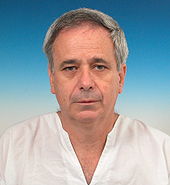
State University Hosts Israeli Historian Ilan Pappe- Says No to McCarthyite Campaign

Breaking news/a good day for free speech: despite extensive efforts by the new Amcha Initiative to get Israeli historian Ilan Pappe booted from Cal State University campuses, where he is scheduled to speak next week, the presidents of Cal State Fresno, Cal State Northridge, and Cal Poly have taken a strong, unanimous stand in support of free speech on college campuses.

If you’re near any of these campuses, please go hear Ilan Pappe speak the week of February 20th. He’s a brave, important scholar whose analysis and insights are invaluable to understanding Israel and Palestine. He’s speaking at Cal State NorthridgeCal Poly in San Luis Obispo and Cal State Fresno.

In the attempt to censor Pappe, who is a Jewish Israeli, UC Santa Cruz Hebrew lecturer Tammy Rossman-Benjamin, under the aegis of her new group, “The Amcha Initiative: Protecting Jewish Students,”  recently sent a letter to the president of the CSU system against Pappe and his CSU hosts. The letter is a prime example of doublespeak, emphasizing – using bold font and capital letters – that “are NOT asking that these three events be cancelled or that Ilan Pappe be censored.” (emphasis in original)

What, then, were they asking for? For the Cal State campuses and Cal Poly to “rescind all … sponsorship and support” from the Pappe events. What does that mean, exactly? Removing the events from campus and preventing the faculty from hosting Pappe in their official capacity. So no, that wouldn’t exactly be censoring Pappe – he could still speak off-campus, we presume – but it would surely be censoring the faculty who invited him, making a mockery of the freedom of intellectual inquiry and free speech that are so essential to college campuses.

(continued here)

Message from Bab Omar

[youtube http://youtu.be/4PT266SxBVc?]

Revolution in the middle/upper class Mezze (Damascus)

Funeral at Mezze (Damascus) yesterday , 18/02/11

See this also here : http://www.ustream.tv/channel/kafarsousah1 at Mezze

an arrest and guess what is expecting him in jail ?

If Mezzeh, Duma, Daraya, Jdeidet Artuz, Zamalqa, Harasta, Arbeen, Barze, Tadamoun are waking up, what remains with the regime?

Only Jaramana, Old Town, Abbassiin, Abu Rumaneh and Malki. And of course the MOUKHABARAAT and SHABBIHA.

Tariq Ali : ‘Assad must go to save Syria from intervention’

CLICK ON IMAGE

Syrian President Bashar Assad should resign if he doesn’t want to repeat the fate of Iraq’s Saddam Hussein and Libya’s Muammar Gaddafi, while Russia and China should help him to do so, the Middle East expert Tariq Ali told RT.
British historian and journalist Ali considers it unlikely that Syrian president will step down on his own accord.
“He has to be pushed out,” Tariq Ali insists, for which “the Syrian people are doing their best”.
Pressure is being mounted outside Syria by Turkey and NATO for intervention – that would be disastrous and bring enormous bloodshed, like in Libya, believes Tariq Ali.
The expert says both Assad and his father have spilled enough Syrian blood and that “this family is unacceptable”.
“Syria needs a non-sectarian national government to prepare a new constitution,” Tariq Ali stressed.
He expressed hope that all the most influential parties, like Russia, China, Iran and even Hezbollah must realize that it is time for President Assad to go and to do so, no peacekeeping force is needed.
Tariq Ali agrees that mounting international pressure on Bashar Assad is needed because simple economic sanctions will not bring the desired results. Countries like Iran and China would not abide them, so it is time for Russia and China to realize they need Assad no more.
He believes that once Assad falls, the new government will keep good relations with Iran, because this will be in the interest of the new democratic government.
“If the Assad clan refuses to relinquish their stronghold on the country, sooner or later something disastrous will happen,” Tariq Ali predicts, threatening a foreign intervention and recalling the inglorious deaths of Saddam Hussein and Muammar Gaddafi lynched by mobs inspired by the west.
“That is the future that stares them in the face, there is no other future,” Tariq Ali said.
“The fact is that the overwhelming majority of people in Syria want the Assad family out – and that is the key thing that we have to understand and he [Assad] should understand,” Tariq Ali claims.
He also warns about letting Islamists of the Muslim Brotherhood take control of the Syrian government. Even if it becomes a moderate one, religious minorities will most probably be targeted to divert attention from economic and social problems.

CrossTalk: Syria Agony

Interesting PULSE article on viewing RT, CNN etc.

Anthony Shadid

Anthony Shadid (1968-2012): Pulitzer-Winning NY Times Middle East Correspondent Dies in Syria. Click on image for Democracy Now report

See also this article on a book by Anthony Shadid to be published shortly

Syria : In Damascus too (Mezze)

‘We’ll die for our country, it doesn’t matter,’ Syrian activist says

Editor’s note: With the Syrian city of Homs under siege, CNN interviewed an opposition activist using the pseudonym of “Danny” to find out more about what was happening on the ground. Danny, whose real name CNN is protecting, escaped the slaughter.

CNN traveled to an undisclosed location recently to interview activist Danny. For his safety, we are not disclosing where that was, and Danny has since moved.

Before leaving Homs, Danny shared his stories with CNN and posted videos on YouTube purporting to show the violence in Syria. CNN cannot verify these videos independently, but they appear to show a desperate situation. CNN’s Nick Paton Walsh caught up with Danny to ask him about what’s going on in Syria, what scenes keep him up at night and what he hopes will happen.

There are many things Danny wants the world to know about what he and others in the Syrian city of Homs have gone through. But mostly, he wants people to know it has gotten so bad, and so many people have died that it has become the norm in that town.

“What people have to see is the children getting killed. Not just the children, but when someone dies and the relatives get used to it,” Danny says.

“One of my friends, his father got killed two weeks ago. I hugged him and he cried a little bit, but he kept going for like an hour, an hour and a half, going, coming, he was asking for a pen. So I caught him and I said, ‘Why do you want a pen?’

“He said he wanted to write on my Dad’s body, on the sheets, his name so I don’t lose it between the bodies.

“People are getting used to that kind of bodies in the street.”

The scenes that have played out before him can keep Danny up all night. There are situations and people whom he remembers vividly.

“I’ve seen lots. You would not imagine. If I would go on about what I’ve seen, it would take me hours.

“What about the kid we picked up who’s got no jaw left and he’s still alive? What about the kid that’s lost his two legs, and he’s still alive? What about the kid who’s lost his arms? My friend who’s paralyzed now?  My friend who’s lost his arm? My friend who lost an eyeball? My friend who got hit by a (sniper’s bullet) that went in his mouth and went out … (who) lost his teeth?

“These are all people who are scarred for life. I would rather get killed than be scarred like that.

“That’s what people are scared about now not dying. We’ll die for our country. It doesn’t matter.

“But that’s different to losing a piece of your body.”

Danny has been an outspoken advocate since the breakout in violence. And he has made strong pleas to President Barack Obama to help Syrians.

“I would beg him to help us. Military forces, or weapons, or by a ‘no-fly’ zone. We want help. We can’t stay like this  Bashar al-Assad will kill millions. He has no problem.

“This can’t be solved peacefully. We’re asking anyone for any kind of help.

“Even if the Israelis come in. One of my friends said he wants Satan to come in his place, it’s much better.”

CNN asked Danny if he was concerned radicals could hijack his movement if the conflict dragged on.

“Listen, this revolution is for the Syrian people. It’s not for the Muslim Brothers, it’s not for anybody. It’s for everybody. Kurds, Muslims, Christians, Sunnis it’s for everybody. This revolution is for the Syrian people. We started it; we will end it.

“People are saying it is an Islamic movement in Syria it’s all Muslims and Salafi, and we have got al Qaeda and Taliban. No, it’s not. It’s all guys like me 22, 18, 17 years old going out on demonstrations.”

Danny said he believes history will show China and Russia share in the responsibility for deaths in Syria after their Security Council veto of a U.N. resolution condemning violence in the country.

“It’s a crime against humanity. … Russia and China will be dealing with that. They have Syrian blood on their hands. This is all their fault.

“The last time the U.N. did nothing they gave the green light to Bashar al-Assad to kill more.

“It was the first time that he used rocket launchers after the U.N.

“He felt safe. They gave him the OK.

“They think our blood is just like water. They want to trade our blood with something.”

Read more firsthand accounts of what’s happening in Syria:

One activist’s chronicle of daily hell in Syria

Farmers, teachers, carpenters armed with rifles fear massacre

Wounds ooze, doctors cry in Syrian city

Activists say trying to flee from homes under attack is virtually a suicide run

Fearful residents prepare for a bloody battle

A Syrian resistance leader’s plea to the world

By Muhammad Zuka, Special to CNN

February 16, 2012 — Updated 1831 GMT (0231 HKT)
Syrian activists say this photo shows a mass funeral February 4 in Homs after they say the regime killed more than 200 people.
Syrian activists say this photo shows a mass funeral February 4 in Homs after they say the regime killed more than 200 people

Editor’s note: Muhammad Zuka, a pseudonym, is a Syrian resistance leader in his mid-30s from the Qalamoun region, north of Damascus. He owned a small business but lost it in the crackdown. He recently participated, with six colleagues, in a Skype call with U.S. journalists and others hosted by the Foundation for Defense of Democracies. This commentary was translated from Arabic and facilitated by Ammar Abdulhamid, author of the daily blog Syrian Revolution Digest and a foundation fellow. Ken Ballen, author of the book “Terrorists in Love” (Free Press, 2011) and president ofTerror Free Tomorrow, a nonprofit institute that researches attitudes toward extremism in Syria and elsewhere, also assisted.

North of Damascus, Syria (CNN) — The Syrian revolution has taken place as a long-delayed response to the misery and helplessness visited upon the Syrian people by a narrow authoritarian clique that treated the country as its own private fiefdom.

Occurring within the context of the Arab Spring, and considering what world leaders already knew about the nature of President Bashar al-Assad’s regime, protest leaders had believed that world reaction would be far more sympathetic to our desire for freedom. Unfortunately, we were wrong. The world has been slow to condemn al-Assad’s atrocities and sanction his behavior. Worse, the international community has failed to develop a plan or vision of what should come next.

Syrian protesters have been entirely left to our own devices, to fend for ourselves against a barbaric regime actively supported by its historical allies. We have tried to appeal to the world, to argue our case in the arena of international public opinion and to suggest courses of action, using the Internet and YouTube videos, and by talking to the few foreign correspondents who managed to find their way to us. Meanwhile, our suffering increases under the weight of the violent and brutal regime crackdown. International sanctions have been inadequate to stop the bloodshed and could easily backfire when there is no endgame in sight.

When the death toll reached 5,000 and the number of detainees 50,000, we were finally forced to resort to violence. Our protests started entirely peacefully. Yet after months of seeing unarmed protesters mowed down by tanks and children targeted by snipers, we needed to start defending ourselves. Defectors from al-Assad’s loyalist army joined with us and have led to the establishment of the Free Syrian Army.

Stopping our resistance is no longer an option. Talking to al-Assad and the people who drove us to the brink, who called us “infiltrators,” “germs” and “terrorists” is tantamount to betraying everything we have stood for. Al-Assad’s promises of reform sound as disingenuous now as they did when he first made them in 2000.

Today, as the regime’s brutality increases and entire residential neighborhoods and towns are being targeted indiscriminately with howitzers and tanks, we are more committed than ever to defending ourselves while protecting the civic nature of our movement.

For those who doubt our ability to do this, just remember that not a single massacre or act of revenge has taken place in any of the communities that have been under the control of the protesters. The regime makes claims and spreads rumors but offers no verifiable proof. Meanwhile, its atrocities have been meticulously documented by our colleagues and more recently by the foreign correspondents who gained access to the country.

The world has no reason to be afraid of us. This revolution was launched to reclaim the future for freedom and democracy. For this, we should be engaged and supported. We are not one color, but a rainbow, committed to protecting our national diversity and the values of tolerance for which Syrian society has always been known — not because the world wants it, but because it is our heritage. Had we had any other agenda, the world would have already seen signs of that on the ground. It has been almost a year since the revolution began, yet, despite the regime’s provocations, we remain committed to national unity, and we shall not waver.

Here is what we ask of the world:

• Recognize the Free Syrian Army, whose soldiers stand among us and risk their lives to protect us;

• Provide material and logistical support to the Free Syrian Army so it can protect protest hubs while developing the necessary command structure to act in accordance with the professional standards required for leading the transitional period with the civilian leadership;

• Engage the protest leaders on the ground, for we are the ones responsible for ensuring that this revolution remains committed to civic and democratic values.

• Help establish safe havens along Syria’s borders with her neighbors; and

• Help establish humanitarian corridors to embattled Homs communities, where the specter of famine grows by the day, and where residential neighborhoods are getting bombarded around the clock.

We know these are not simple or easy demands. But it’s clear by now that, long before the Russian and Chinese vetoes of the U.N. Security Council resolution, international reluctance and confusion have given al-Assad’s regime a green light for further escalation.

Today the death toll is approaching 8,000, with 60,000 detained and 20,000 missing. When will it be the right time to help us? What other option is there that hasn’t been tried yet?

Follow CNN Opinion on Twitter.

Join the conversation on Facebook.
Blog at WordPress.com.

Up ↑