Search

band annie's Weblog

I have a parallel blog in French at http://anniebannie.net

Month

August 2011

Syria : The Great Divide!

Both Assad supporters and opponents are not as homogeneous as they are said to be, and both hold deeply held beliefs about the “other side,” but only the protesters have so far shown demonstrable willingness to rise above their prejudice and reach out to the other side. Assad supporters have responded by lies, accusations, and mindless violence.

Saturday August 6, 2011

Eyewitness reports that Hama City has now completely fallen under the control of Assad troops. Most inhabitants have left the city and those left are now hostages. Power is still out and many streets are reportedly strewn with bodies of residents who were killed by the shelling and/or snipers. Food supplies are running low, and the city virtually ran out of baby formulas. Eyewitnesses report serious shortage of potable water.

In response to allegations that the Iraqi Government will be providing $10 billion in aid to the Assad regime, the Iraqi Minster of Finance, Rafei Aleissawi, issued a statement recently clarifying that the amount is actually $6 billion only, to be paid in three installments over the next 9 months, beginning from the agreement date signed between the two governments on July 27th.

Human Rights Organization put the death toll for Friday August 5, excluding Hama City, at 29, with dozens reported missing.

The Austrian Central Bank decided to stop abiding by a bilateral agreement to mint Syrian currency.

Syrian security officers arrest the known dissident Walid Al-Bouni, and his two sons.

Syrian army sends more tanks and troops into Homs and Deir Ezzor City.

Links

Prominent Syria poet calls on Assad to step down

Poet Adunis is one of the Arab world’s well-respected intellectuals; describes Syria’s oppostion movement as disunited.

Gulf countries call on Syria to end bloodshed

Gulf states called for an “immediate halt to violence and bloodshed” in Syria after security forces killed at least 24 civilians in the latest round of anti-government protests.

Leading politician urges EU to withdraw diplomats from Syria

A leading member of Chancellor Angela Merkel’s Christian Democrats has called for EU ambassadors to be withdrawn from Syria. Meanwhile, Germany’s foreign minister says change is inevitable in Damascus.

Syria looks toward parliamentary elections by year’s end

But Syrian opposition members say it’s questionable whether the move could end decades of single-party Baathist rule without constitutional reform. Observers say one of the articles of the Syrian constitution guarantees supremacy for the ruling Baath party.

Syria Forces Extend Siege on Hama as Toll Rises

Activists also said that the death toll could be much higher, but that a comprehensive and accurate count was almost impossible, given the state of communications in the city, the siege and the difficulty of moving around. They said that they feared the near-total media blackout imposed on the city could mean that the military was carrying out an unrestrained operation.

Syria: inside the city under siege

It was the start of the Muslim month of Ramadan, supposed to be a period of daytime fasting and prayer to reinforce the virtues of patience, spirituality, humility and submission to God.

Police run Syria, defector says

Lieutenant Khalaf, who served in the Syrian army for 10 years, said the military itself is “completely” subject to the security apparatus, adding that Syrian prisons are filled with hundreds of army officers who refused to open fire on civilians.

Senator Robert Casey: Bashar al-Assad must step down

… the United States should continue to pursue a resolution at the U.N. Security Council condemning the Syrian government’s behavior. Last week’s statement by the council was a positive step but should be bolstered by a strong resolution.

The Assads do have supporters on the ground, after all the protesters are not killing themselves. But, and while the majority of the supporters of the Assads come from an Alawite, Christian, Druze and Ismailite background, not all members of these communities are in agreement with the Assads and many have been part of this Revolution since the beginning.

On the other hand, the Assad support base include a significant Sunni component whose membership is not only derived from the ranks of the Sunni commercial elite and the upper middle class, but also from the ranks of poorer urban and rural classes whose family members are connected one way or another to the Assads’ large security apparatus, and Baath institutions.

In theory, these communal intersections between the supporters and opponents of the Assads should facilitate dialog and negotiations at some point, but now is clearly not the time for that.

To be clear, the Assads can never be part of any dialog. Theirs has always been an all-or-nothing approach, which makes them unable to offer anything of substance to the protesters. Moreover, the Assads don’t seem to have reached the stage yet where they may be willing to negotiate an exit strategy for themselves. They still believe, it seems, as do their supporters, that they can somehow contain and survive the Revolution with little change. Current developments reflect continued commitment to this mentality. The Assads can never be part of any solution.

But there cannot be a solution, one that can help us avoid significant bloodshed, without successfully reaching out to the Assad support base.

The problem here is that if top military general and security chiefs have shown themselves to be too far gone to be promising candidates for a successful outreach effort, the civilian component does not seem that promising either, at least at this stage.

Indeed, there is a certain level of paranoia and denial within the ranks of Assads’ supporters that leaves little room for any kind of dialog or outreach, again at this stage. They keep seeing networks of Salafists and terrorists springing up all over Syria leading to the establishment of one Kandahar after another, when the only evidence in this regard is the verbal assertions of regime propagandists and inflammatory reports on state-run media. Regional and international news networks that provide evidence to the contrary, evidence that highlights regime brutality and the peaceful nature of the Revolution, are seen as part of an ongoing conspiracy, and their evidence is ignored.

Even Assad supporters living in the West and who have access to reportage by known western journalists like Anthony Shadid among others, who actually managed to visit Hama City, walked down its streets and talked to its residents and protest leaders, chalk off the observations of these people on the peaceful nature of the protest movement as part of the international conspiracy or as reflection of the naivety of the journalists involved.

Furthermore, signs of religiosity among the protesters are taken as evidence of extremism, and the rural appearance of some as evidence of backwardness and lack of readiness for democracy. Meanwhile, most Assad supporters, especially those who joined the army or security forces or became members of the proliferating pro-Assad militias, themselves come from a rural background and are no less religiously observant than the protesters, as evidenced by the jewelry and/or tattoos they wear: the crosses, the Allah engraving and the mini forked swords (a Shiite and Alawite religious symbol). Religiosity is simply not the exclusive domain of the Sunnis in Syria.

How can rational dialog take place in these conditions? What sort of guarantees can be offered to change this mentality? What sort of statements and/or actions can the protesters offer to appease the fear and worries involved? Assad supporters seem to be currently cruising on a “cut down the tall trees” mode, it’s pretty much doubtful that they will stop for a serious rational chat anytime soon. So long as they cling to the belief that the Revolution can and should be crushed, and that Assad should be in charge of whatever “reform” process to take place, they leave little room for dialog or even negotiations.

Religious and sectarian prejudice is deeply ingrained in our culture, this is something that no one can deny. And yes, both protesters and supporters, irrespective of their particular religious sectarian backgrounds, are guilty in this regard. But the protesters have been trying to rise above theirs since the beginning of the Revolution. The discourse of some of their “spokespeople” might occasionally fall short of the slogans of national unity they raise, a shortcoming characteristic of such nascent movements and which at this stage also comes as a reaction to the ongoing brutal crackdown and the lies and provocations that come with it, but the preponderance of their actions come as a reflection of a sincere desire to build something new and inclusive.

Their efforts at outreach, however, are unlikely to have the desired effects at this stage. It is only when the regime is at the very point of collapse that we can hope to begin negotiating and dialoging with the other side, because only then some might be willing to listen, driven by the same existential angst that is being manipulated by the Assads today and channeled into the current crackdown.

Right now, the focus of the protesters should be on winning, and that, in large part, calls for keeping their activities peaceful. With increasing violence on part of the Assads and their supporters and loyalists, and increasing attempts by fringe elements to push for retributions, protest leaders have their work cut out for them.

The focus on winning, however, does not preclude the need for enunciating a vision for an inclusive tomorrow and coming out with a plan for the transitional period, seeing that our ability to acquire international legitimacy and to successfully reach out to that important segment of the population that remains silent seems to hinge on this.

At the end of the day, however, it seems quite probable that the Assads will have some diehard supporters who will fight for them to the end. While so many are focused on the potential drive for retribution on part the revolutionaries, it is more than likely that these diehard elements, who are responsible for the preponderance of the violence today, will be the ones to seek retributions tomorrow when their cause is lost, after all they are the better organized and armed side, and the brainwashed ones whose paranoia is fueling the current mayhem.
source

Tent 1948

by Abir Kopty on August 6, 2011

If you are Palestinian, it will be difficult to find anything to identify with in Tel Aviv’s tents’ city on Rothschild Boulevard, until you reach Tent 1948. My first tour there was a few days ago, when I decided to join Tent 1948. Tent 1948’s main message is that social justice should be for all. It brings together Jewish and Palestinian citizens who believe in shared sovereignty in the state of all its citizens.

For me, as a Palestinian, I don’t feel part of the July 14 movement, and I’m not there because I feel part. Almost every corner of this encampment reminds me that this place does not want me. My first tour there was pretty depressing, I found lots of Israeli flags, a man giving a lecture to youth about his memories from ’48 war’ from a Zionist perspective, another group marching with signs calling for the release of Gilad Shalit, another singing Zionist songs. This is certainly not a place that the 20% of the population would feel they belong to. The second day I found Ronen Shuval, from Im Tirtzu, the extreme right wing organization, giving a talk full of incitement and hatred to the left and human rights organizations. Settlers already set a tent and were dancing with joy.

The existence of Tent 1948 in the encampment constitutes a challenge to people taking part in the July 14 movement. In the first few days, the tent was attacked by group of rightwing activists, who beat activists in the tent and broke down the Palestinian flag of the tent. Some of the leaders of the July 14 movement have said clearly that raising core issues related to Palestinian community in Israel or the occupation will make the struggle “lose momentum”. They often said the struggle is social, not political, as if there was a difference. They are afraid of losing supporters if they make Palestinian issues bold.

The truth is that this is the truth.

The truth is, this is exactly what might help Netanyahu, if he presses the button of fear, recreates the ‘enemy’ and reproduce the ‘security threat’, he might be able to silence this movement. The problem is not with Netanyahu, he is not the first Israeli leader to rely on this. The main problem is that Israelis are not ready yet to see beyond the walls surrounding them.

Yet, one has to admit, something is happening, Israelis are awakening. There is a process; people are coming together, discussing issues. The General Assembly of the encampment decided on Friday that it will not accept any racist messages among its participants. Even to Tent 1948 many Israelis arrived, read the flyers, listened to what Tent 1948 represent and discussed calmly. Perhaps if I was a Jewish Israeli I will be proud of the July 14 movement. But, I am not a Jew, I am not Zionist, I am Palestinian.

I don’t want to beatify the reality, or hide anything for the sake of ‘tactics’ and I will not accept crumbs. I want to speak about historical justice, I want to speak about occupation, I want to speak about discrimination and racism, I want to put everything on the table, and I want to speak about them in the heart of Tel Aviv.

Social justice can’t be divided or categorized. If it is not justice to all including all Palestinians, then it is a fake justice, elite justice or “Justice for Jews only” exactly as the Israeli democracy functions “for Jews only”. July 14 is a great opportunity for Israelis to refuse to allow their state to continue to drown into an apartheid regime.

Abir Kopty blogs here. Follow her twitter feed @abirkopty. A media analyst and consultant and political activist, she is a former city council member in Nazareth & former spokeswoman for Mossawa, the Advocacy Center for Arab Citizens in Israel.

source

{ 4 comments… read them below or add one }

Unforgettable Words From an Israeli General’s Son

Miko Peled is a peace activist who dares to say in public what others still choose to deny. Born in Jerusalem in 1961 into a well known Zionist family, his grandfather, Dr. Avraham Katsnelson was a Zionist leader and signer of the Israeli Declaration of Independence. His Father, Matti Peled, was a young officer in the war of 1948 and a general in the war of 1967 when Israel conquered the West Bank, Gaza, Golan Heights and Sinai.

Miko’s unlikely opinions reflect his father’s legacy. General Peled was a war hero turned peacemaker.

[youtube http://youtu.be/c4ZfnpN4Dfc?]

Miko grew up in Jerusalem, a multi-ethnic city, but had to leave Israel before he made his first Palestinian friend, the result of his participation in a dialogue group in California. He was 39.

On September 4, 1997 the beloved Smadar, 13, the daughter of Miko’s sister Nurit and her husband Rami Elhanan was killed in a suicide attack.

Peled insists that Israel/Palestine is one state—the separation wall notwithstanding, massive investment in infrastructure, towns and highways that bisect and connect settlements on the West Bank, have destroyed the possibility for a viable Palestinian state. The result, Peled says is that Israelis and Palestinians are governed by the same government but live under different sets of laws.

At the heart of Peled’s conclusion lies the realization that Israelis and Palestinians can live in peace as equals in their shared homeland.

Source: PakistanPal

The Syrian Free Officers

Bahrain: Shouting in the dark

[youtube http://youtu.be/xaTKDMYOBOU?]

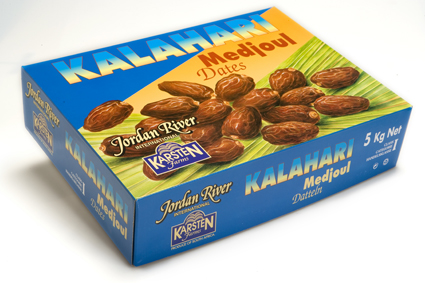
‘ Bomaja Medjoul’

Date: Thursday, 4 August, 2011, 21:35

Hi people,

Willem and I just arrived in Holland for hols. We go to our local Dekamarkt
supermarket to stock up with provisions and what do we find? A whole pile
of boxes of Medjoul dates, prominently displayed in the middle of the store,
bearing the label “Bomaja”. Being curious, we examined these closely to see
where they originated from. Not a trace of any country of origin whatsoever.
A couple of young men, presumed Muslim, were also eyeing them suspiciously
and we all agreed that they were probably Israeli.

Googling on “bomaja dates”, look at the first hit that comes up:

http://www.hadiklaim.com/Info/Packaging

Scroll down a bit and there they are. Yet another Israeli brand to watch out
for. Please spread the word about these and all the other brand names listed
on the Hadiklaim page.

The good news is that nobody in our branch of Dekamarkt seemed to be
buying them. Who knows, maybe by tomorrow they will have acquired some
labelling which makes their country of origin clear. 😉

Sue B

21 More Rules for Translators: Susan Bernofsky and Hala Salah Eldin Hussein

Posted on August 4, 2011 by mlynxqualey| 1 Comment

Multiaward-winning Susan Bernofsky, widely considered to be one of the best English translators of German literature today, has translated works by Robert Walser, Hermann Hesse, and Yoko Tawada. Among other awards, she has two honours from the PEN Translation Fund (2005, 2007) as well as the Helen and Kurt Wolff Translation Prize (2006). Plus, she blogs at translationista.com.

1. Always be a writer while you are translating, and every time you forget, bring yourself back to it.

2. The most important thing about the structure of a sentence is the order in which the bits of information arrive.

3. If the original text is not well-written, you are doomed; feel free to despair.

4. If the original is well-written, make sure you understand exactly what’s good about it, i.e. what constitutes this writer’s characteristic style.  Getting the tone right is key.

5. Get up from your computer at least once every hour to stretch and walk around.  Translating in a stupor isn’t going to work out to anyone’s satisfaction.

6. The most important reference work you can own is a Roget’s International Thesaurus.  Indexed, not in dictionary form.  Yes, it does make a difference.  And no, there is no dictionary of synonyms available online that can hold a candle to a good Roget’s.

7. No, it’s not good enough yet, keep revising.

8. I can’t believe you’re asking again already.  Revise some more.

9. Read everything you translate aloud, preferably to a bookloving listener who can be trusted to furrow a brow when a phrase is off.

10. Read lots and lots of gorgeous books at all times so that your head will constantly be filled with the cadences of literary greatness.

11. Remember that no matter what hard work it is, translating is supposed to be fun; if you consistently find yourself not having fun while translating, why don’t you try something else that you might actually make some money at?

Hala Salah Eldin Hussein is Albawtaka Review editor and general manager of Albawtaka Publishing House. Albawtaka Review is an Arabic independent (non-governmental) non-profit online quarterly concerned with translating English short fiction into Arabic. Here is a brief introduction in English about the project: http://albawtaka.com/whoareweenglish.htm You can also read more about Hussein here.

Make peace with the profession.

If you have fantasies about becoming an author, translation is not the job for you. If you look with envy at “your” author, you are not cut for the job. If you think you could learn from others, so one day you will write by yourself, you will never give it all. If you are jealous of not being under the spotlight, rather the author, look for another job. You should love the very act of translation. Make your peace with it!

Render into your mother tongue.

I don’t care if you were taught in Oxford University or your mother is a half-Mexican, half-Irish citizen. If you have spent your early years in an Arab country, another English native translator will probably do a better job rendering Arabic “literary” texts into English. Don’t do it!

Have sources, have weapons.

You are not a dictionary; you will never be a dictionary. English-Arabic literary translators should be armed – all at the same time – with Almawred Dictionary, (both Arabic-English and English-Arabic), dictionary.com, Oxford Genie dictionary, OED dictionary, lexicons.ajeeb.com, and finally links to alphabetized slang dictionaries online. Don’t assume the right equivalent even if it sounded logic; dig deep into every dictionary. Dictionaries will teach you that your horizon is shamefully limited and there are tons of implications to each and every word.

Don’t act like an Oxford Genie though!

Don’t explain, don’t explicate, and don’t clarify. You are not an Oxford Genie Dictionary. If it took an English-speaking reader 7 seconds to get it, it should take the same period for an Arab to get it. Vagueness is not a sin. Vagueness — intended or unintended, out of cleverness or out of stupidity — is not for you to decipher.

Be meek at first, rule at last.

You need to have this sense of modesty — even servility — about the text. You can’t work feeling confident and strong, you will be crushed. Creep up on its lines in your first draft, check every word, suspect every meaning, and be humble to its potentials. With your initial and second drafts done, you can afford to follow your own rules, aesthetics of your own mother tongue. Don’t go too far you would lose this imaginary link between the two texts, but be sure to end up gaining power over the text. It’s YOURS now. And you have the right to bring out the very honest version of it.

Be there by not being there.

You are not there to fabricate or render a text into another that you might like more. Don’t flirt with the idea of delivering the “soul” of the text, not its exact words. Both can go together. Soul is good, soul is cool. But if you purposefully left out an adjective or an adverb, you are committing high treason. Literal is not a bad word.

When it comes to literature, love your text.

Spending a long time with a text can be a serious punishment if you are not in awe of it. If you have the urge to alter the text, add a few words here, erase this, copy and paste that in another place, you are not a fan. If you think the text could have come out better if the author tackled it in a different way, you are not in love with it. Emotionally, you should think of it as YOUR text, but in a slightly different way.

Take it as it gets ugly; take it as it gets you anywhere.

A sober PhD doctor doesn’t speak like an addict vagabond. Only a fool would make them utter the same words, have the same attitude. If an author does, there is a reason for it (Fantasy might interfere; it’s not your job to decide!) Don’t mess up with your characters. Rule is you translate a sentence in Standard English into another sentence in Standard Arabic, same goes for colloquial words. Jump freely between language tones, but follow the text. Your language can handle it. In a conservative society, guarded by a strict censorship system, don’t go for it aiming to create a “clean” text. It is certainly not your place to bowdlerize it. Slang words and profane language are there for a purpose. You are not a guard of morality.

Sleep on it.

The brain works in stages. You have to forget what you have learned or worked on in order to be able to detect its flaws. Eyes can get blind in one single setting no matter how many times you have revised your text. A text is like a meal cooked slowly, then put into the fridge, not to sprinkle stuff on it unless it’s solid. Stay away from the text for a week or so, then go back to it. Put the original aside, then play with the newly created text. Smooth the rough edges, place prepositional phrases and other structures where they would sound more Arabic or better suit whatever purpose it serves. Whenever unsure, go back to the original text to make sure you have not stranded out of context.

Please sound Arabic.

Don’t make me skim through a text echoing its original words. Names and places excluded, your text should feel as if it has been written in Arabic. I don’t want to waver between two languages, two cultures maybe. Let go of the original text and dig in the aesthetics of your mother tongue. Try to stay away from trite words, discover new sounds, find words that might sound slightly old, and give it a fresh use. (Don’t go too far; not biblical words, please.). Never take this nonsense about how cultural differences will stand in the way of translation, they NEVER do. Human experience is the same; you will eventually nail the right word, the right tone.

Carlos : “I’m with you, heart and soul”.

source

Carlos LatuffCarloss Latuff, brazilian political cartoonist, became famous during the uprising in Egypt. In an interview with Kristin Jankowski the artist talks about solidarity, internationalism and struggles against the system.

A couple of days ago, I’ve passed the Tahrir-Square and a demonstrator held one of your cartoons in his hands – with a big smile on his face. Your art has become a part of the uprisings. Do you think that art can set people free?Carlos Latuff: Only people can set people free. Art will serve them as tools. A revolutionary will use any tools at reach, from cell phones to guns. Art is one of these tools.

You are based in Rio de Janeiro, Brazil. Far away from Egypt. Why is it important for you to cover the current political situation in Egypt ? Why do you care?

Carlos Latuff: I care about Egypt the same way I care about Palestine, where I was in 1999. It’s about internationalism, solidarity with people of the world. Egyptians, Palestinians, Brazilian, in the end, we are all human beings.

How are the current events in Egypt affecting your life?

Carlos Latuff: I tend be attached to movements which I believe in. I take them to a personal level.

The Egyptians claim they want democracy and freedom. But the Army is still in Power. What do you think are the achievements of the uprisings till now?

Carlos Latuff: I believe that Egyptians are there in the streets to stay, I’m sure that their struggle was not for replacing Mubarak’s dictatorship for a military dictatorship. Martyrs didn’t die for nothing. Egyptians will struggle until to reach a full democratic regime.

You became famous in a short time here in Egypt. People are sharing your cartoons at facebook or carrying your art during demonstrations. What is your message to the Egyptians who are taking part in the struggle against the system?

Carlos Latuff: My cartoons are my personal expression of solidarity with them. It’s my way to tell them “I’m with you, heart and soul”.

You made a series of cartoons that portray international politicians as monsters. Who do you think is the monster here in Egypt?

Carlos Latuff: Many of them. Overthrowing Mubarak didn’t mean that you cleaned up Egypt of all the nasty, corrupt characters.

Some people, especially leftist, are saying the worldwide resistance against the global system of capitalism and injustice has just begun. Do you think the same?

Carlos Latuff: Inshallah! :-)

Artists are mostly dreamers, people full of fantasy. Sometimes their art is a way to digest the cruelty of the world. What are you dreaming of?

Carlos Latuff: I try to put my art not at the service of my own dreams but the dreams of others. I don’t have dreams anymore.

When are you coming to Egypt?

Carlos Latuff: Not anytime soon. SCAF would arrest me once in the airport. :-)

Gore Vidal in Venice Part 1 of 12

from P U L S E
“Freedom of the press is guaranteed only to those who own one.”
Vidal in Venice

At an old bookshop that I frequently visit, I recently found a book titled Vidal in Venice, a glossy coffee-table hardback about the history, architecture and culture of Venice, illustrated with superb artwork and photography. The book was a companion edition to a series of documentaries Gore Vidal wrote and presented in 1985 for Channel 4 about the city he calls ‘perhaps the most beautiful cliche on earth.’ Thanks to the wonders of youtube, today I was able to find it and here it is in its entirety.

For the other 11 see here